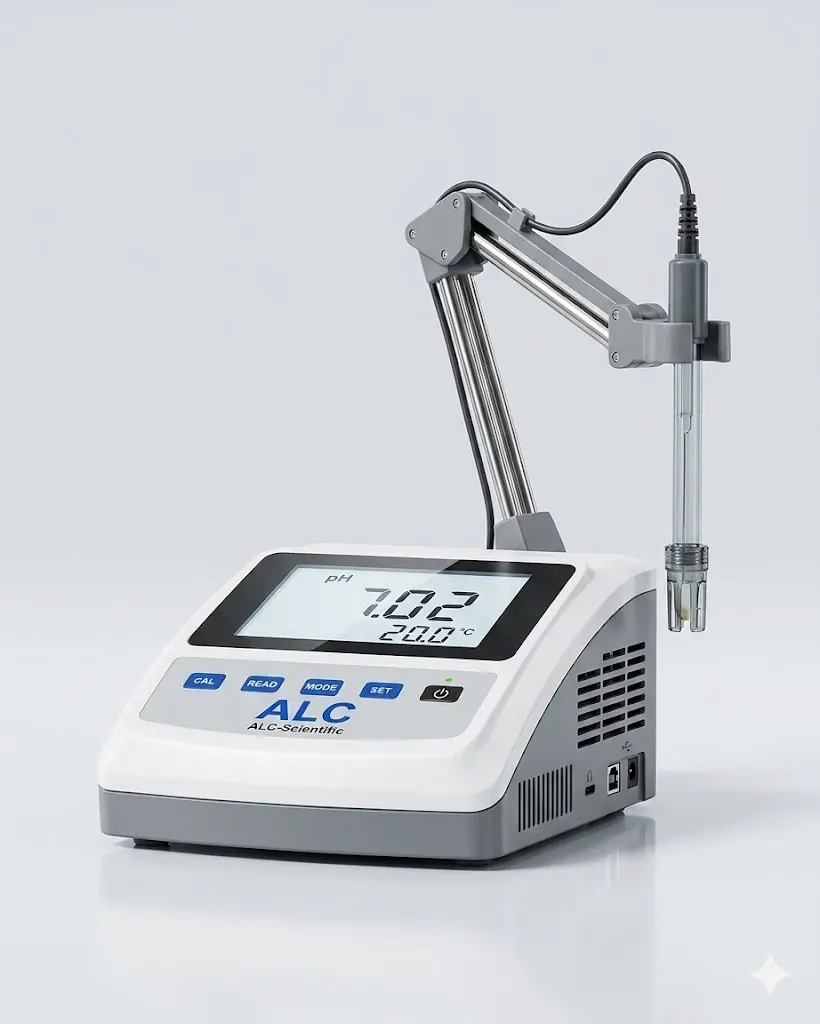
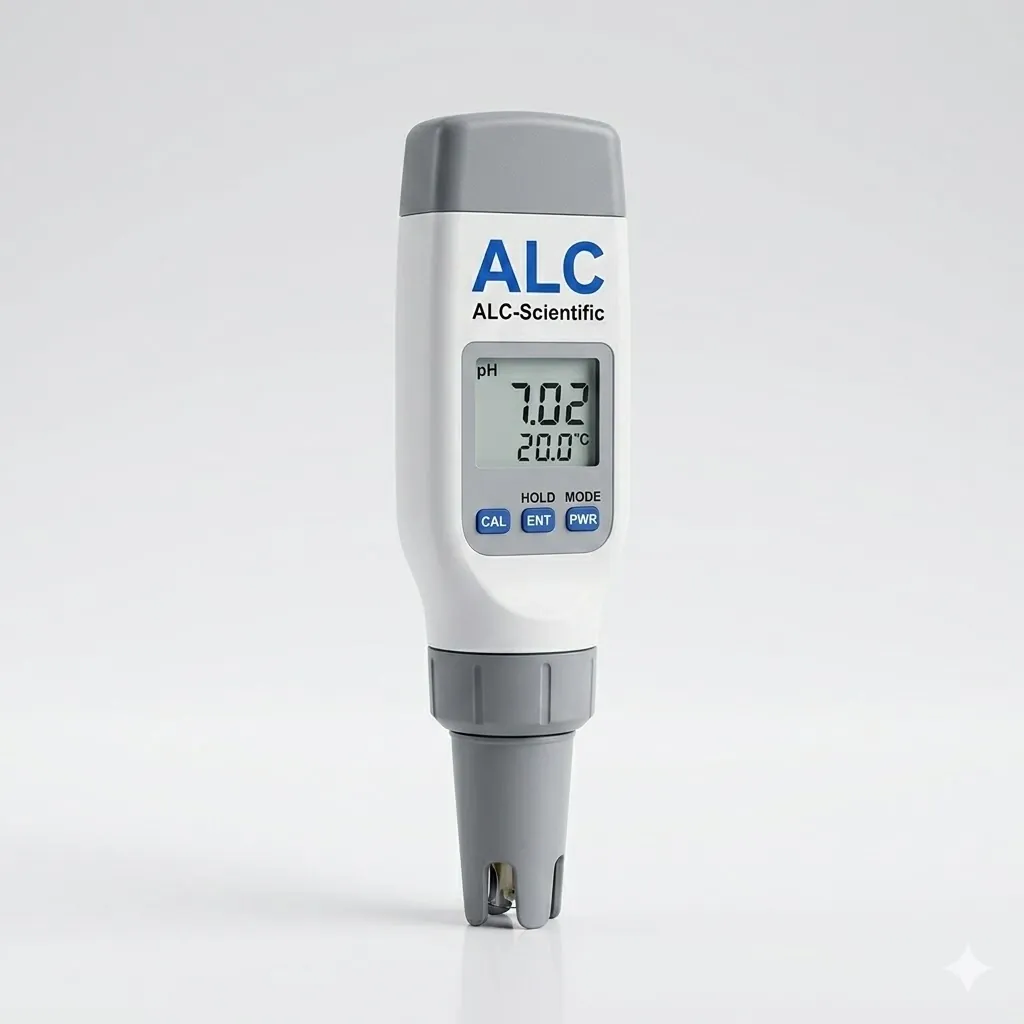
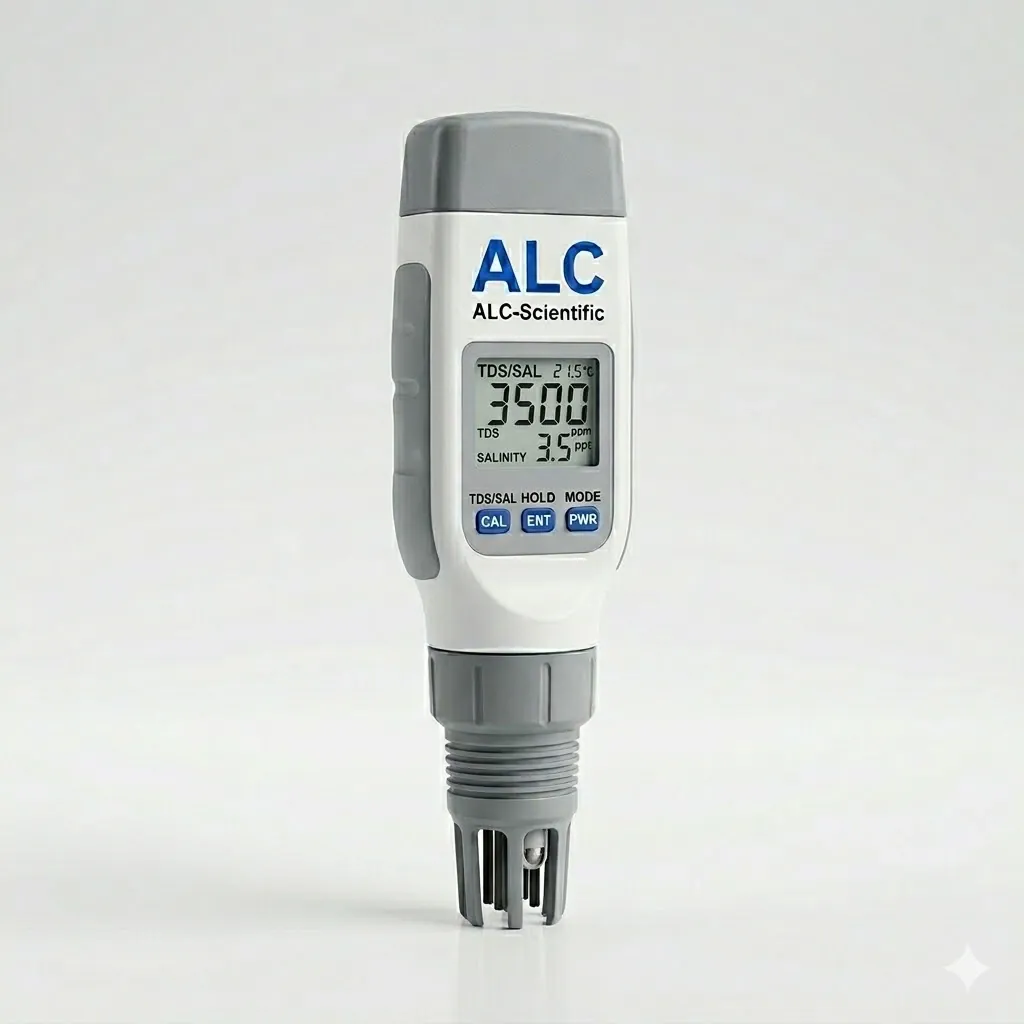
A benchtop conductivity meter measures the ability of ions in a sample to carry electrical current and may derive TDS or salinity through configured conversion settings. Typical uses include water-quality testing, buffer and reagent checks, and process-water monitoring.
A connected conductivity cell applies an electrical field to the sample and the bench meter evaluates the resulting conductance. Cell constant, temperature compensation and calibration determine how the displayed conductivity is interpreted.
Where Benchtop Conductivity Meter fits
Suitable measurements
Benchtop Conductivity Meter is commonly shortlisted for Water-quality testing, Buffer and reagent checks, and Process-water monitoring. These uses orient the Benchtop Conductivity Meter enquiry; suitability still depends on the exact model, method and site conditions.
Specify method, range and sample conditions
For Benchtop Conductivity Meter, the enquiry should document Bench samples, expected conductivity range and required cell constant and Cell constant, sensor material and connector compatibility. Acceptance values for the proposed Benchtop Conductivity Meter should come from the buyer's method, URS or tender rather than catalogue assumptions.
Confirm calibration and measurement evidence
Ask for the exact Benchtop Conductivity Meter model, measurement range, resolution or readability, stated accuracy or uncertainty where applicable, calibration method, included sensors or accessories, power requirements and datasheet revision.
Typical applications for Benchtop Conductivity Meter
Water-quality testing.
Buffer and reagent checks.
Process-water monitoring.
Salinity and TDS estimation.
Selecting the right Benchtop Conductivity Meter
Application or load: Bench samples, expected conductivity range and required cell constant.
Required performance: Cell constant, sensor material and connector compatibility.
Configuration and compatibility: Calibration standards, number of calibration points and temperature compensation.
Site, utilities and support: Data logging, bench power, sample holder and replacement-sensor requirements.
Documents to review for Benchtop Conductivity Meter
Because Benchtop Conductivity Meter selection includes bench samples, expected conductivity range and required cell constant, no orderable model specification is inferred from this page and the quotation must identify the applicable technical document.
Product information scope
Benchtop Conductivity Meter selection guidance; the exact model is confirmed in the quotation
Model reference
Assigned for Benchtop Conductivity Meter in the quotation or approved datasheet
Supply responsibility
Must be stated for the quoted Benchtop Conductivity Meter
Technical evidence
Revision-controlled Benchtop Conductivity Meter document required
Request a quotation for Benchtop Conductivity Meter
To prepare a model-level quotation for Benchtop Conductivity Meter, provide Bench samples, expected conductivity range and required cell constant; Cell constant, sensor material and connector compatibility; Calibration standards, number of calibration points and temperature compensation; required quantity; delivery and installation location; and the technical evidence, training or service scope needed for approval.