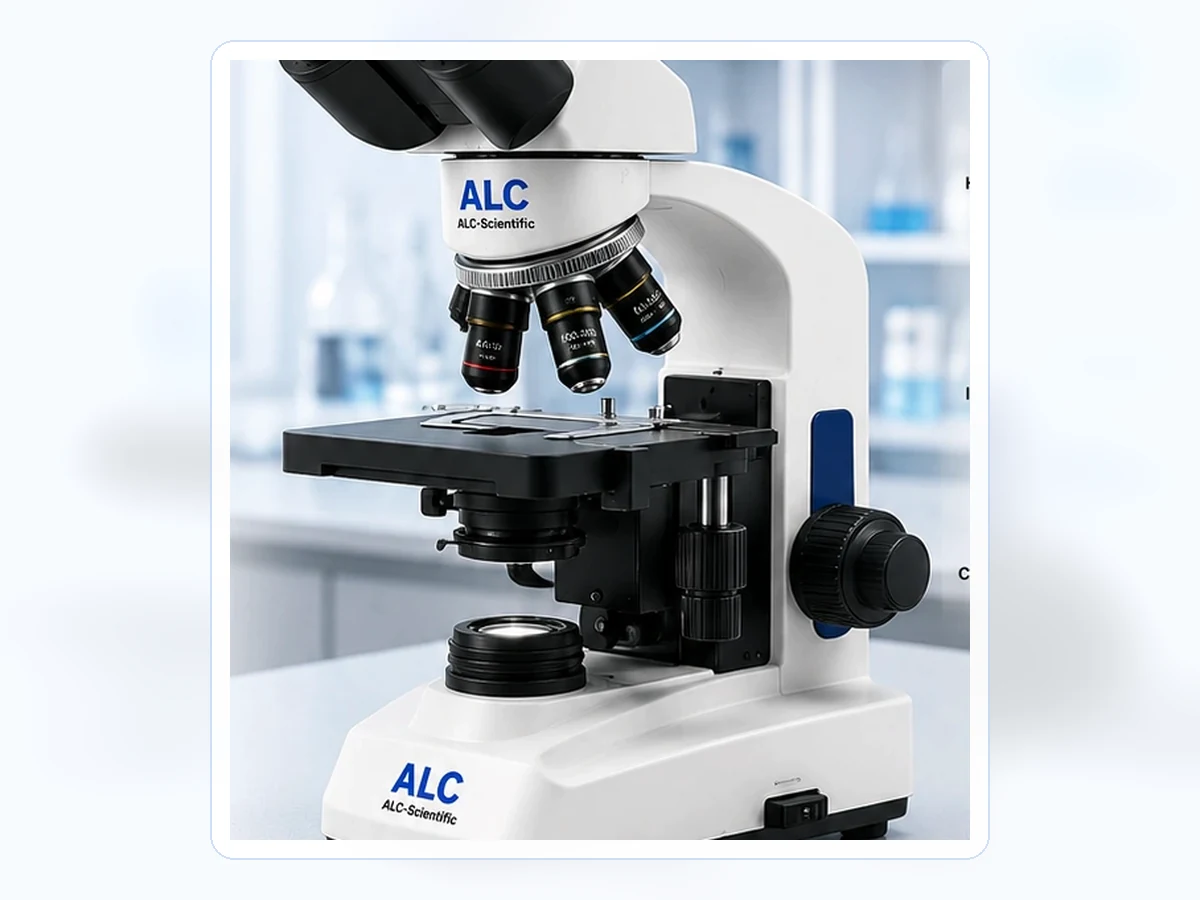
A compound microscope uses objective and eyepiece optics to magnify illuminated specimens for routine observation, teaching or documentation workflows. This page focuses on clinical and diagnostic observation, biology and microbiology education, and histology and pathology workflows.
The objective lens forms a magnified image of the illuminated specimen, and the eyepiece enlarges that image for observation. Resolution and contrast depend on the selected optics, illumination, specimen preparation and focusing technique.
Where Compound Microscope fits
Suitable measurements
Compound Microscope is commonly shortlisted for Clinical and diagnostic observation, Biology and microbiology education, and Histology and pathology workflows. These uses orient the Compound Microscope enquiry; suitability still depends on the exact model, method and site conditions.
Specify method, range and sample conditions
For Compound Microscope, the enquiry should document Specimen type, preparation method and required contrast and Objective set, magnification, numerical aperture and immersion needs. Acceptance values for the proposed Compound Microscope should come from the buyer's method, URS or tender rather than catalogue assumptions.
Confirm calibration and measurement evidence
Ask for the exact Compound Microscope model, measurement range, resolution or readability, stated accuracy or uncertainty where applicable, calibration method, included sensors or accessories, power requirements and datasheet revision.
Typical applications for Compound Microscope
Clinical and diagnostic observation.
Biology and microbiology education.
Histology and pathology workflows.
Research laboratories.
Routine specimen examination.
Selecting the right Compound Microscope
Application or load: Specimen type, preparation method and required contrast.
Required performance: Objective set, magnification, numerical aperture and immersion needs.
Configuration and compatibility: Illumination, condenser, stage movement and focusing controls.
Site, utilities and support: Camera port, image capture, measurement software and teaching requirements.
Operating limits and safety for Compound Microscope
Useful resolution depends on objective, condenser, illumination and specimen preparation.
Special contrast methods require compatible optical components.
Camera adapters and software must be matched to the selected trinocular or imaging configuration.
Documents to review for Compound Microscope
Use the preliminary Compound Microscope sheet to frame questions about objective set, magnification, numerical aperture and immersion needs, but replace it with the quotation-specific model document before tender submission or technical approval.
To prepare a model-level quotation for Compound Microscope, provide Specimen type, preparation method and required contrast; Objective set, magnification, numerical aperture and immersion needs; Illumination, condenser, stage movement and focusing controls; required quantity; delivery and installation location; and the technical evidence, training or service scope needed for approval.