Suitable workflows
Tube Roller is commonly shortlisted for Blood-tube mixing, Sample resuspension, and Hybridization. These uses orient the Tube Roller enquiry; suitability still depends on the exact model, method and site conditions.
 ALC-ScientificLaboratory SystemsQuote List Request a Quote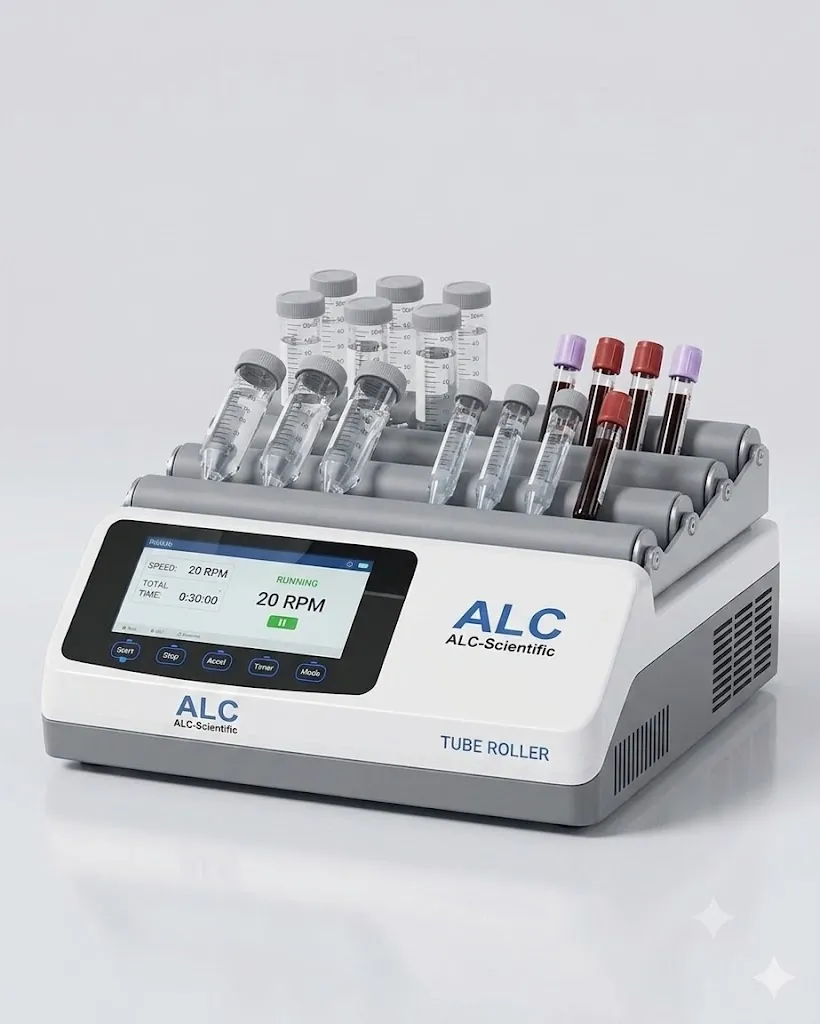
Mixing & Shaking
A tube roller rotates closed tubes, often with a gentle rocking action, to provide continuous low-shear mixing along the tube length. Relevant workflows include blood-tube mixing, sample resuspension, and hybridization.
Parallel rollers rotate the closed tubes and may add a gentle rocking action. This produces continuous low-shear mixing along the tube length.
Tube Roller is commonly shortlisted for Blood-tube mixing, Sample resuspension, and Hybridization. These uses orient the Tube Roller enquiry; suitability still depends on the exact model, method and site conditions.
For Tube Roller, the enquiry should document Tube diameter, length, count and closure type and Required rolling speed and optional rocking angle. Acceptance values for the proposed Tube Roller should come from the buyer's method, URS or tender rather than catalogue assumptions.
Ask for the exact Tube Roller model, vessel or sample range, load capacity, speed, motion or amplitude range, compatible tools, included accessories, control features and maintenance requirements.
Because Tube Roller selection includes roller spacing, platform length and total load, no orderable model specification is inferred from this page and the quotation must identify the applicable technical document.
How product information and approved technical documents are managed
To prepare a model-level quotation for Tube Roller, provide Tube diameter, length, count and closure type; Required rolling speed and optional rocking angle; Roller spacing, platform length and total load; required quantity; delivery and installation location; and the technical evidence, training or service scope needed for approval.
Related Products