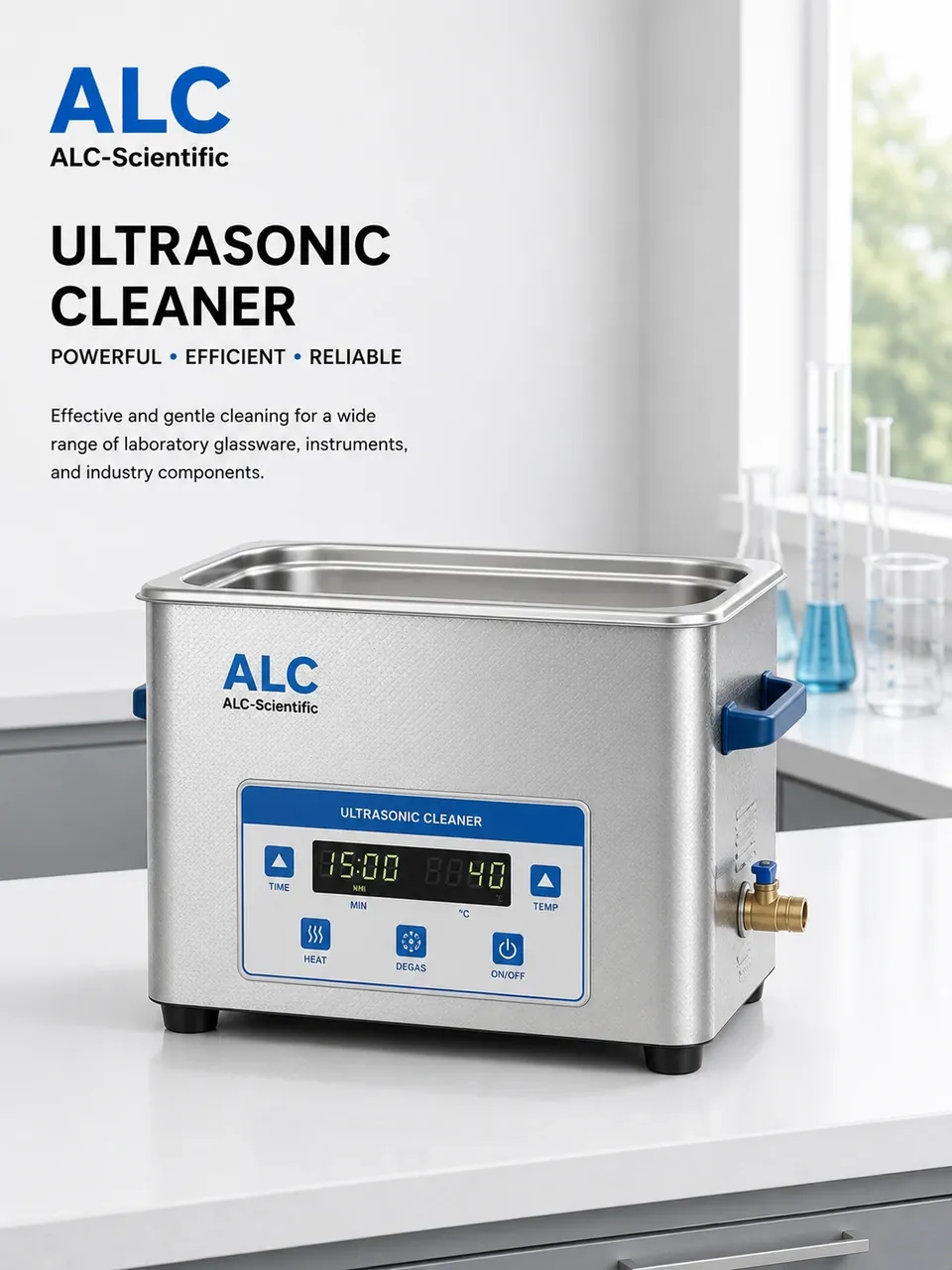
An ultrasonic cleaner uses cavitation in a liquid bath to help remove contamination from immersed compatible parts, vessels or tools. This page focuses on glassware and component cleaning, instrument-part cleaning, and degas and sample preparation.
How Ultrasonic Cleaner supports laboratory operations
Ultrasonic transducers create alternating pressure waves in the cleaning liquid. Cavitation bubbles form and collapse near immersed surfaces, helping dislodge contamination from accessible areas and recesses.
Where Ultrasonic Cleaner fits
Suitable workflows
Ultrasonic Cleaner is commonly shortlisted for Glassware and component cleaning, Instrument-part cleaning, and Degas and sample preparation. These uses orient the Ultrasonic Cleaner enquiry; suitability still depends on the exact model, method and site conditions.
Specify capacity and site conditions
For Ultrasonic Cleaner, the enquiry should document Part or vessel material, geometry and type of contamination and Tank dimensions, basket size and usable liquid volume. Acceptance values for the proposed Ultrasonic Cleaner should come from the buyer's method, URS or tender rather than catalogue assumptions.
Confirm utilities and supplied scope
Ask for the exact Ultrasonic Cleaner model, capacity or output, materials of construction, required utilities, drainage or ventilation needs, included accessories, installation scope and maintenance requirements.
Typical applications for Ultrasonic Cleaner
Glassware and component cleaning.
Instrument-part cleaning.
Degas and sample preparation.
Precision-part cleaning.
Selecting the right Ultrasonic Cleaner
Application or load: Part or vessel material, geometry and type of contamination.
Required performance: Tank dimensions, basket size and usable liquid volume.
Configuration and compatibility: Ultrasonic frequency, power control and need for sweep or degas modes.
Site, utilities and support: Heating, timer, cleaning chemistry, drain and lid requirements.
Operating limits and safety for Ultrasonic Cleaner
Do not operate the bath without the required liquid level.
Use a basket and avoid placing parts directly on the tank floor.
Select cleaning chemistry compatible with the tank, load and hazards.
Allow the bath to cool and disconnect power before draining or cleaning.
Documents to review for Ultrasonic Cleaner
For Ultrasonic Cleaner, information about tank dimensions, basket size and usable liquid volume remains qualitative until a quotation ties it to an exact model, included scope and controlled technical document.
Product information scope
Ultrasonic Cleaner selection guidance; the exact model is confirmed in the quotation
Model reference
Assigned for Ultrasonic Cleaner in the quotation or approved datasheet
To prepare a model-level quotation for Ultrasonic Cleaner, provide Part or vessel material, geometry and type of contamination; Tank dimensions, basket size and usable liquid volume; Ultrasonic frequency, power control and need for sweep or degas modes; required quantity; delivery and installation location; and the technical evidence, training or service scope needed for approval.