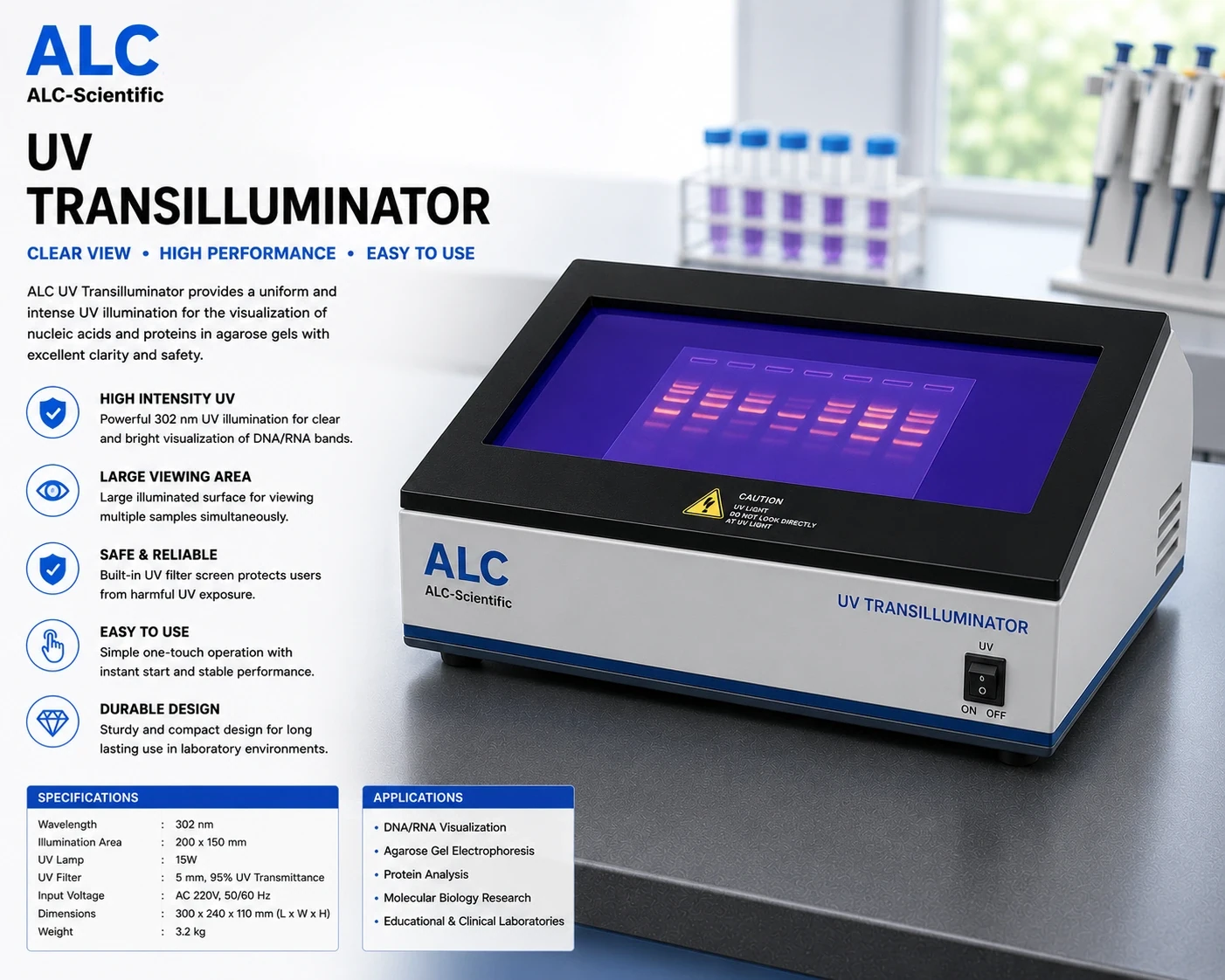
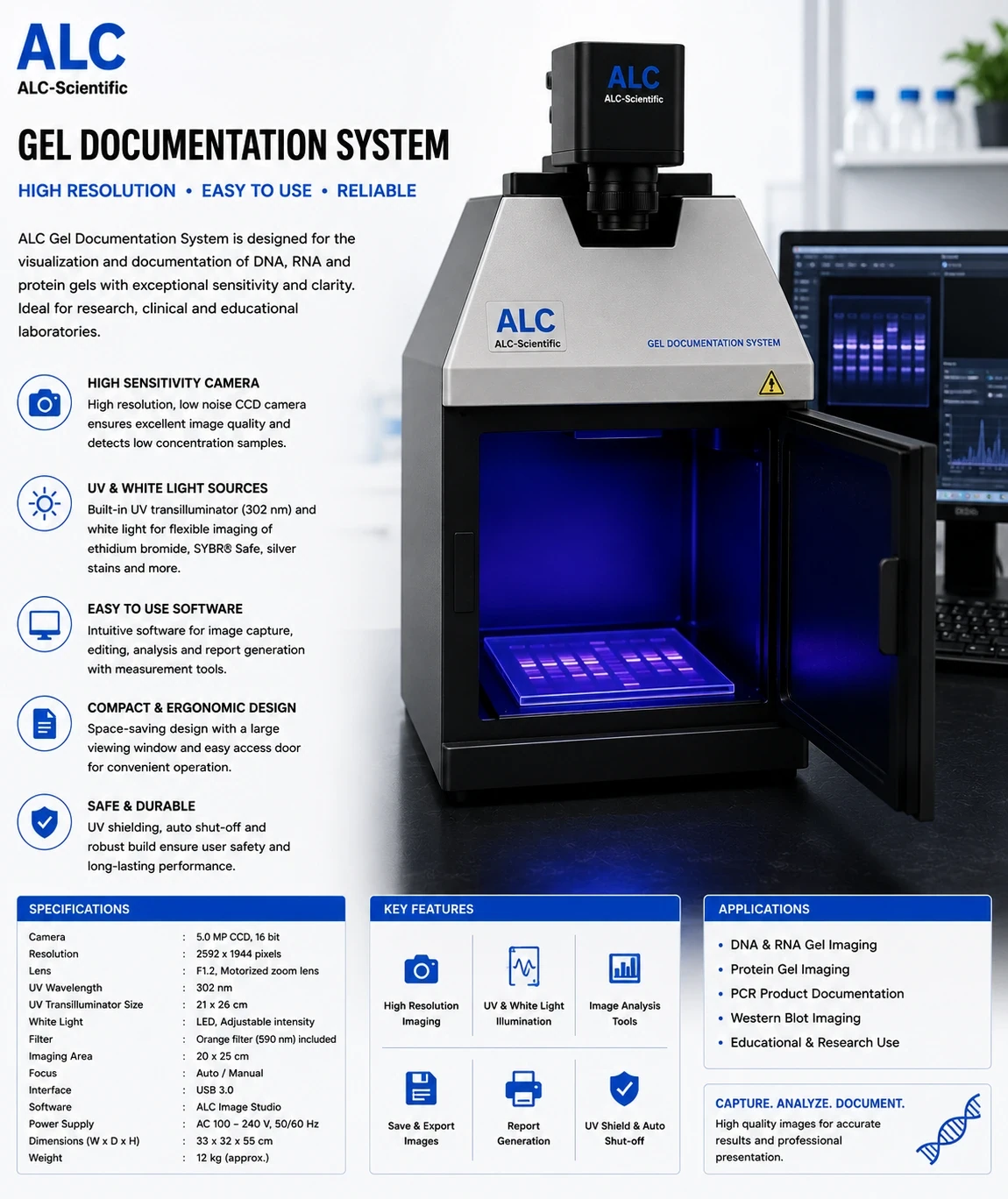
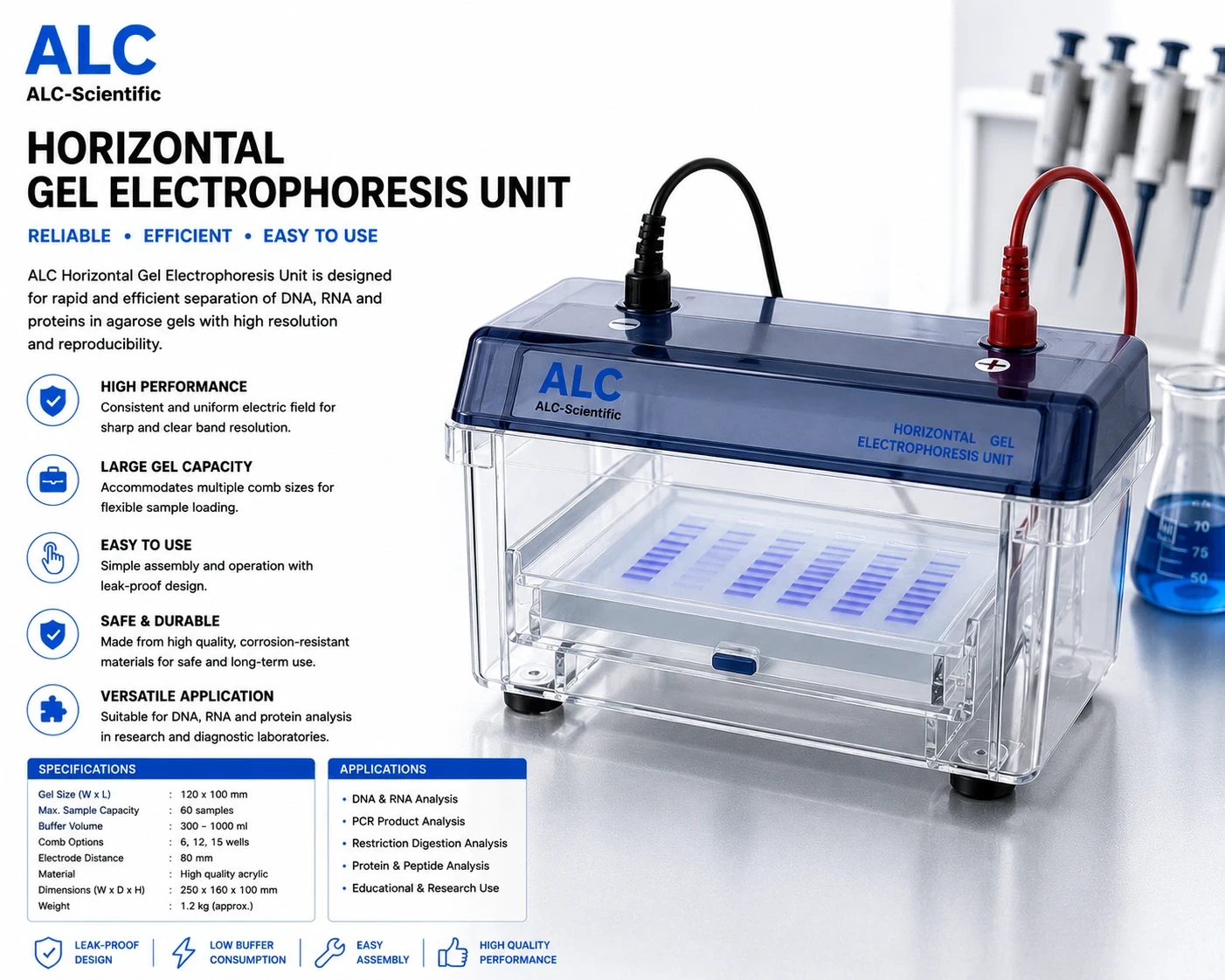
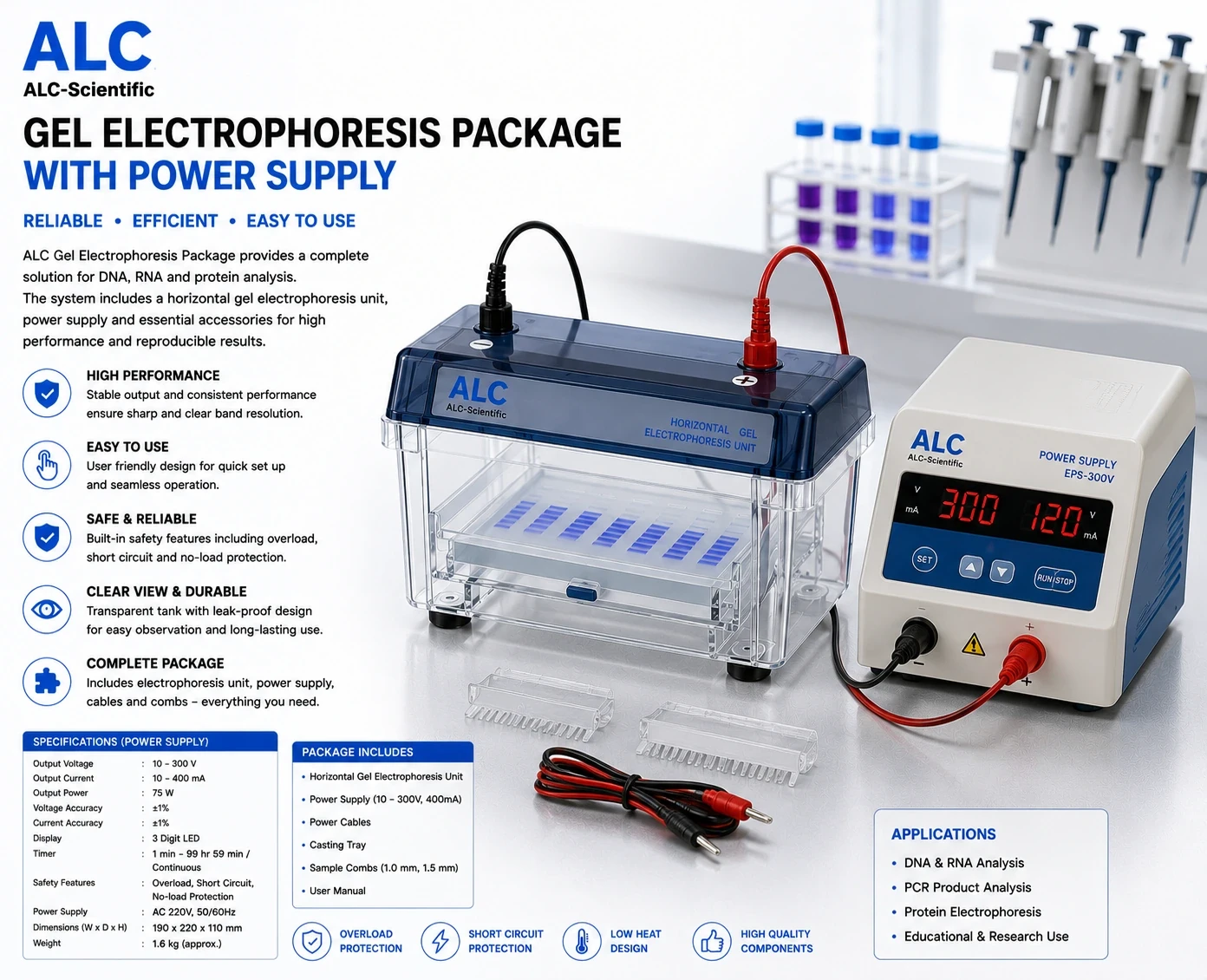
A UV transilluminator illuminates compatible fluorescent gel bands for viewing or documentation and requires wavelength-appropriate eye, skin and sample protection. Typical uses include DNA and RNA band visualisation, agarose gel electrophoresis review, and PCR-product and restriction-digest checking.
The illumination source directs ultraviolet or other specified light through the gel. Fluorescent labels emit visible light, allowing bands to be viewed or documented with suitable eye and skin protection.
Where UV Transilluminator fits
Suitable workflows
UV Transilluminator is commonly shortlisted for DNA and RNA band visualisation, Agarose gel electrophoresis review, and PCR-product and restriction-digest checking. These uses orient the UV Transilluminator enquiry; suitability still depends on the exact model, method and site conditions.
Specify samples and compatibility
For UV Transilluminator, the enquiry should document Stain or fluorophore and compatible illumination wavelength and Gel dimensions and required viewing area. Acceptance values for the proposed UV Transilluminator should come from the buyer's method, URS or tender rather than catalogue assumptions.
Confirm accessories and documentation
Ask for the exact UV Transilluminator model, sample format, compatible consumables, power supply, optical or software requirements where applicable, included accessories and the relevant verification or calibration documents.
Typical applications for UV Transilluminator
DNA and RNA band visualisation.
Agarose gel electrophoresis review.
PCR-product and restriction-digest checking.
Location of bands before documentation or excision.
Compatible fluorescent protein-gel applications.
Molecular-biology teaching and demonstration.
Selecting the right UV Transilluminator
Application or load: Stain or fluorophore and compatible illumination wavelength.
Required performance: Gel dimensions and required viewing area.
Configuration and compatibility: Protective shield, viewing hood and exposure-control method.
Site, utilities and support: Camera or gel-documentation compatibility and band-excision workflow.
Operating limits and safety for UV Transilluminator
Ultraviolet exposure can injure eyes and skin; the supplied shield and appropriate personal protection must be used.
Illumination wavelength must be compatible with the stain, imaging method and required sample recovery.
UV exposure can damage nucleic acids and should be limited when downstream recovery is planned.
Documents to review for UV Transilluminator
The current UV Transilluminator download may help compare stain or fluorophore and compatible illumination wavelength; the accepted offer must separately identify the model, revision, included accessories and controlled technical evidence.
To prepare a model-level quotation for UV Transilluminator, provide Stain or fluorophore and compatible illumination wavelength; Gel dimensions and required viewing area; Protective shield, viewing hood and exposure-control method; required quantity; delivery and installation location; and the technical evidence, training or service scope needed for approval.