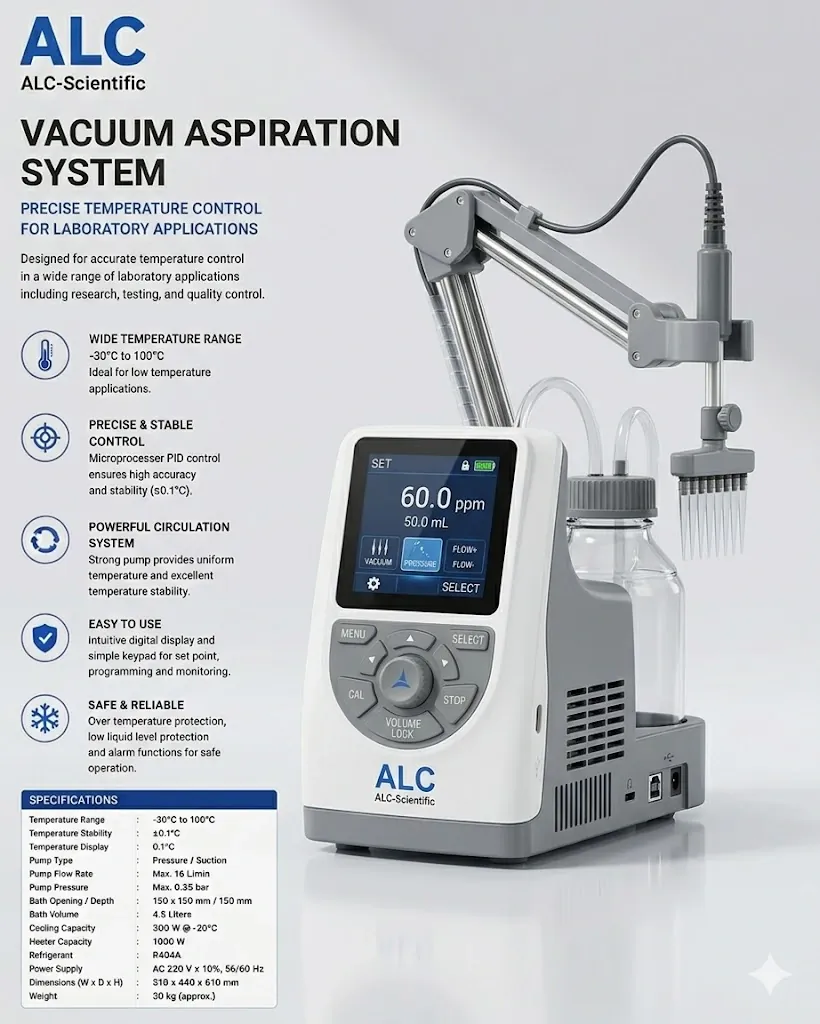
A vacuum aspiration system draws liquid through tubing into a collection vessel for compatible removal tasks, with overflow protection and waste containment built into the working method. Relevant workflows include cell-culture media removal, supernatant aspiration, and microplate washing support.
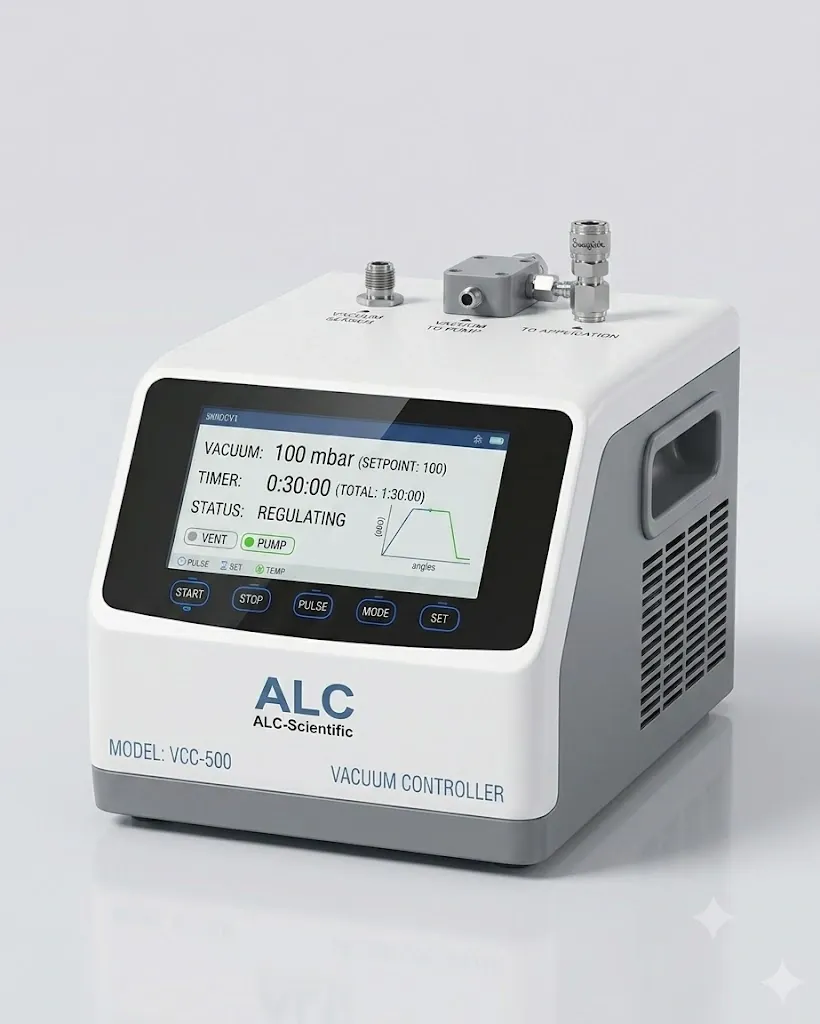
Illustrative product image. Final appearance, controls and included accessories depend on the quoted configuration.
How Vacuum Aspiration System controls aspiration or vacuum
A vacuum source creates negative pressure that draws liquid through the handpiece and tubing into a collection bottle. Overflow protection, suitable containment and correct waste handling are essential for safe operation.
Where Vacuum Aspiration System fits
Suitable workflows
Vacuum Aspiration System is commonly shortlisted for Cell-culture media removal, Supernatant aspiration, and Microplate washing support. These uses orient the Vacuum Aspiration System enquiry; suitability still depends on the exact model, method and site conditions.
Specify vessels, flow and pressure needs
For Vacuum Aspiration System, the enquiry should document Liquid type, biological or chemical risk and aspiration task and Required vacuum range and control at the handpiece. Acceptance values for the proposed Vacuum Aspiration System should come from the buyer's method, URS or tender rather than catalogue assumptions.
Confirm tubing, traps and control range
Ask for the exact Vacuum Aspiration System model, flow and vacuum range, compatible tubing and vessels, trap or filter arrangement, control method, included accessories and cleaning or maintenance requirements.
Typical applications for Vacuum Aspiration System
Cell-culture media removal.
Supernatant aspiration.
Microplate washing support.
Biological liquid-waste collection.
Selecting the right Vacuum Aspiration System
Application or load: Liquid type, biological or chemical risk and aspiration task.
Required performance: Required vacuum range and control at the handpiece.
Configuration and compatibility: Collection-bottle capacity, material and secondary containment.
Site, utilities and support: Overflow protection, hydrophobic filter, tubing, disinfection and waste disposal.
Operating limits and safety for Vacuum Aspiration System
Collection bottles, overflow protection, tubing and filters must be compatible with the liquid and risk assessment.
Biological or hazardous waste requires an approved containment and disposal procedure.
Vacuum should be released safely before opening the collection path.
Documents to review for Vacuum Aspiration System
For Vacuum Aspiration System, information about collection-bottle capacity, material and secondary containment remains qualitative until a quotation ties it to an exact model, included scope and controlled technical document.
Product information scope
Vacuum Aspiration System selection guidance; the exact model is confirmed in the quotation
Model reference
Assigned for Vacuum Aspiration System in the quotation or approved datasheet
Supply responsibility
Must be stated for the quoted Vacuum Aspiration System
Technical evidence
Revision-controlled Vacuum Aspiration System document required
To prepare a model-level quotation for Vacuum Aspiration System, provide Liquid type, biological or chemical risk and aspiration task; Required vacuum range and control at the handpiece; Collection-bottle capacity, material and secondary containment; required quantity; delivery and installation location; and the technical evidence, training or service scope needed for approval.