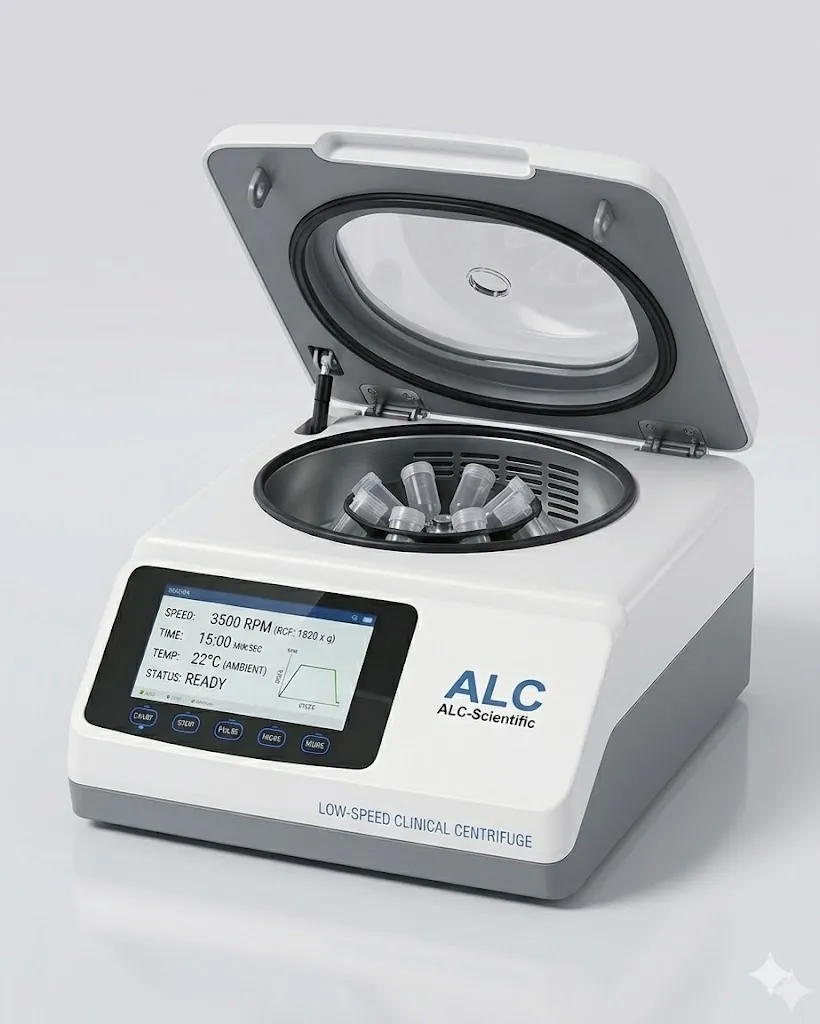
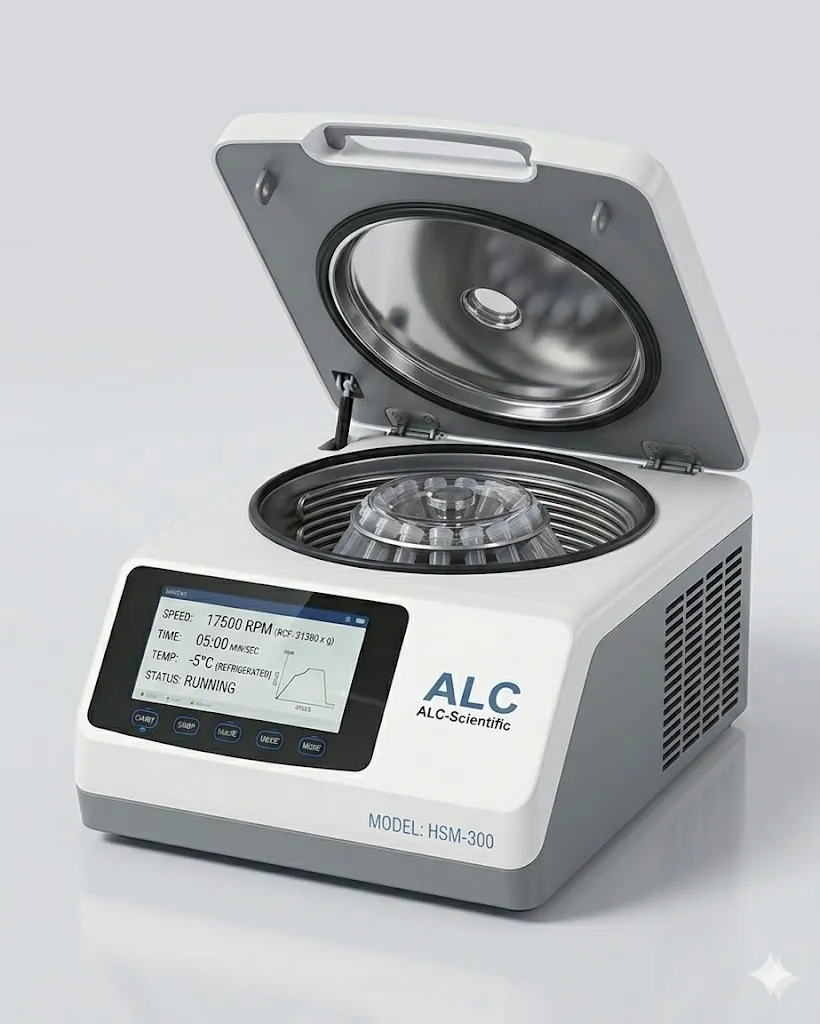
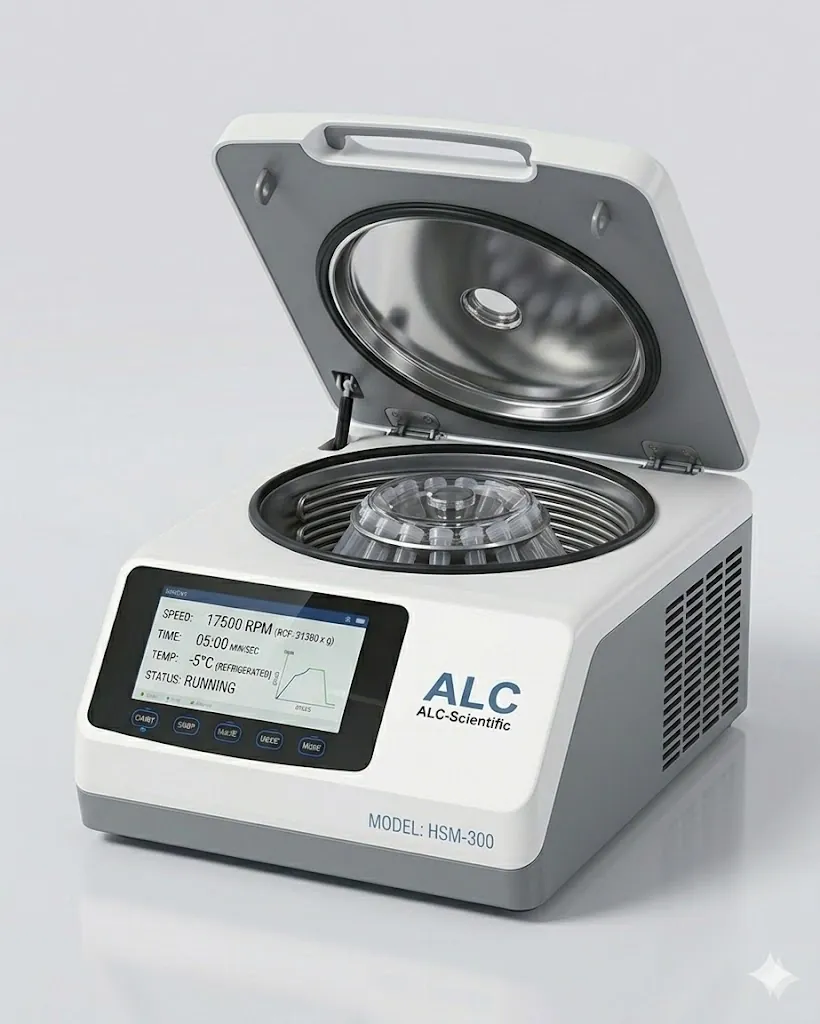
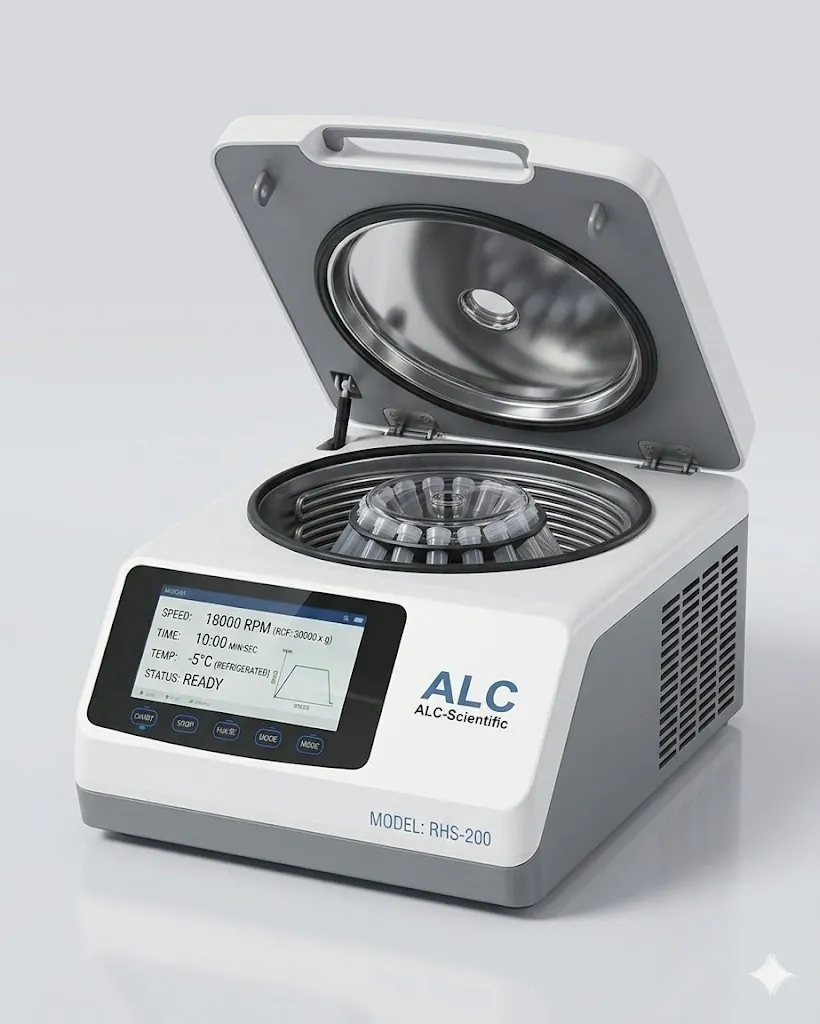
A low-speed clinical centrifuge separates compatible tubes in a rated rotor for routine protocols where tube format, RCF, balance and lid protection matter more than headline RPM. This page focuses on serum and plasma preparation, urine sediment preparation, and prp or routine blood workflows.
How Low-Speed Clinical Centrifuge separates samples
Routine clinical tubes are rotated at controlled low-to-moderate speed so cells or other dense components sediment from the liquid phase. Correct adapters, balanced loading and method-specific time and RCF are essential.
Where Low-Speed Clinical Centrifuge fits
Suitable workflows
Low-Speed Clinical Centrifuge is commonly shortlisted for Serum and plasma preparation, Urine sediment preparation, and PRP or routine blood workflows. These uses orient the Low-Speed Clinical Centrifuge enquiry; suitability still depends on the exact model, method and site conditions.
Specify rotor, vessels and RCF
For Low-Speed Clinical Centrifuge, the enquiry should document Collection-tube format, filled volume, positions needed per run and expected daily throughput and Required RCF rather than RPM alone. Acceptance values for the proposed Low-Speed Clinical Centrifuge should come from the buyer's method, URS or tender rather than catalogue assumptions.
Confirm the complete centrifuge package
Ask for the exact Low-Speed Clinical Centrifuge model, rotor code, maximum RCF, vessel capacity and compatibility, control range, safety features, included accessories and the applicable test or calibration documents.
Typical applications for Low-Speed Clinical Centrifuge
Before applying Low-Speed Clinical Centrifuge to serum and plasma preparation, compare the offered model and its documents with the laboratory method, installation and risk controls.
Serum and plasma preparation.
Urine sediment preparation.
PRP or routine blood workflows.
Teaching laboratories.
Selecting the right Low-Speed Clinical Centrifuge
Application or load: Collection-tube format, filled volume, positions needed per run and expected daily throughput.
Required performance: Required RCF rather than RPM alone.
Configuration and compatibility: Swing-bucket or fixed-angle rotor, carriers and adapters.
Site, utilities and support: Lid lock, imbalance detection, timer, braking and cleaning access.
Documents to review for Low-Speed Clinical Centrifuge
Because Low-Speed Clinical Centrifuge selection includes required RCF rather than RPM alone, no orderable model specification is inferred from this page and the quotation must identify the applicable technical document.
Product information scope
Low-Speed Clinical Centrifuge selection guidance; the exact model is confirmed in the quotation
Model reference
Assigned for Low-Speed Clinical Centrifuge in the quotation or approved datasheet
Supply responsibility
Must be stated for the quoted Low-Speed Clinical Centrifuge
Request a quotation for Low-Speed Clinical Centrifuge
To prepare a model-level quotation for Low-Speed Clinical Centrifuge, provide Collection-tube format, filled volume, positions needed per run and expected daily throughput; Required RCF rather than RPM alone; Swing-bucket or fixed-angle rotor, carriers and adapters; required quantity; delivery and installation location; and the technical evidence, training or service scope needed for approval.