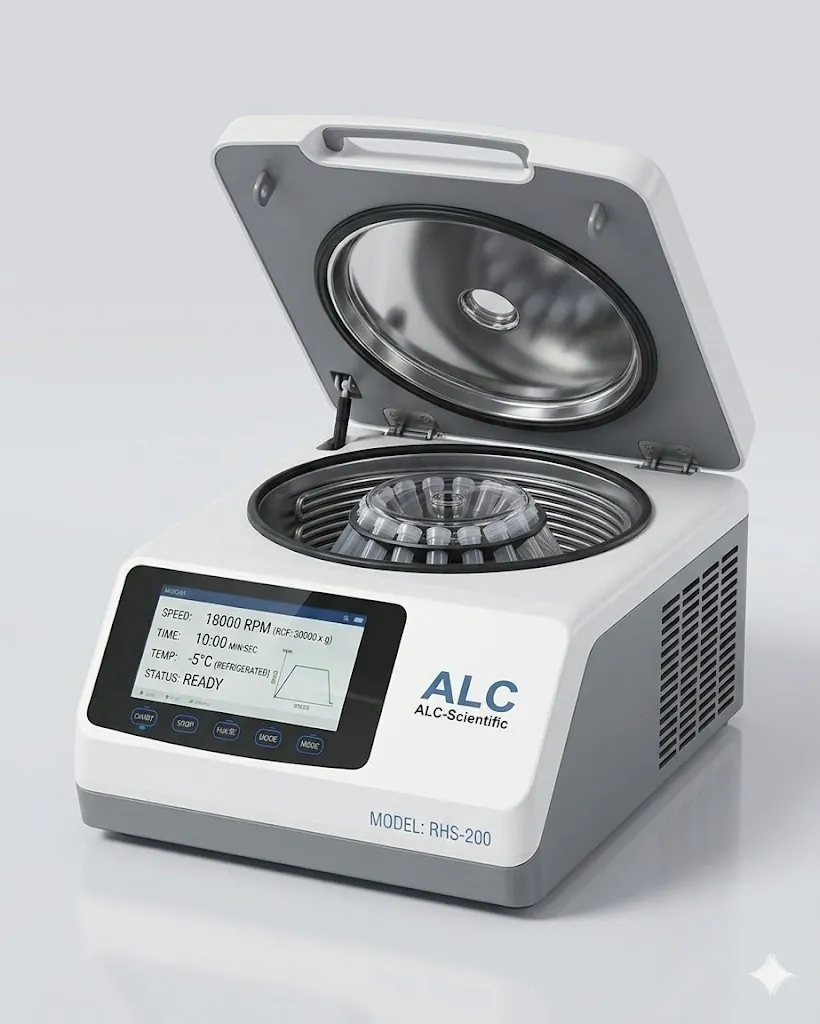
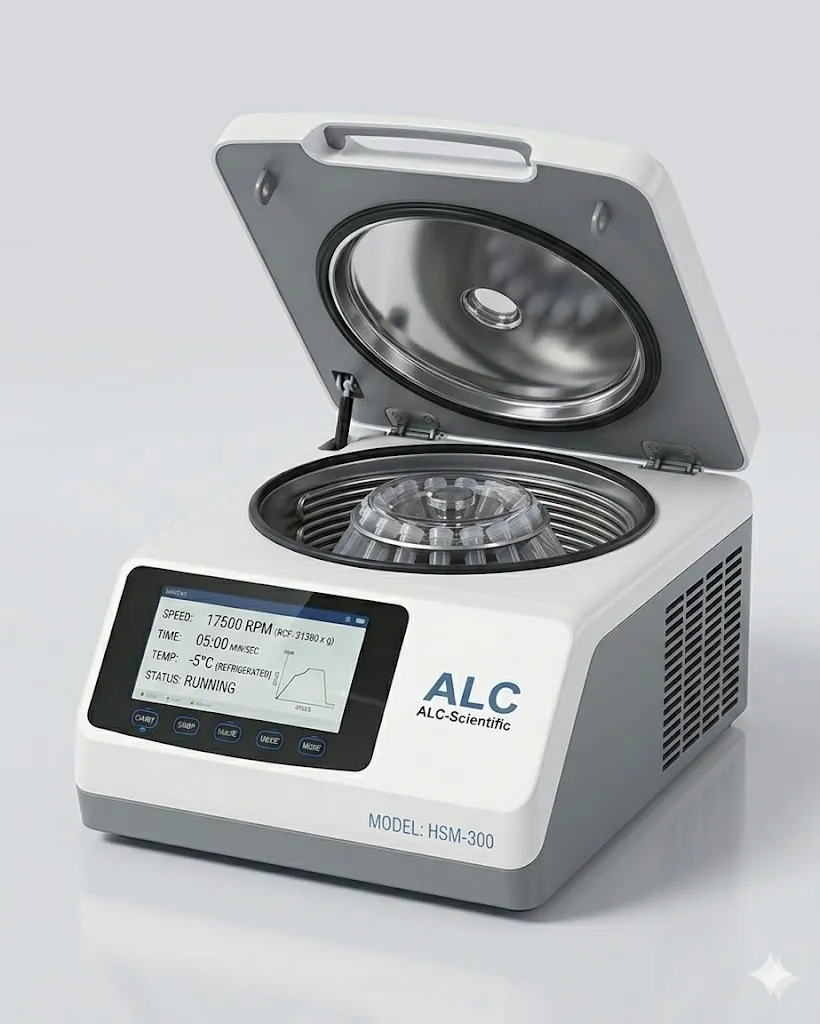
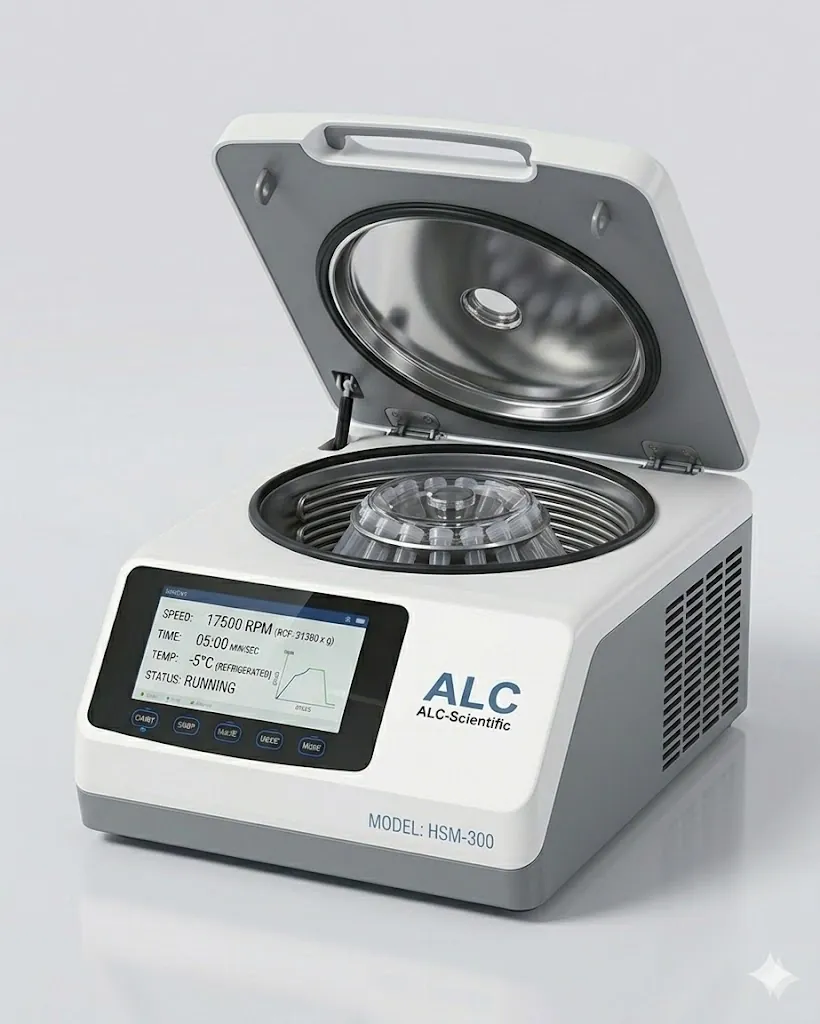
A refrigerated high-speed centrifuge combines rotor-based high-RCF separation with chamber temperature control for protocols that are sensitive to heat generated during a run. Typical enquiry contexts include nucleic-acid and protein workflows, cell and organelle separation, and temperature-sensitive precipitation.
How Refrigerated High-Speed Centrifuge separates samples
The drive rotates the rotor while the refrigeration system manages chamber temperature during high-speed separation. Tube format, rotor rating, RCF, run time and temperature must be matched to the sample method, with opposing loads balanced before each run.
Where Refrigerated High-Speed Centrifuge fits
Suitable workflows
Refrigerated High-Speed Centrifuge is commonly shortlisted for Nucleic-acid and protein workflows, Cell and organelle separation, and Temperature-sensitive precipitation. These uses orient the Refrigerated High-Speed Centrifuge enquiry; suitability still depends on the exact model, method and site conditions.
Specify rotor, vessels and RCF
For Refrigerated High-Speed Centrifuge, the enquiry should document Tube format, fill volume, sample count and protocol and Required RCF with the selected rotor and run time. Acceptance values for the proposed Refrigerated High-Speed Centrifuge should come from the buyer's method, URS or tender rather than catalogue assumptions.
Confirm the complete centrifuge package
Ask for the exact Refrigerated High-Speed Centrifuge model, rotor code, maximum RCF, vessel capacity and compatibility, control range, safety features, included accessories and the applicable test or calibration documents.
Typical applications for Refrigerated High-Speed Centrifuge
Using Refrigerated High-Speed Centrifuge for nucleic-acid and protein workflows is a model-level decision rather than a catalogue assumption, particularly where the work is regulated, hazardous or validated.
Nucleic-acid and protein workflows.
Cell and organelle separation.
Temperature-sensitive precipitation.
Clinical research.
Selecting the right Refrigerated High-Speed Centrifuge
Application or load: Tube format, fill volume, sample count and protocol.
Required performance: Required RCF with the selected rotor and run time.
Configuration and compatibility: Rotor type, adapters, aerosol containment and tube rating.
Site, utilities and support: Temperature range, precooling, acceleration, braking and imbalance protection.
Operating limits and safety for Refrigerated High-Speed Centrifuge
Only approved rotors, adapters and tubes may be used within their stated load and force limits.
Opposing loads must be balanced and the rotor inspected and maintained according to the supplied instructions.
Temperature control does not replace sample-specific biosafety or containment measures.
Documents to review for Refrigerated High-Speed Centrifuge
The current Refrigerated High-Speed Centrifuge download may help compare tube format, fill volume, sample count and protocol; the accepted offer must separately identify the model, revision, included accessories and controlled technical evidence.
Request a quotation for Refrigerated High-Speed Centrifuge
To prepare a model-level quotation for Refrigerated High-Speed Centrifuge, provide Tube format, fill volume, sample count and protocol; Required RCF with the selected rotor and run time; Rotor type, adapters, aerosol containment and tube rating; required quantity; delivery and installation location; and the technical evidence, training or service scope needed for approval.