Browse ALC-Scientific product families across clean air, sterilisation, weighing, centrifugation, sample preparation and OEM-ready laboratory systems.
Explore laboratory equipment by product family, workflow and application. Final model-specific specifications are provided in the approved technical datasheet and quotation.
82 products
Mixing & Shaking
B.O.D. Shaker Incubator
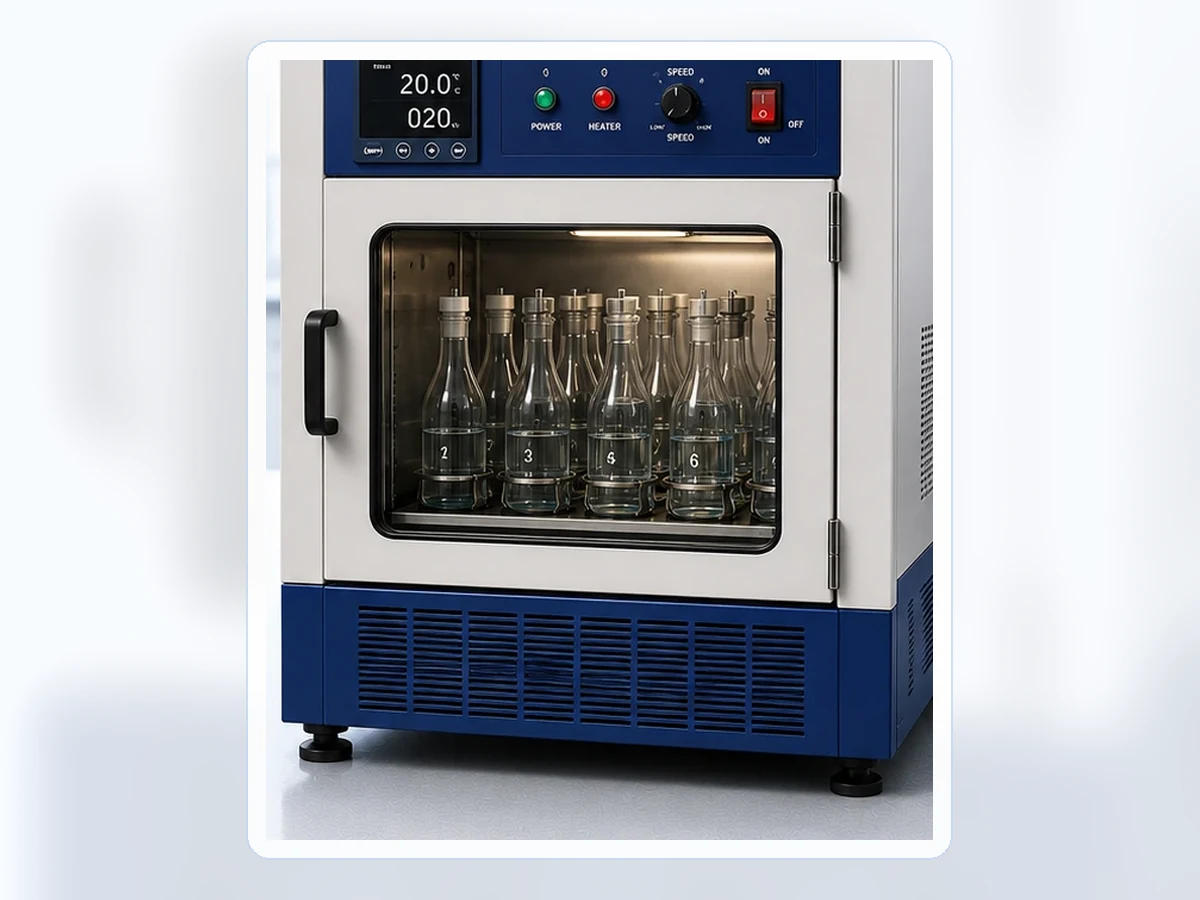
A B.O.D. shaker incubator combines controlled chamber temperature with orbital agitation for vessels secured on a suitable platform. Buyers commonly evaluate it for biological oxygen demand testing, microbial culture and incubation, and environmental and water-analysis laboratories.
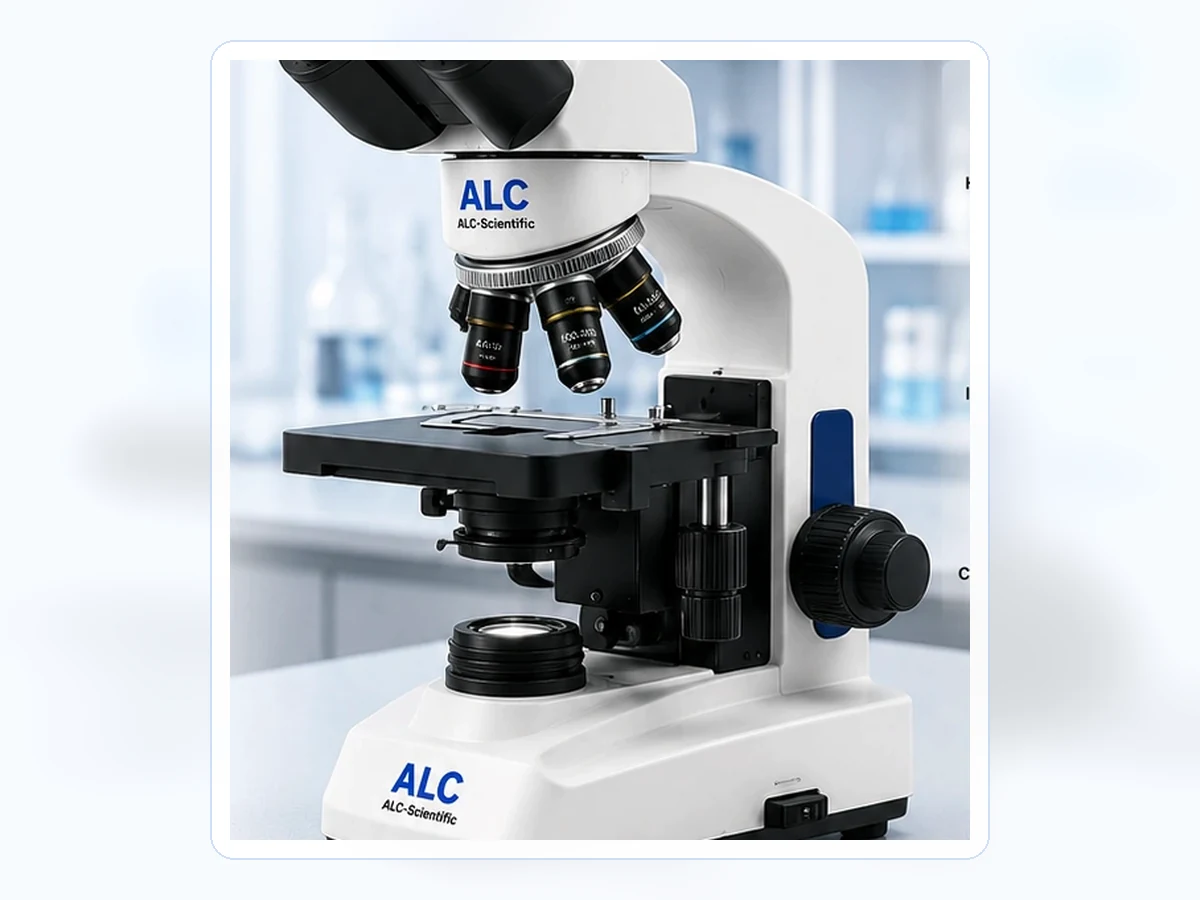
A compound microscope uses objective and eyepiece optics to magnify illuminated specimens for routine observation, teaching or documentation workflows. The current product-family description covers clinical and diagnostic observation, biology and microbiology education, and histology and pathology workflows.
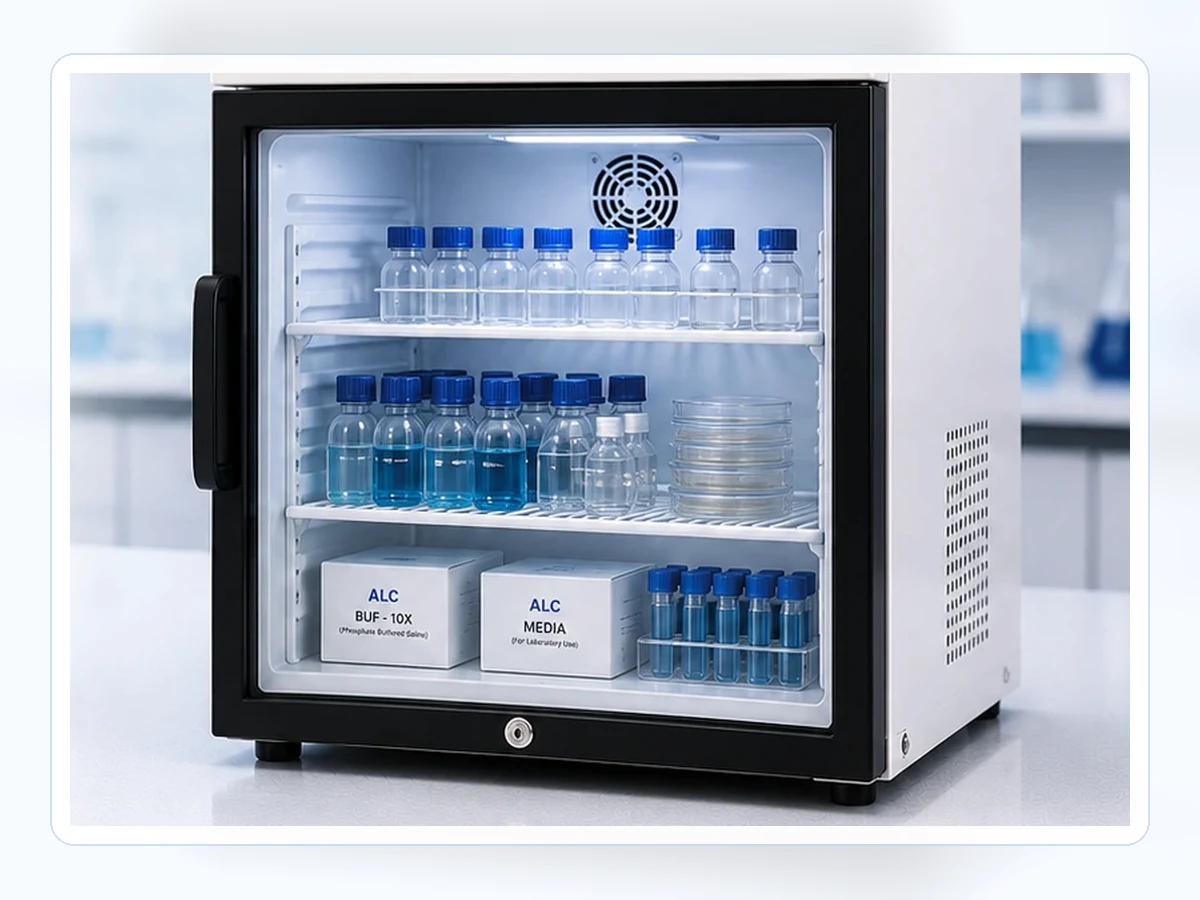
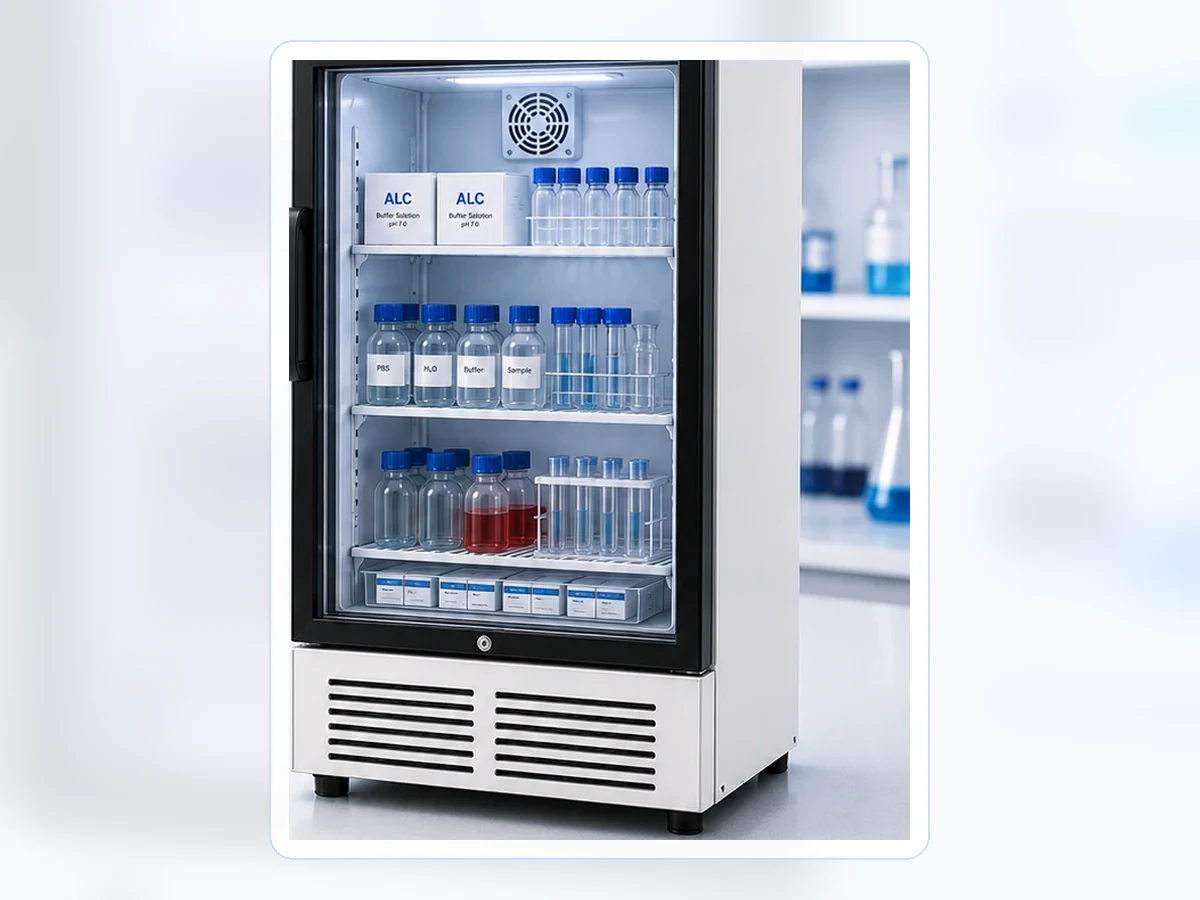
A mini cooler provides compact temperature-controlled storage or short-term cooling for compatible laboratory materials, subject to the supplied model and monitoring arrangement. Typical enquiry contexts include storage of laboratory reagents, short-term sample storage, and media and solution storage.
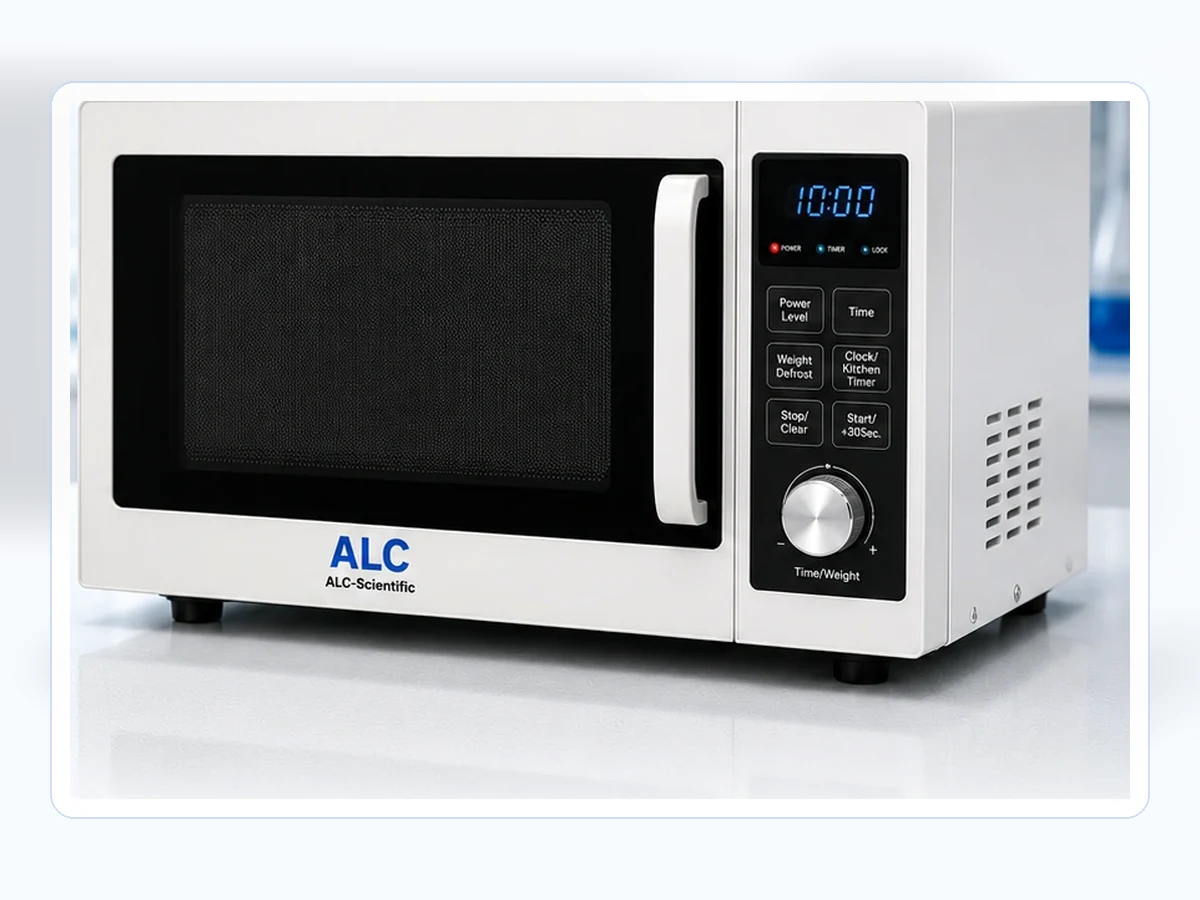
A laboratory microwave oven applies microwave energy to compatible materials for controlled heating tasks; it should not be presented as a validated steriliser without model- and process-specific evidence. Buyers commonly evaluate it for sample warming where method-approved, media preparation, and laboratory drying or heating trials.
A laboratory refrigerator maintains compatible materials in a controlled chilled cabinet, with shelf loading, door openings, air circulation and ambient conditions affecting recovery and uniformity. Typical enquiry contexts include reagent storage, sample and media storage, and pharmaceutical laboratory storage.
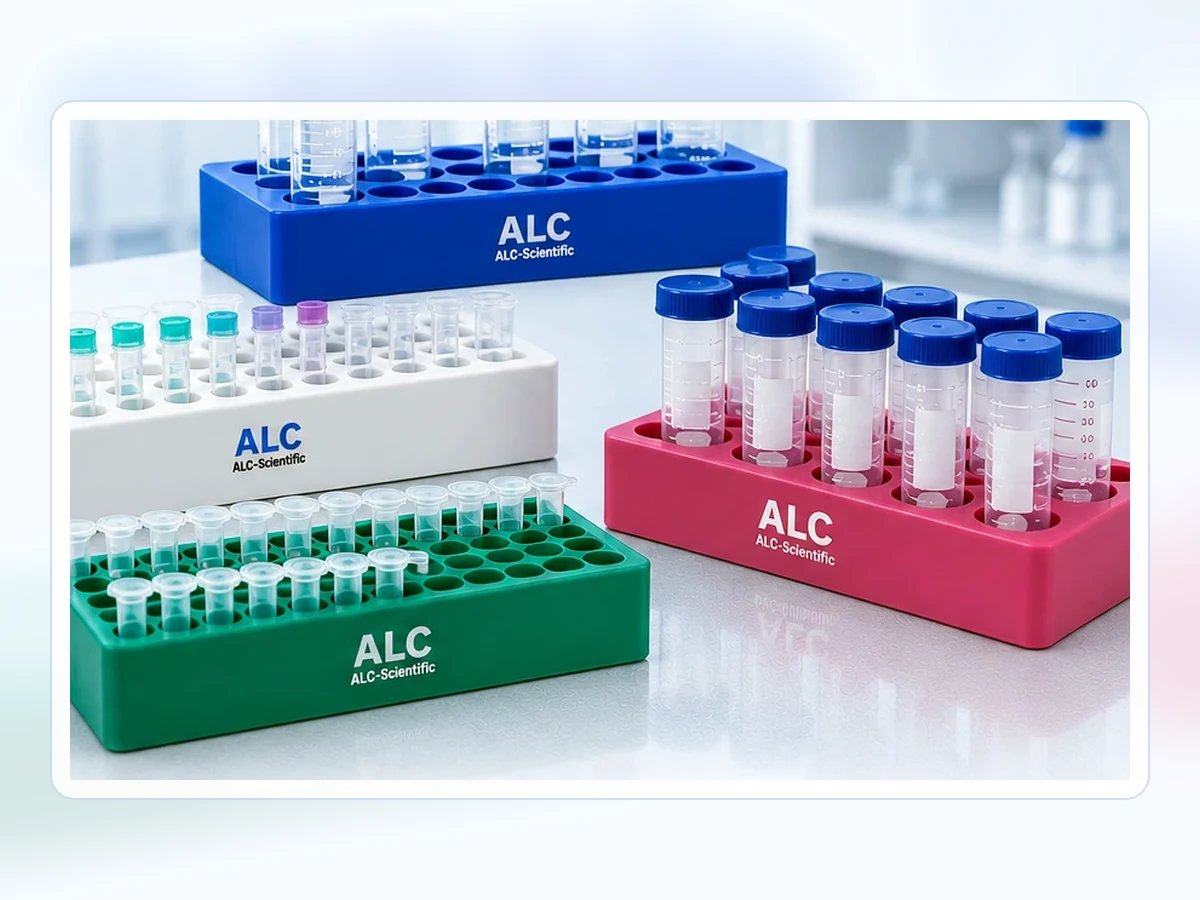
Tissue-culture racks organise and support compatible culture vessels or laboratory containers, with material, spacing, load and cleaning method selected for the workflow. Buyers commonly evaluate it for tissue-culture laboratories, molecular biology, and microbiology.
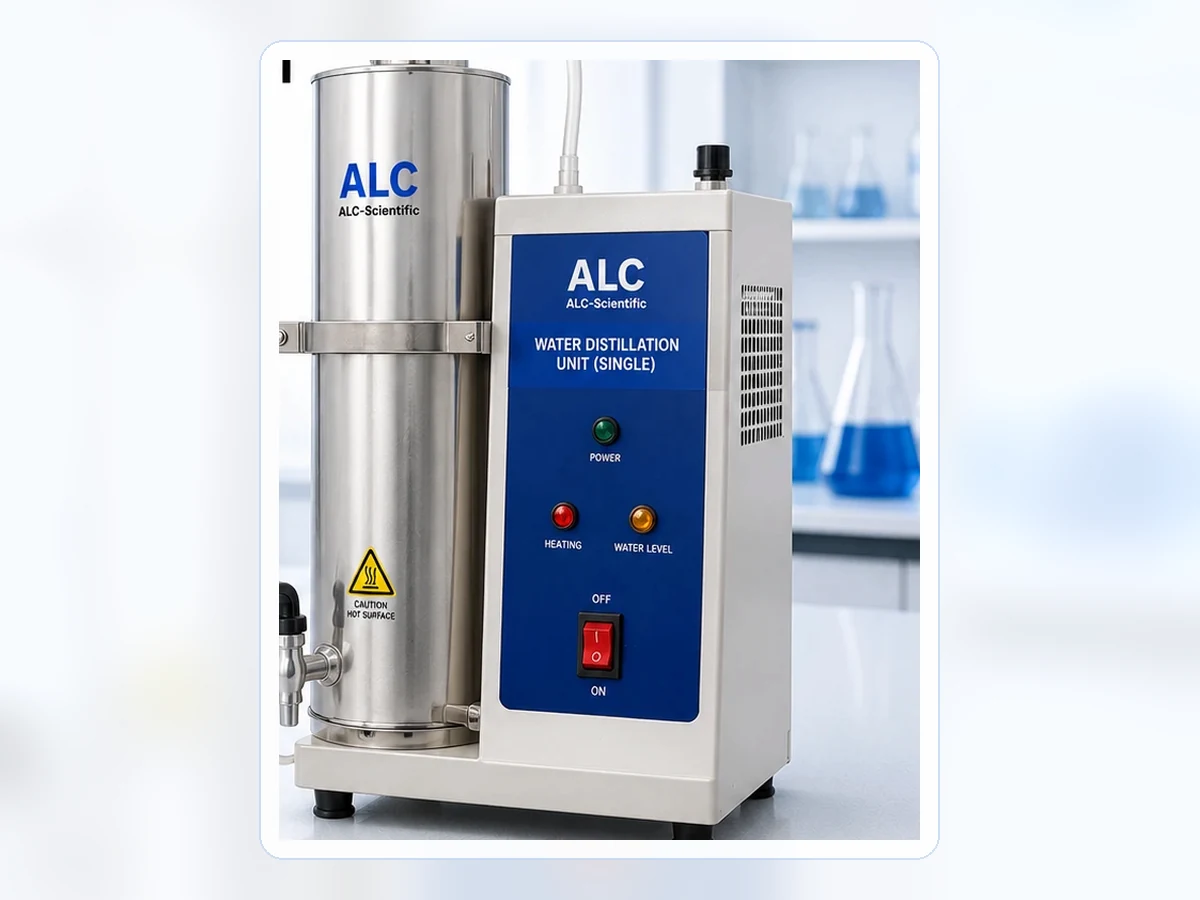
A single-stage water distillation unit boils feed water and condenses the vapour to produce distilled water for workflows that accept the resulting water quality. Relevant workflows include general laboratory water preparation, media and reagent preparation where suitable, and rinsing and cleaning workflows.
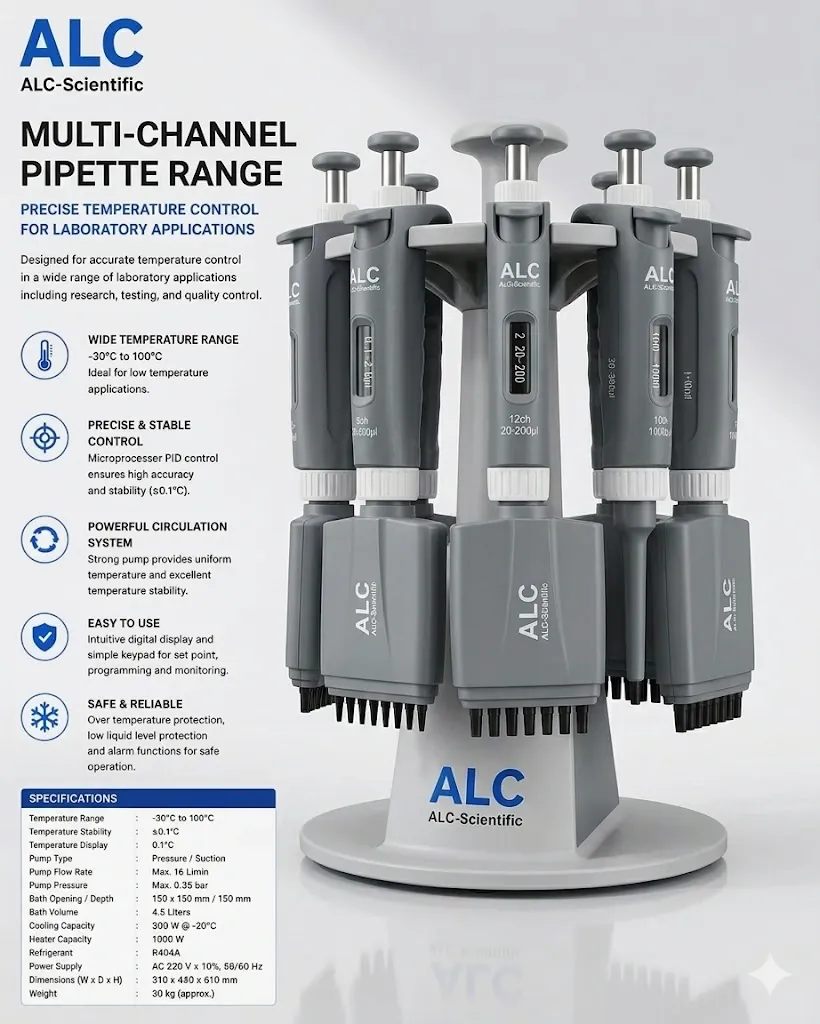
A multichannel pipette transfers liquid across several wells in parallel, making channel spacing, plate format, tip fit, volume range and operator technique central to selection. Buyers commonly evaluate it for microplate filling, elisa workflows, and PCR setup.
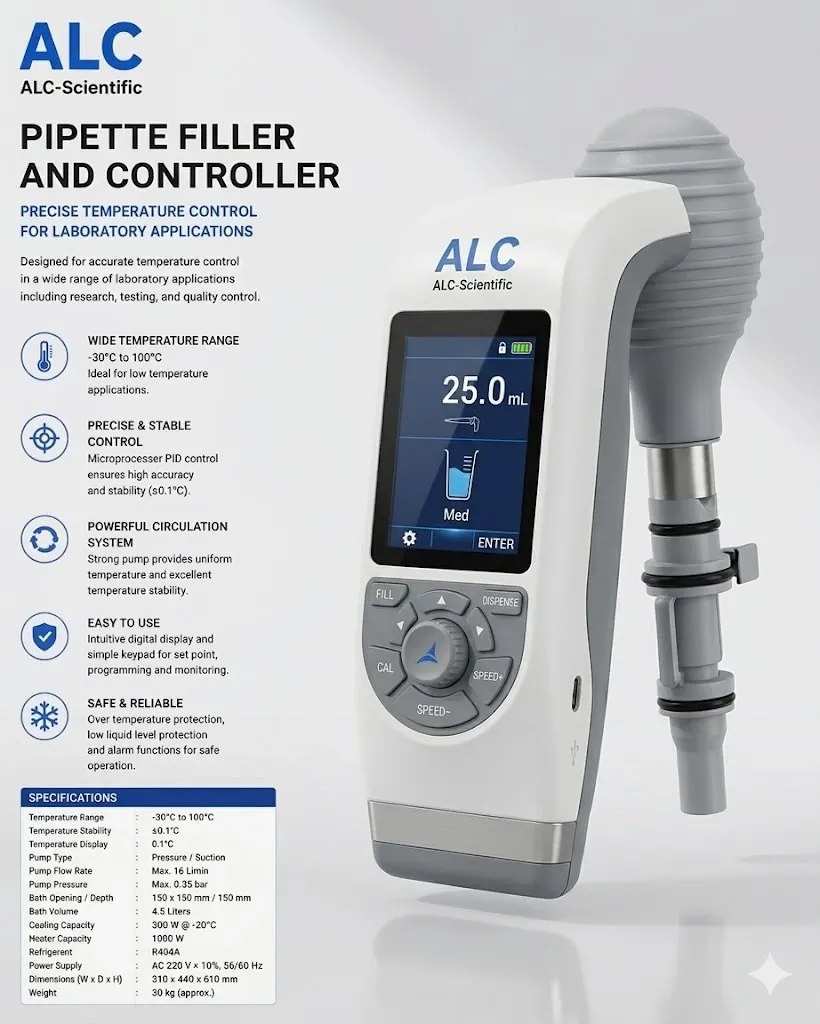
A pipette filler or controller assists aspiration and dispensing through compatible serological or volumetric pipettes while reducing the need for manual suction. Relevant workflows include cell-culture media transfer, buffer preparation, and clinical liquid handling.
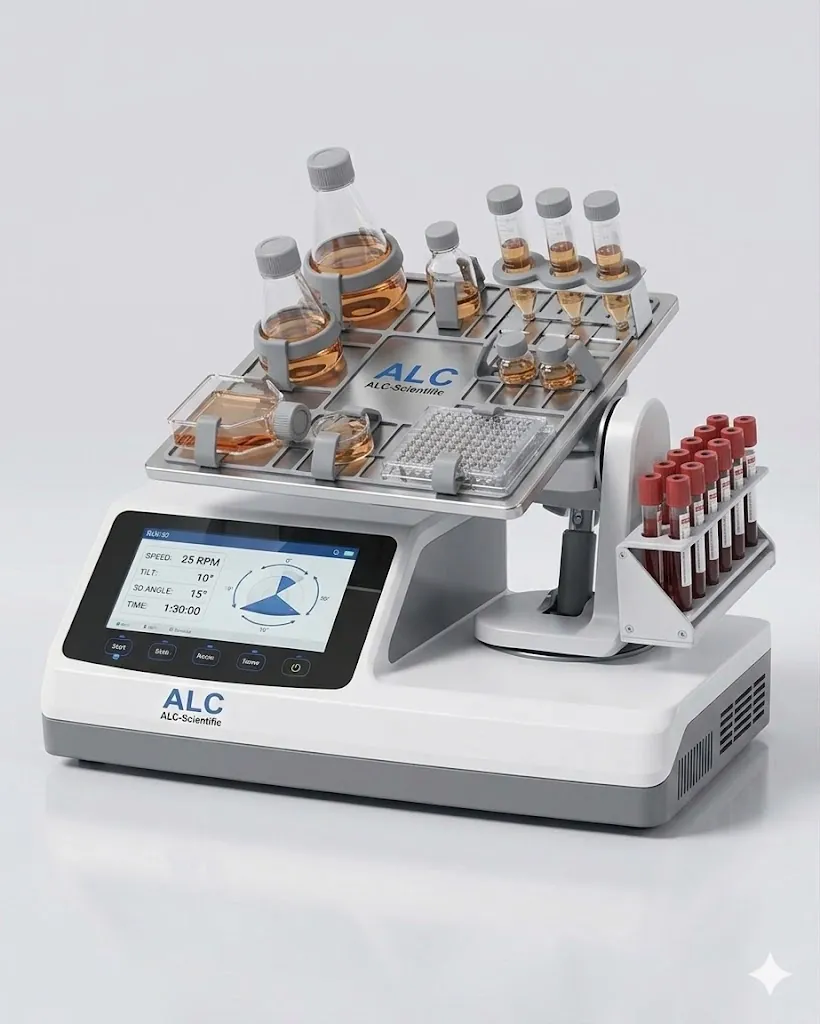
A rocking, rotating or three-dimensional shaker provides gentle continuous movement for closed vessels where tilt, speed, load and container geometry define mixing intensity. The current product-family description covers blood and sample mixing, staining and washing, and hybridization.
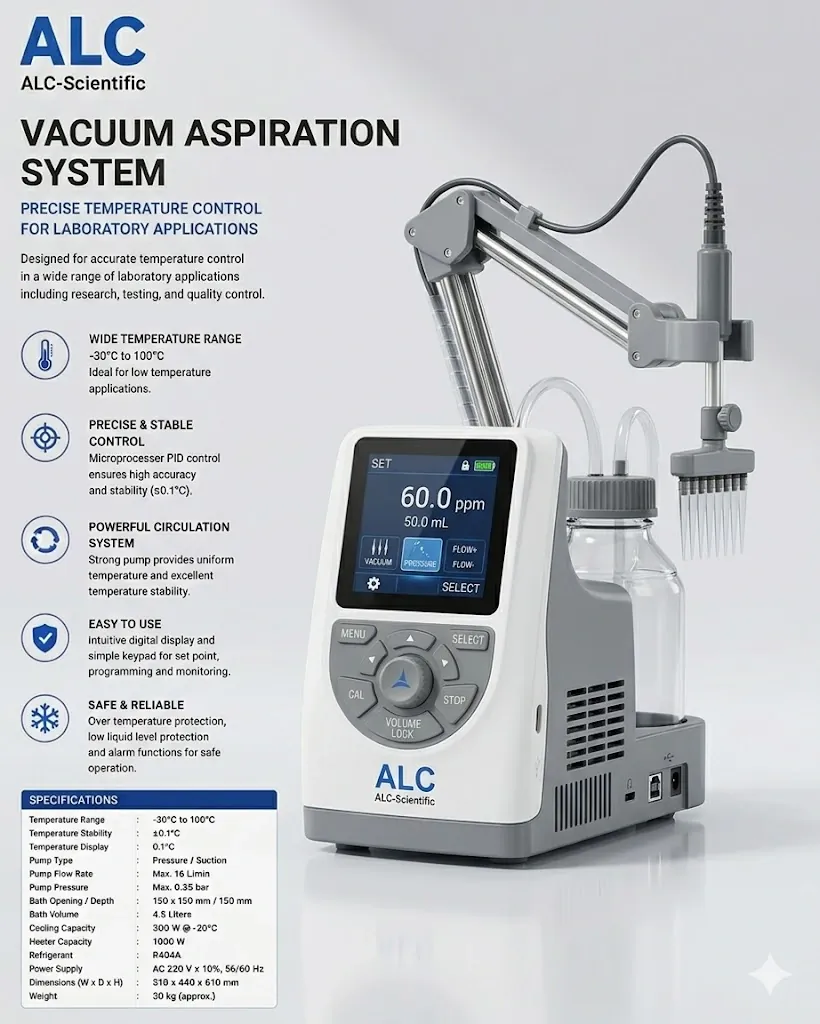
A vacuum aspiration system draws liquid through tubing into a collection vessel for compatible removal tasks, with overflow protection and waste containment built into the working method. Relevant workflows include cell-culture media removal, supernatant aspiration, and microplate washing support.
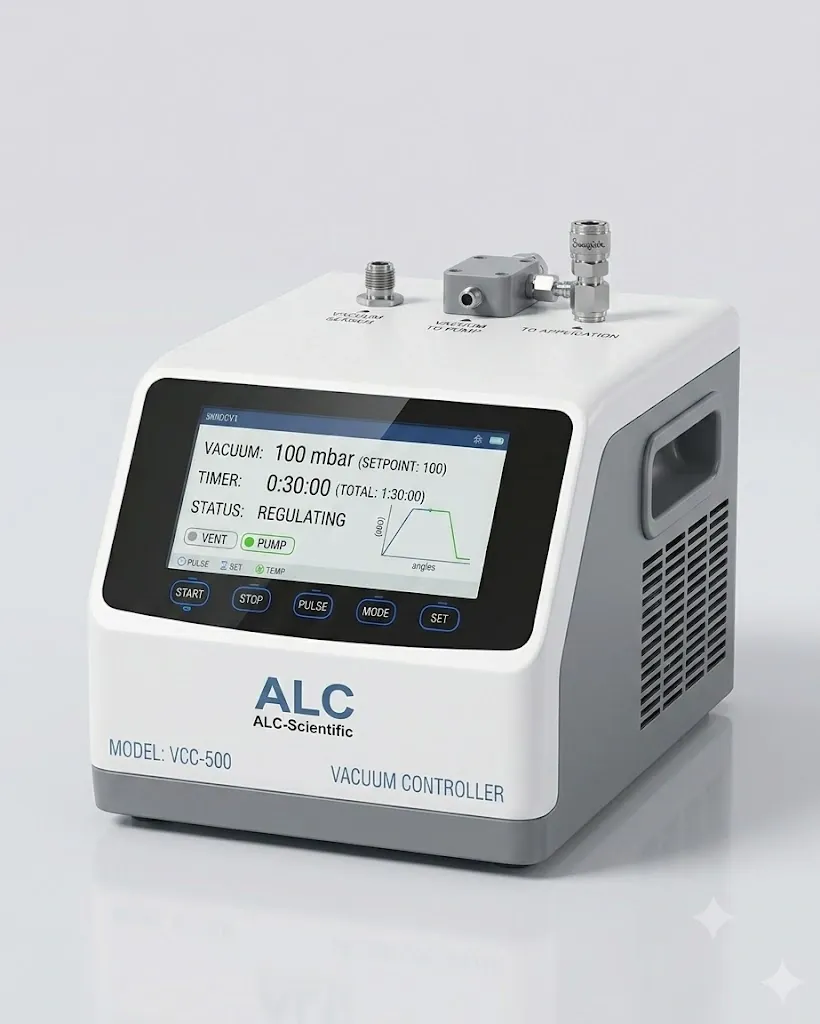
A vacuum controller measures process pressure and regulates a connected valve or pump control to maintain the selected vacuum condition. Typical enquiry contexts include rotary evaporation, vacuum drying, and filtration.
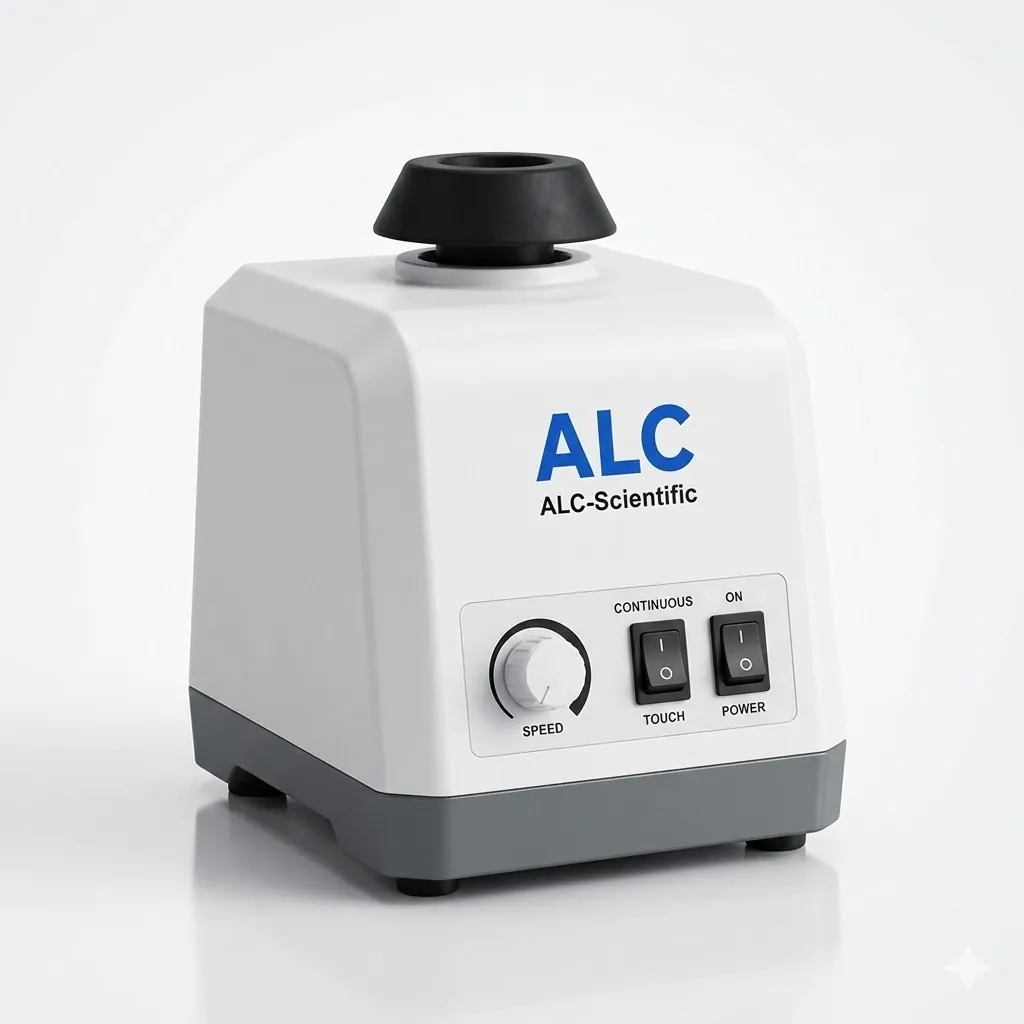
A vortex mixer transfers rapid orbital motion through a cup or platform to mix liquid in compatible vessels, with intensity governed by speed, vessel shape and sample volume. The current product-family description covers reagent mixing, cell suspension resuspension, and biochemical assays.
A Class II Type A2 biosafety cabinet uses filtered inflow and downflow to support personnel, product and environmental protection when the cabinet is correctly installed, operated and field certified. Relevant workflows include cell culture, clinical sample handling, and microbiological procedures.
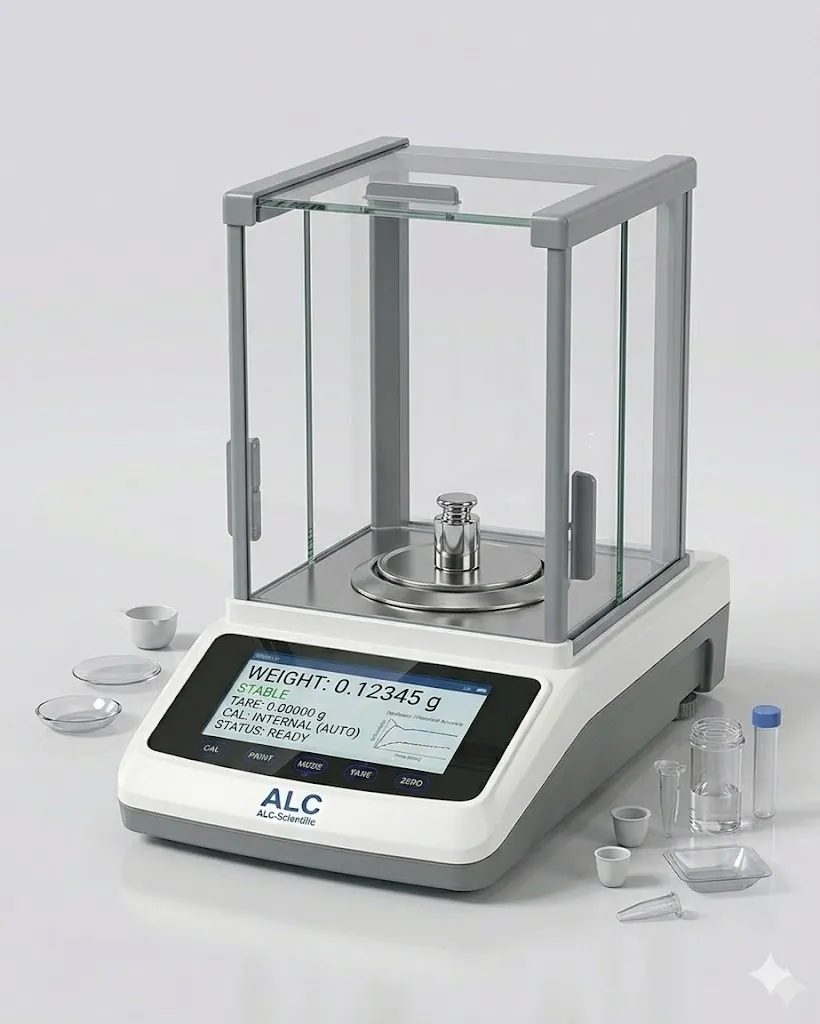
A digital analytical balance measures small mass changes in a draft-protected weighing space where levelling, warm-up and control of air movement affect the result. Buyers commonly evaluate it for standard and reagent preparation, gravimetric analysis, and pharmaceutical formulation.
A laminar-flow cabinet supplies HEPA-filtered unidirectional air over the work area for product protection; it is not a substitute for a biological safety cabinet where operator containment is required. Typical enquiry contexts include media preparation, plant tissue culture, and sterile assembly.
A digital hot-air oven uses heated air to dry or thermally condition compatible materials; any sterilisation claim requires model-specific validation and a documented load process. Buyers commonly evaluate it for glassware drying, moisture removal, and thermal ageing.
A deep freezer provides controlled sub-zero storage for compatible laboratory materials, with usable performance influenced by load, access frequency, monitoring and room conditions. Relevant workflows include reagent storage, biological-sample storage, and pharmaceutical material storage.
A benchtop centrifuge separates suspended material by rotating compatible tubes in a rated rotor; the required RCF, tube format and protocol determine the usable configuration. Buyers commonly evaluate it for cell and precipitate separation, blood and clinical sample preparation, and nucleic-acid workflows.
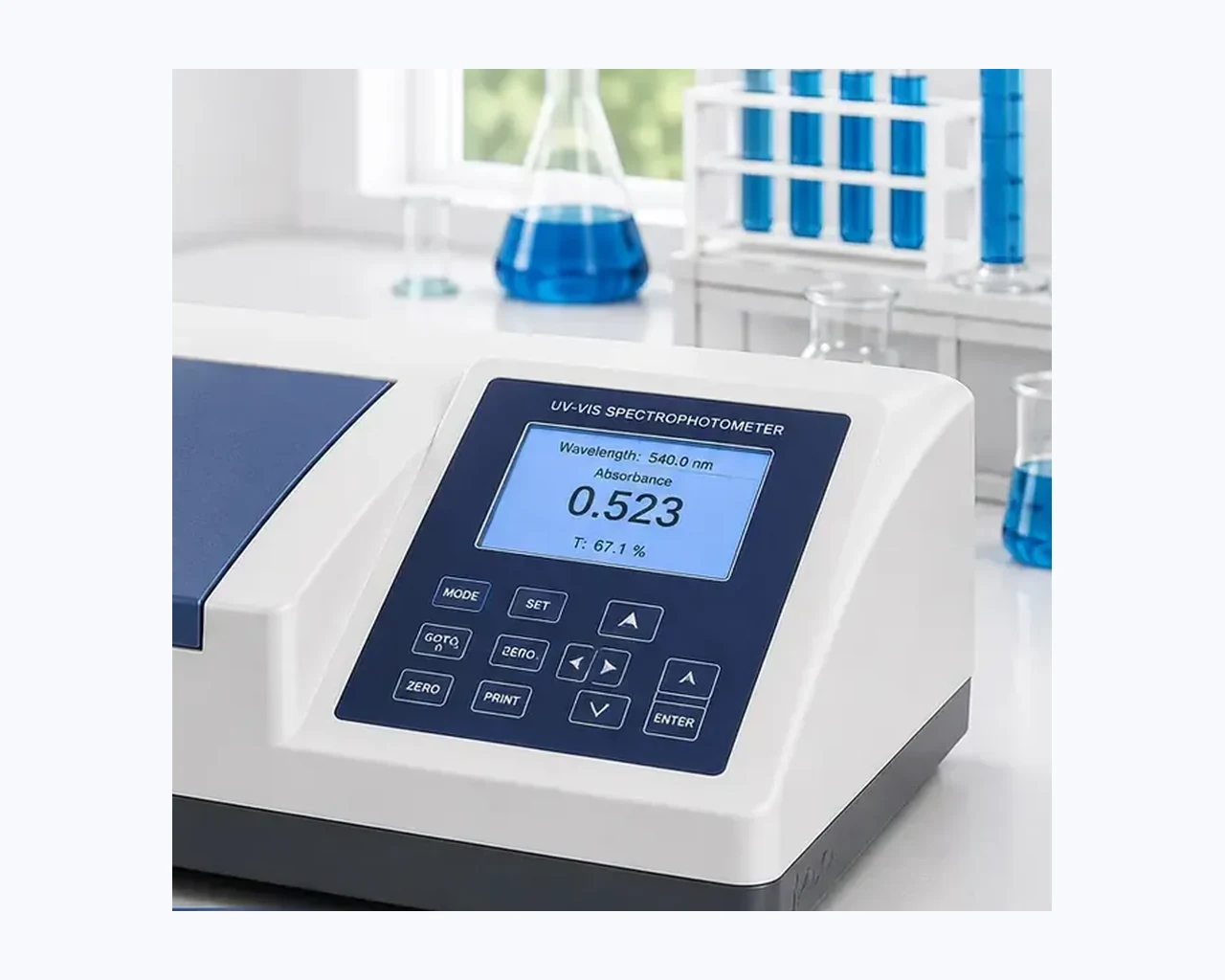
A UV–Vis spectrophotometer measures how a sample transmits or absorbs selected ultraviolet and visible wavelengths, with method suitability determined by the optical configuration and verification data. Typical enquiry contexts include quantitative assays, spectral scanning, and kinetic measurements.
A vertical autoclave uses saturated steam under pressure to process compatible loads; cycle suitability depends on air removal, steam contact, exposure conditions and load-specific validation. Buyers commonly evaluate it for culture-media preparation, glassware and instrument sterilisation, and biohazard waste treatment.
A probe sonicator transfers ultrasonic energy directly into a liquid through the probe tip for methods such as disruption, dispersion or emulsification, while generating local heat and cavitation. Buyers commonly evaluate it for cell lysis, nanoparticle dispersion, and DNA shearing.
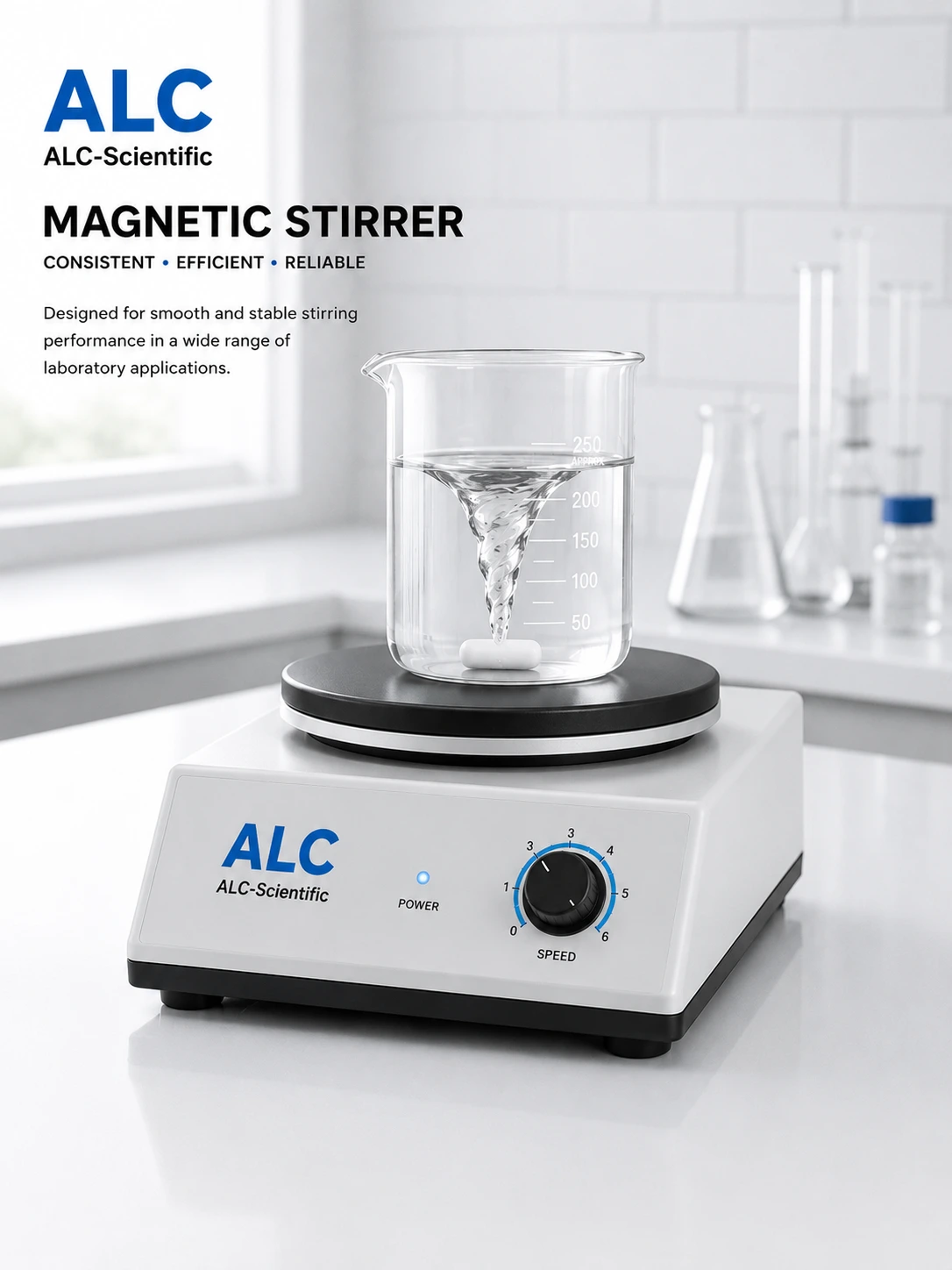
A magnetic stirrer rotates a stir bar through a changing magnetic field to mix liquids without a driven shaft entering the vessel. Buyers commonly evaluate it for buffer and reagent preparation, dissolution, and routine solution mixing.
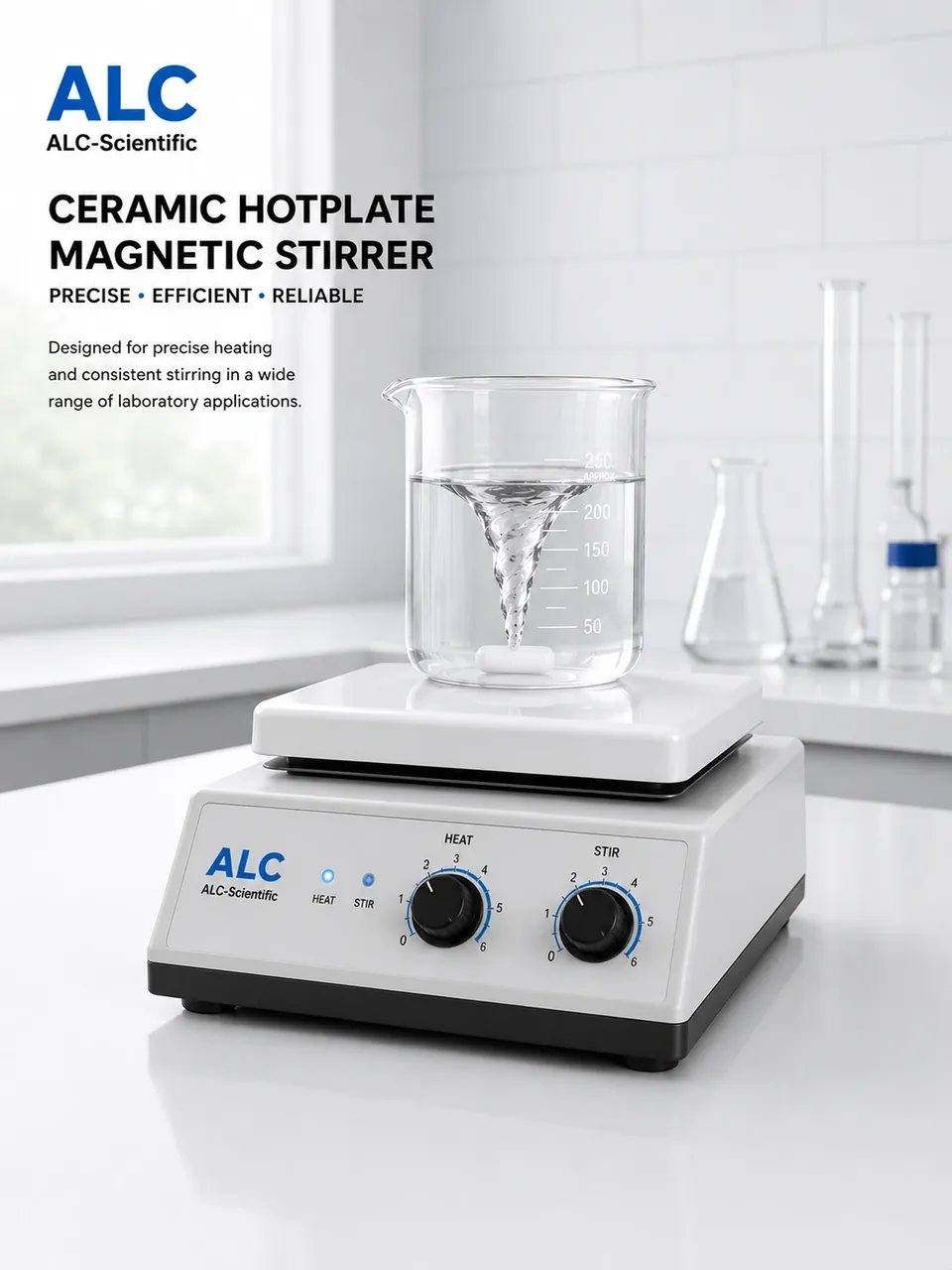
A ceramic hotplate magnetic stirrer combines vessel heating with magnetic stirring, so plate material, liquid volume, viscosity, stir bar and temperature sensing must be considered together. Buyers commonly evaluate it for solution preparation, buffer heating, and chemical synthesis support.
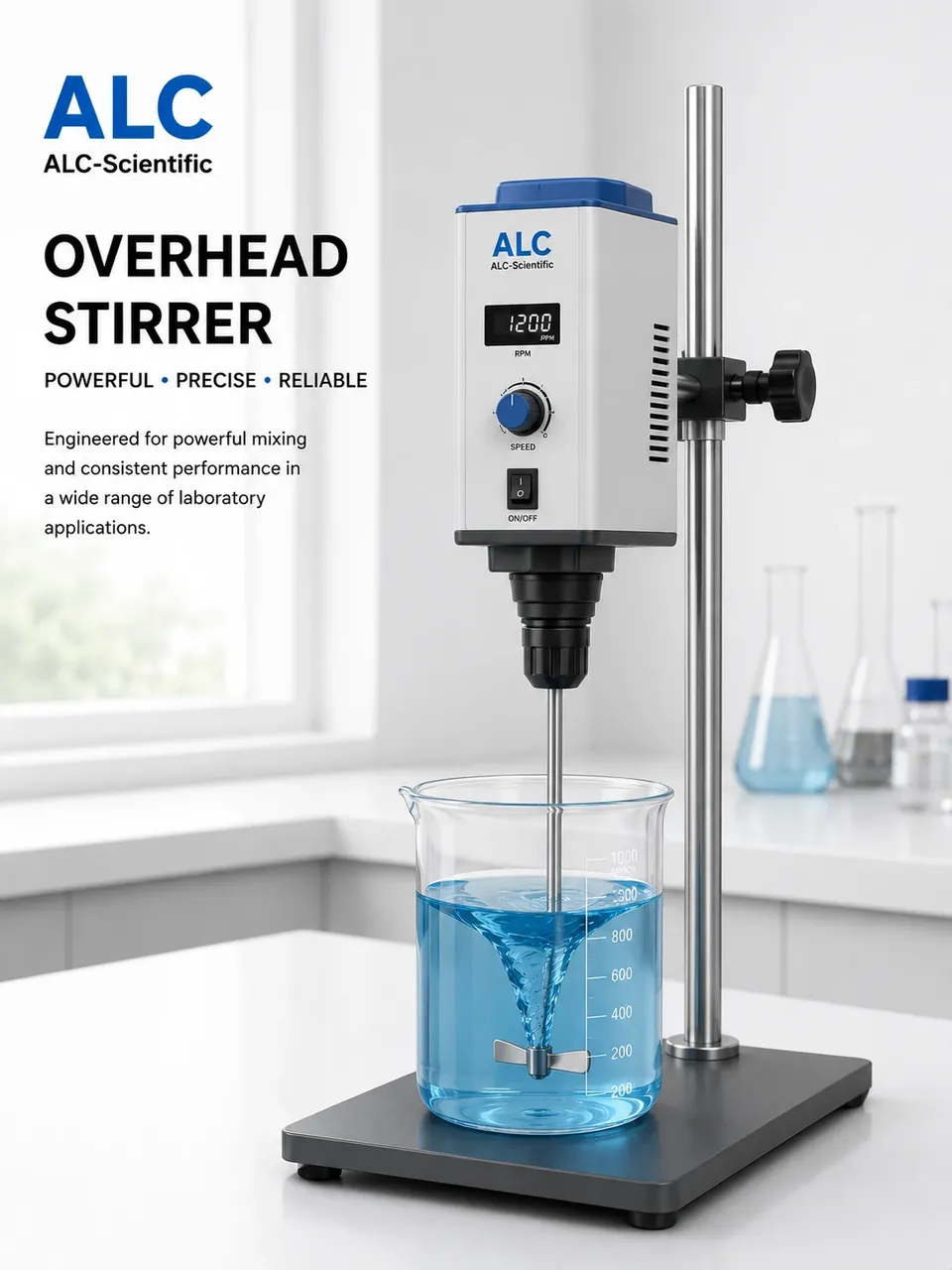
An overhead stirrer drives an immersed shaft and impeller for liquids that may require more torque, volume handling or tool choice than a magnetic stirrer can provide. Buyers commonly evaluate it for polymer and resin mixing, suspension preparation, and viscous formulation.
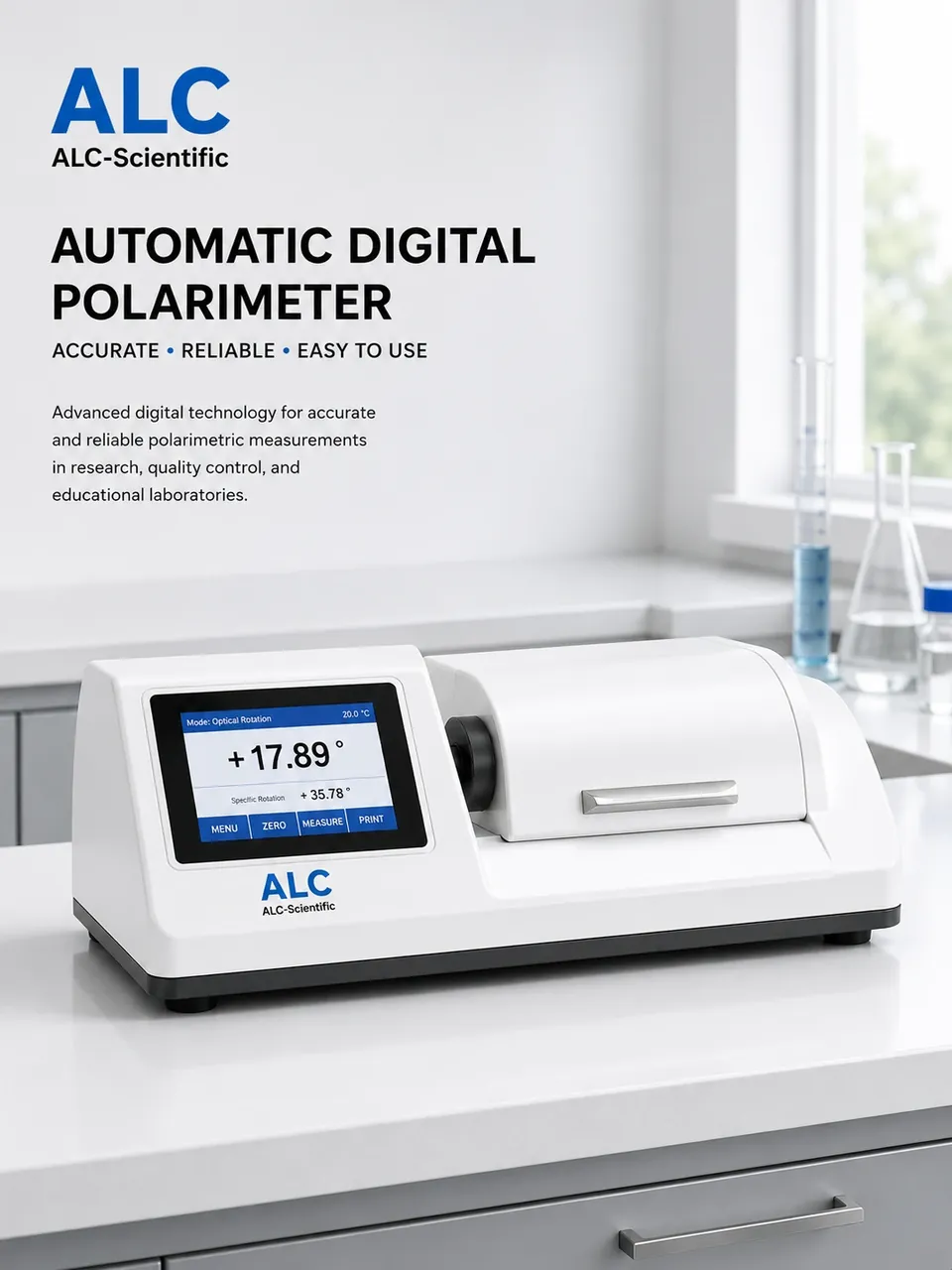
An automatic digital polarimeter measures optical rotation in optically active samples while reducing the need for manual endpoint observation. Buyers commonly evaluate it for sugar and beverage analysis, pharmaceutical identity testing, and essential-oil analysis.
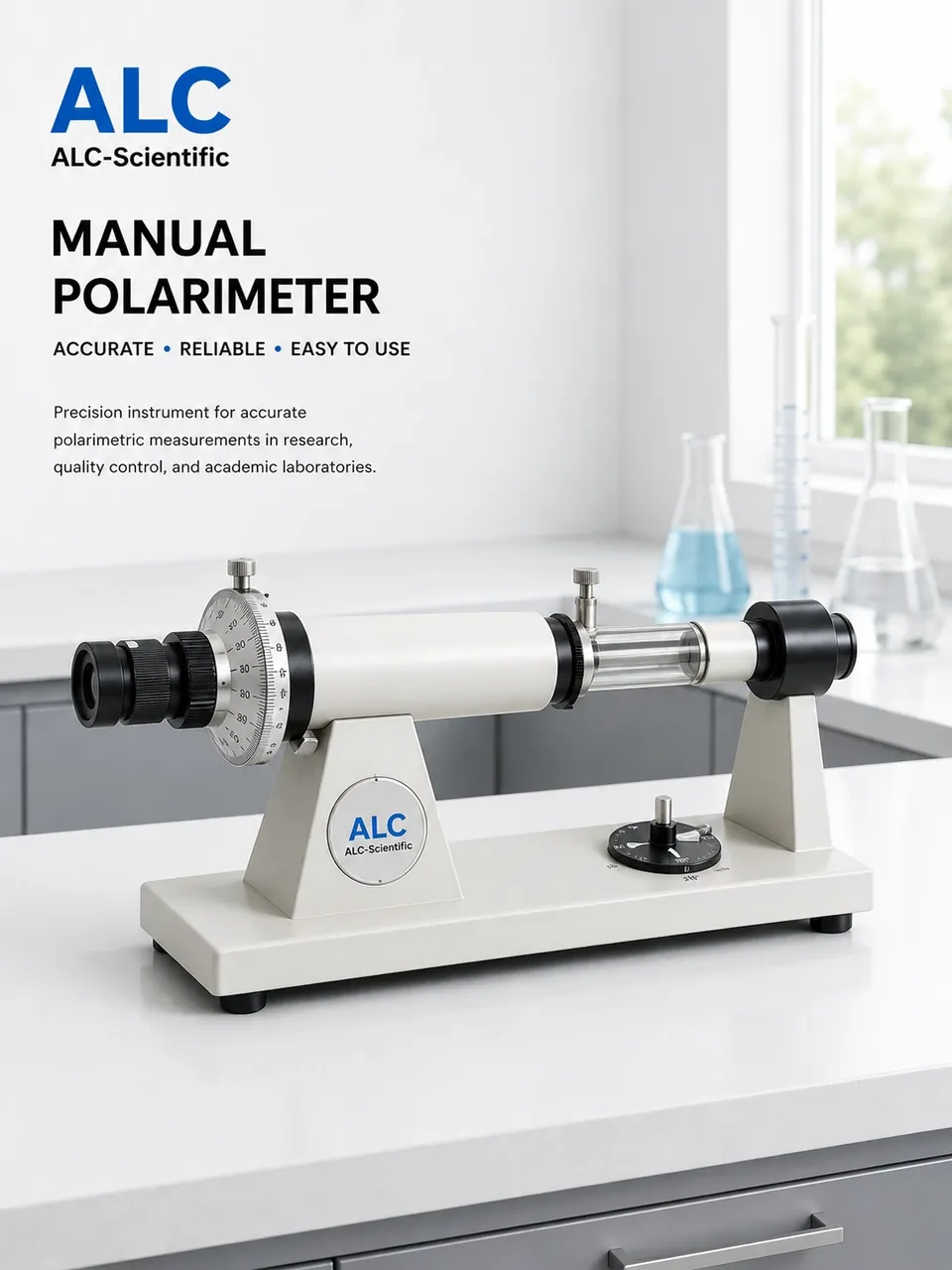
A manual polarimeter measures optical rotation through operator-observed alignment or endpoint reading, with temperature, wavelength, path length and sample preparation influencing the result. The current product-family description covers sugar concentration checks, education and demonstration, and pharmaceutical identity testing.
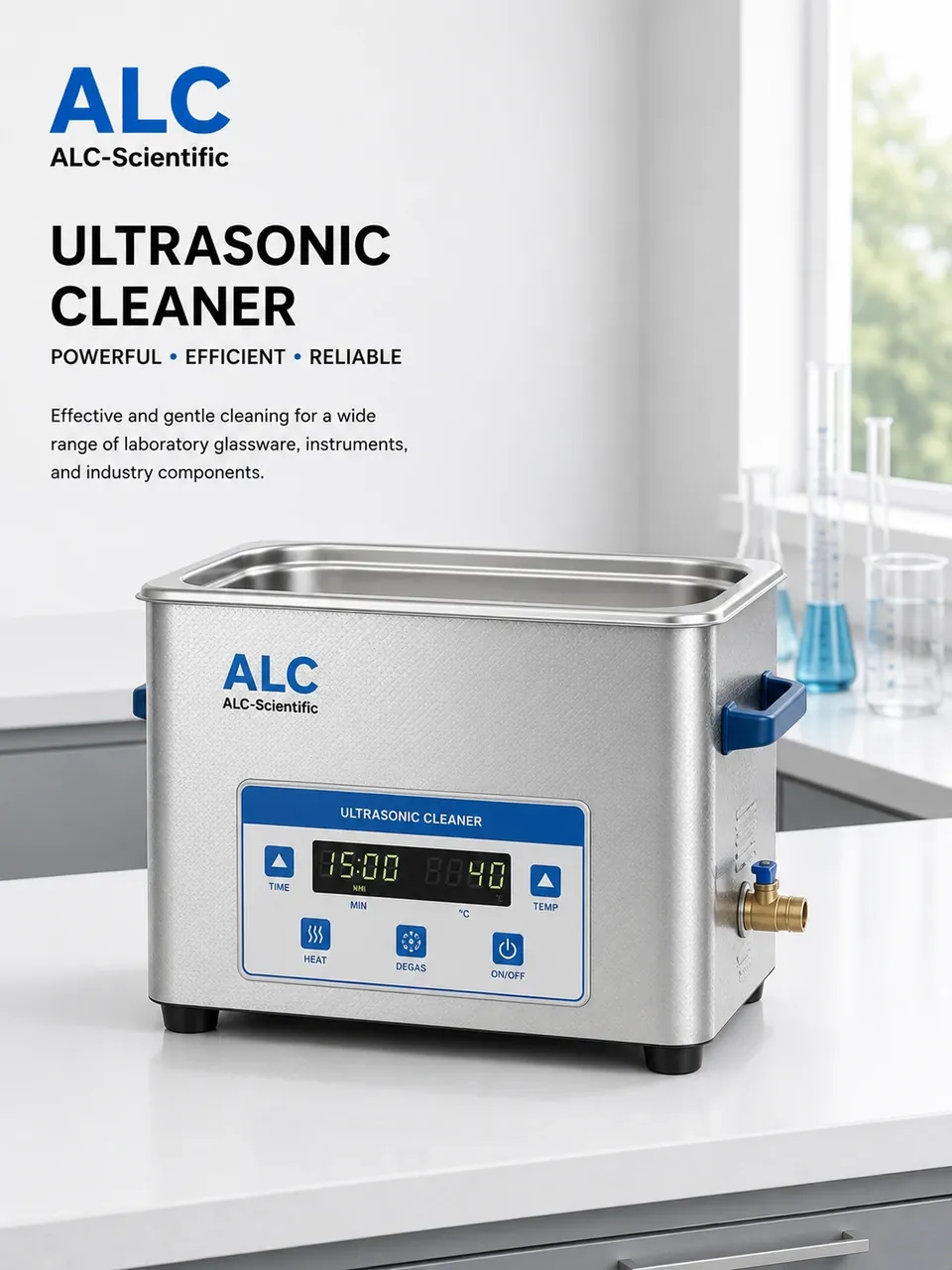
An ultrasonic cleaner uses cavitation in a liquid bath to help remove contamination from immersed compatible parts, vessels or tools. The current product-family description covers glassware and component cleaning, instrument-part cleaning, and degas and sample preparation.
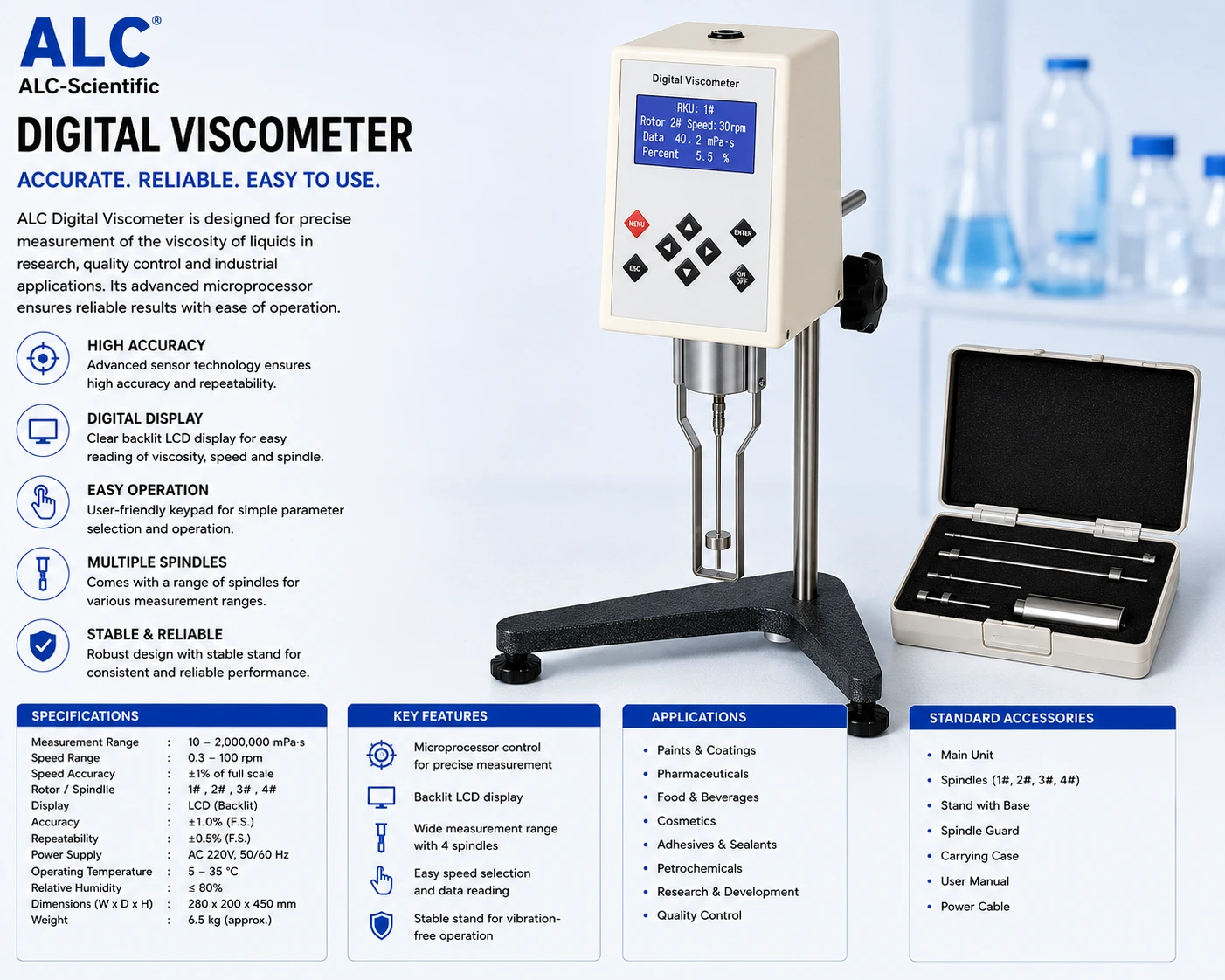
A digital viscometer measures resistance to controlled spindle or measuring-element movement and converts the resulting torque into a viscosity value for the stated method conditions. Buyers commonly evaluate it for formulation development, incoming raw-material testing, and batch consistency checks.
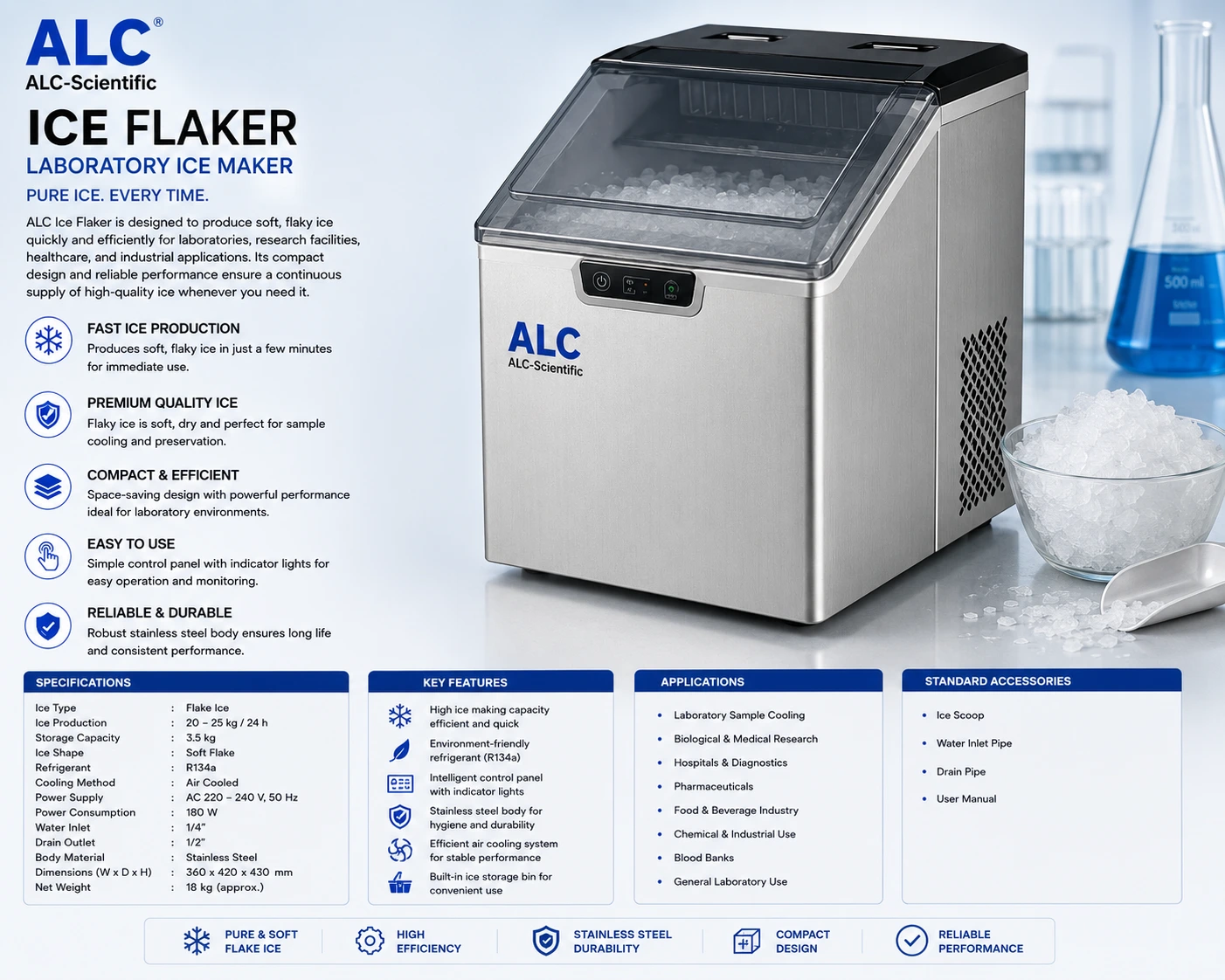
A laboratory ice flaker produces flake ice for compatible cooling workflows, with output, storage, water quality, drainage and ventilation determined by the supplied model. Buyers commonly evaluate it for sample cooling, reagent and specimen transport, and ice-bath preparation.
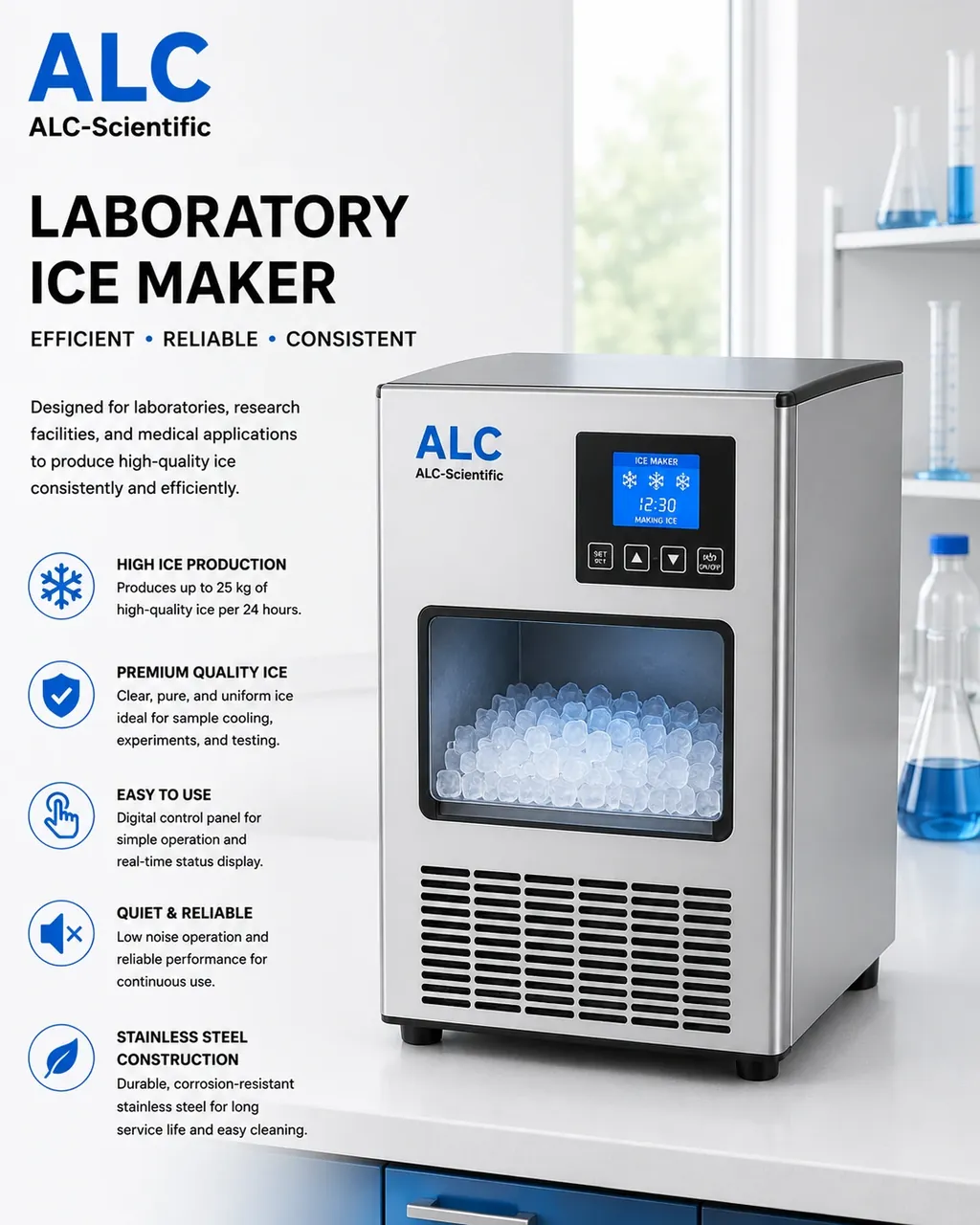
A laboratory ice maker produces a specified ice form for cooling or handling workflows, subject to model output, storage, feed-water and site-service requirements. The current product-family description covers ice-bath preparation, sample transport, and temporary cooling.
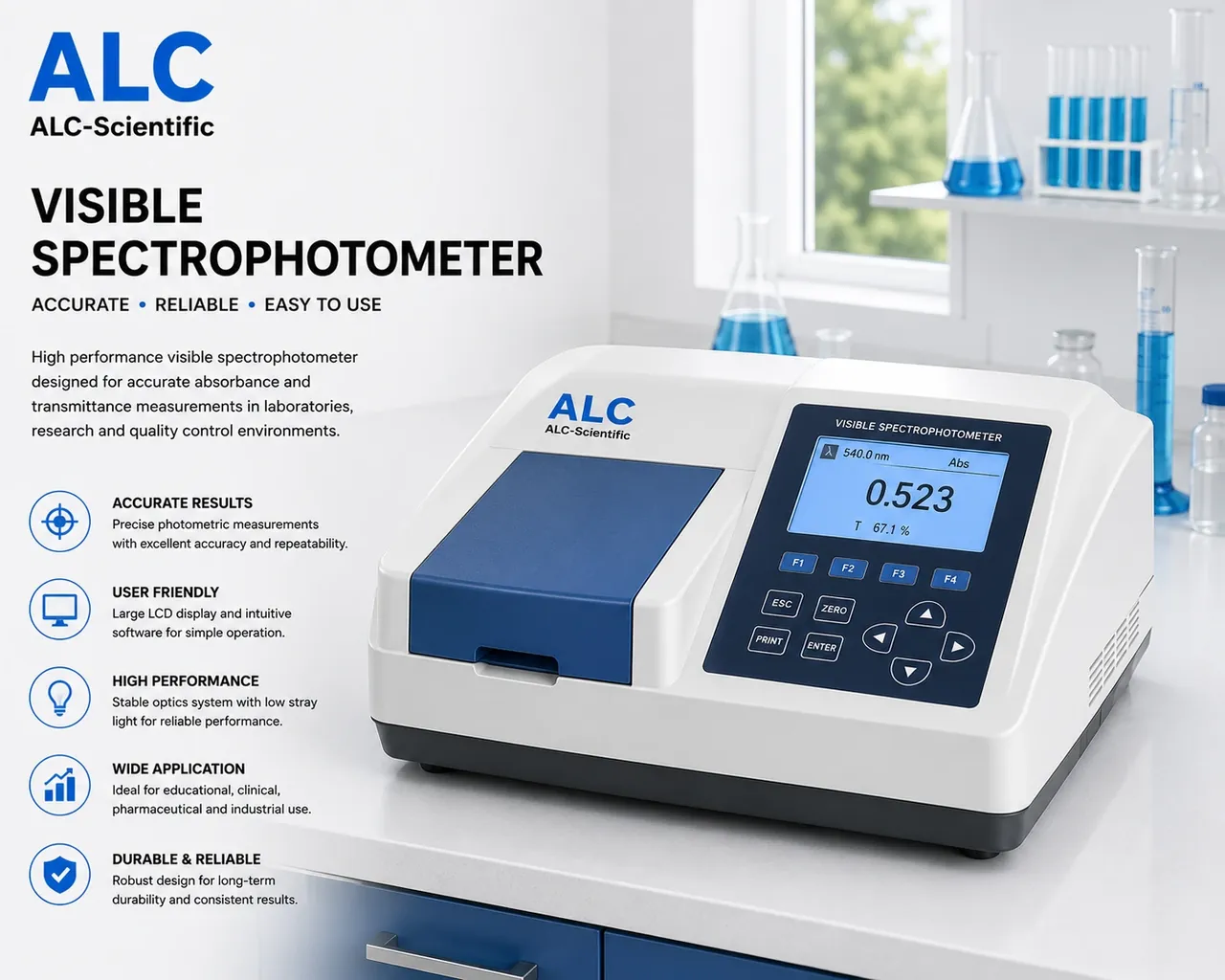
A visible spectrophotometer measures absorbance or transmittance within the visible range using a blank and sample under the selected analytical method. Typical enquiry contexts include water-quality colourimetry, education and routine assays, and food and beverage analysis.
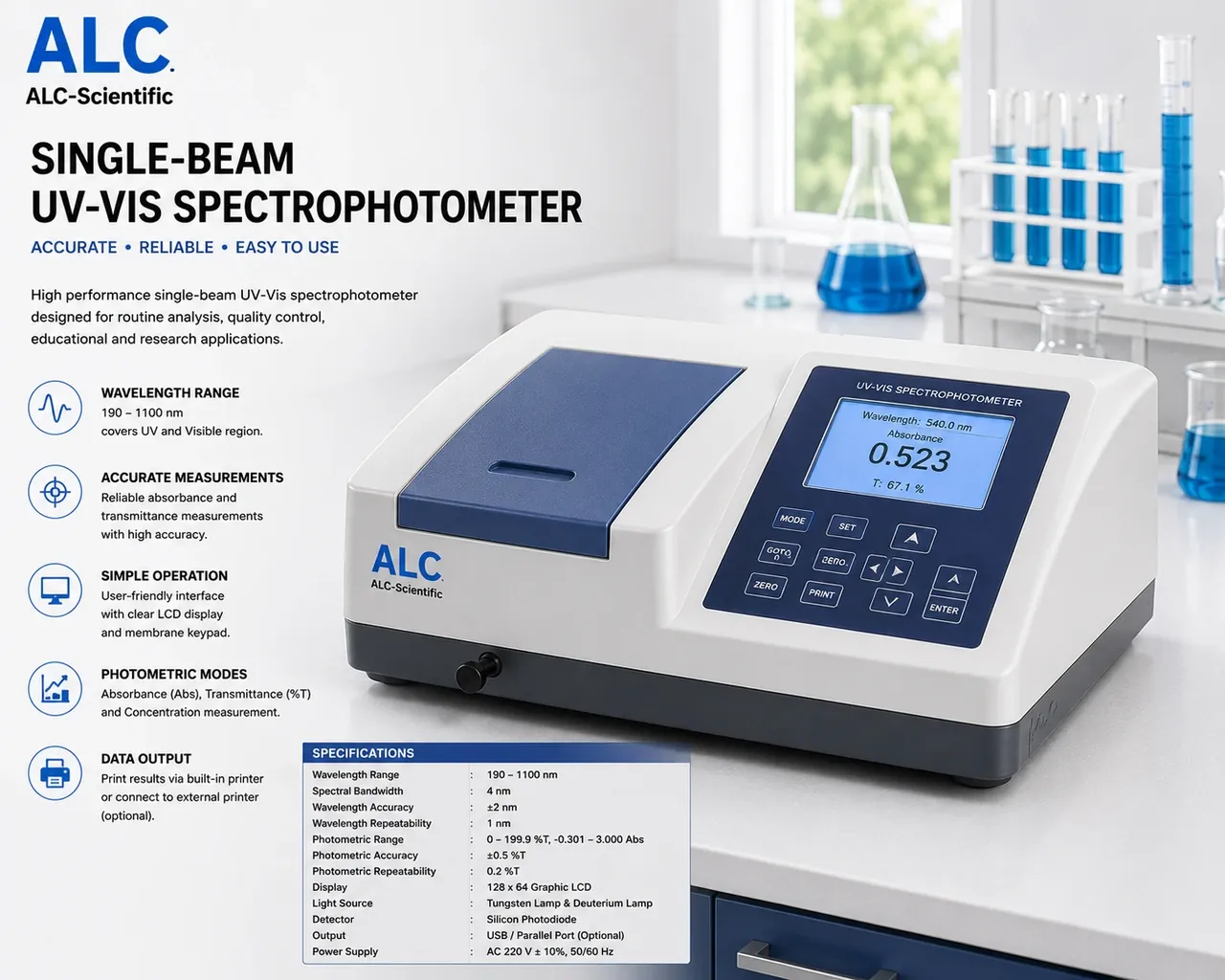
A single-beam UV–Vis spectrophotometer measures a blank and sample sequentially on the same optical path to calculate absorbance or transmittance. The current product-family description covers routine quantitative analysis, wavelength scanning, and kinetics.
A double-beam UV–Vis spectrophotometer compares sample and reference optical paths during absorbance or transmittance measurements, helping compensate for source and baseline change. Buyers commonly evaluate it for quantitative absorbance analysis, kinetic measurements, and spectral scanning.
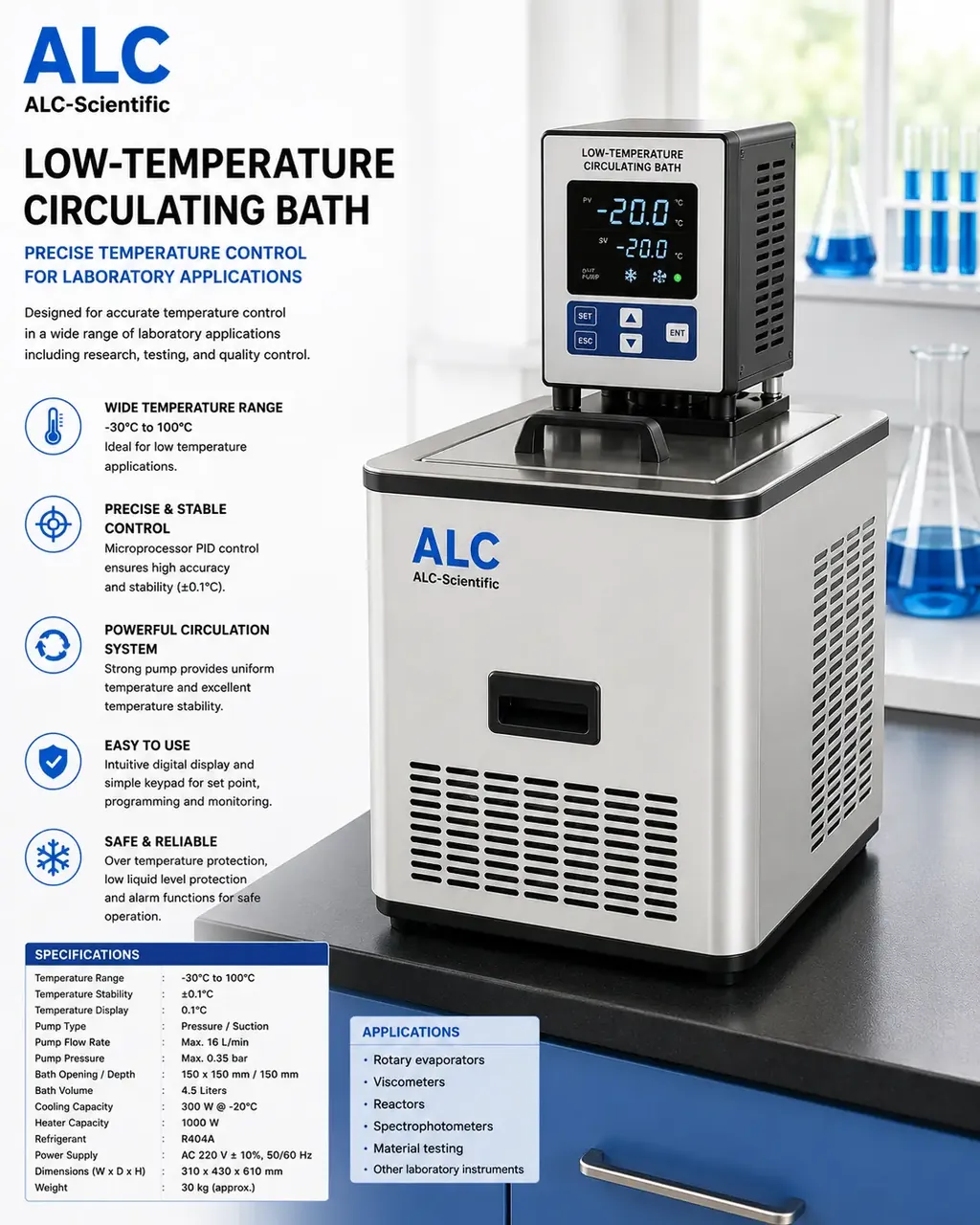
A low-temperature circulating bath removes heat from a controlled fluid loop for below-ambient sample conditioning or external instrument temperature control. Buyers commonly evaluate it for reaction cooling, viscometer temperature control, and materials testing.
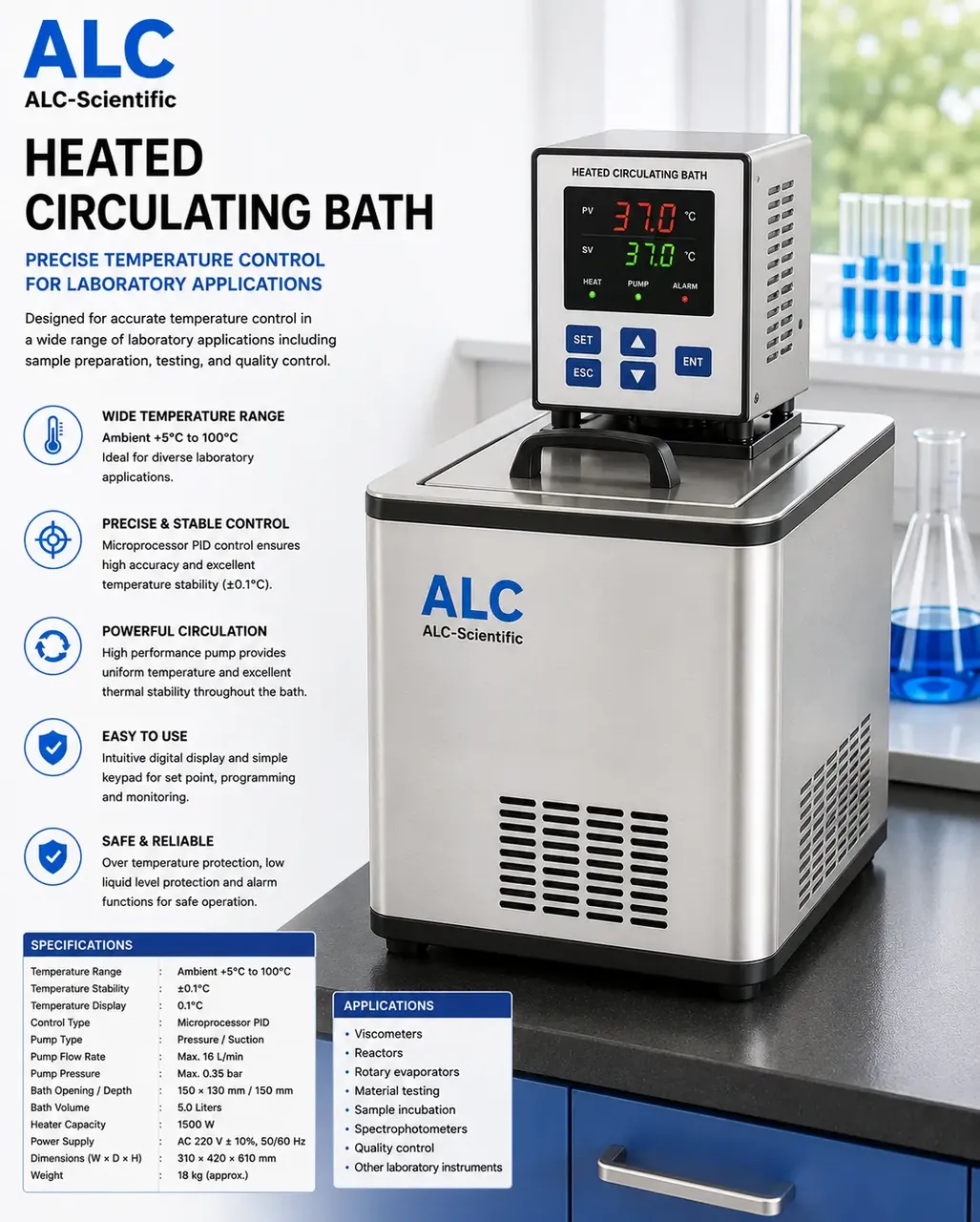
A heated circulating bath controls fluid temperature for samples placed in the bath or for connected equipment that requires an external temperature-control loop. Typical enquiry contexts include viscometer temperature control, sample incubation, and reaction-vessel conditioning.
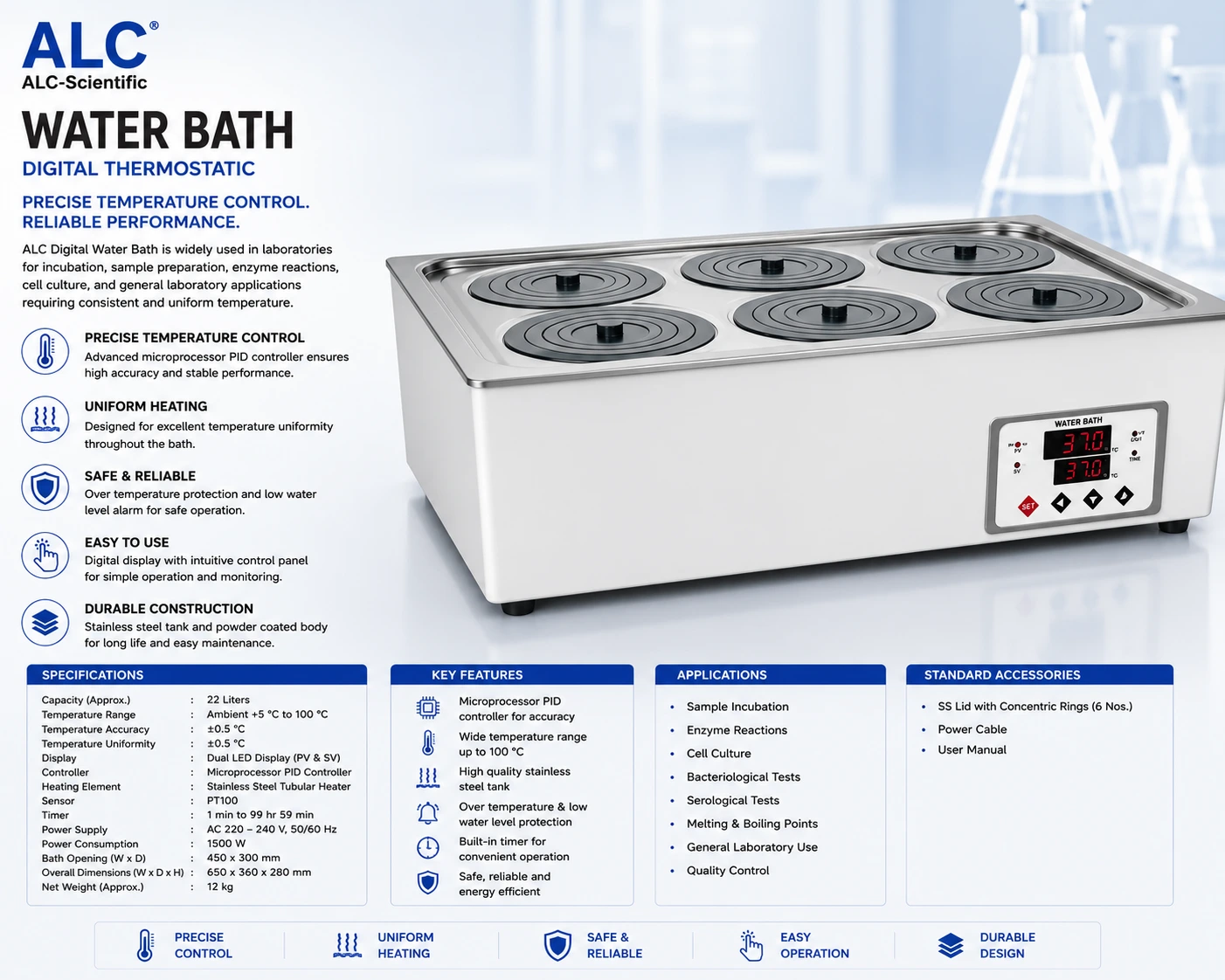
A digital water bath uses a heated liquid medium to condition vessels at a controlled set point, with load arrangement and circulation affecting temperature uniformity. Relevant workflows include sample incubation, reagent warming, and serology and clinical workflows.
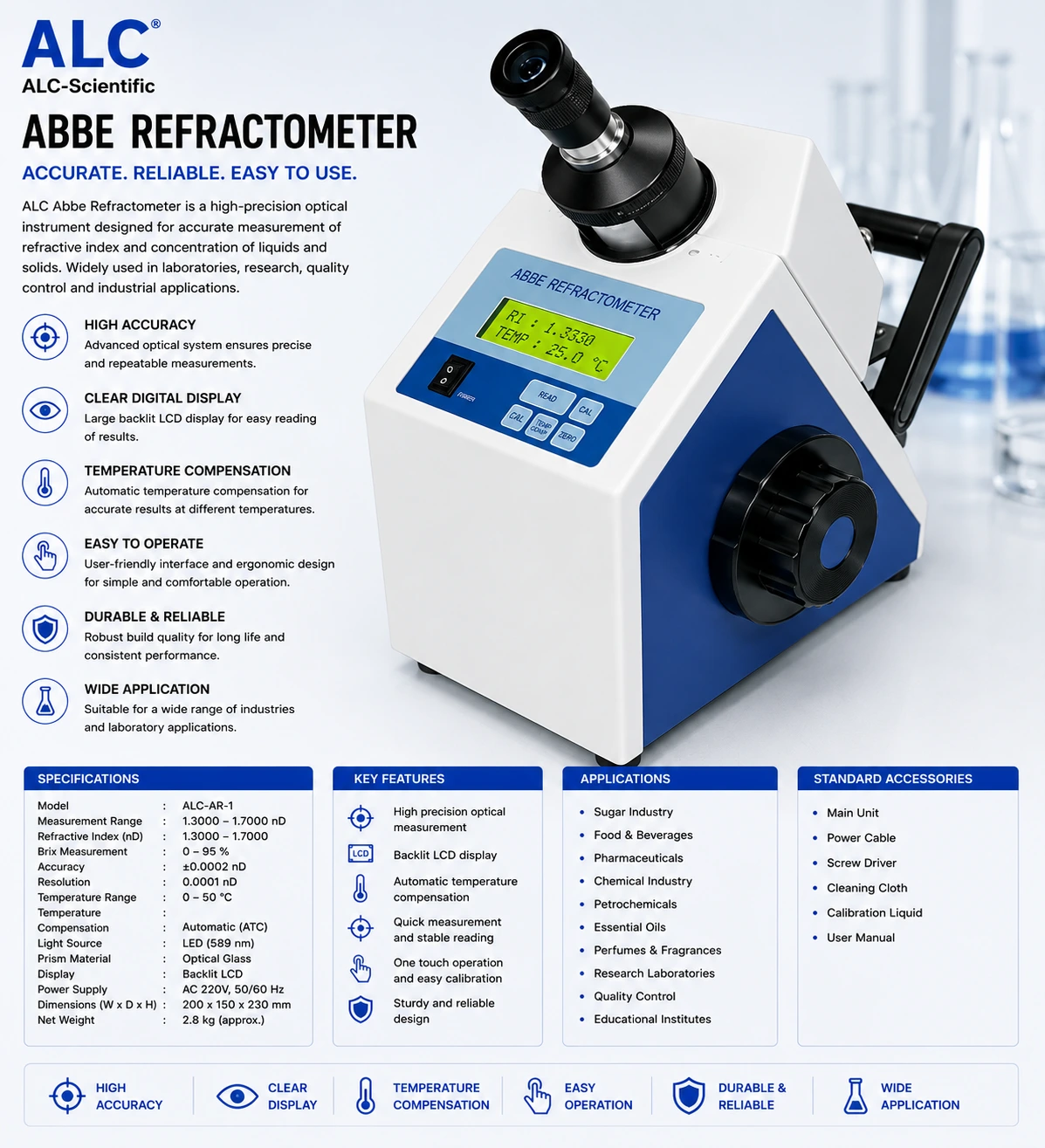
An Abbe refractometer measures refractive index and can report a concentration-related scale when the instrument and method are calibrated for that purpose. Buyers commonly evaluate it for raw-material identification, concentration checks, and food and beverage quality control.
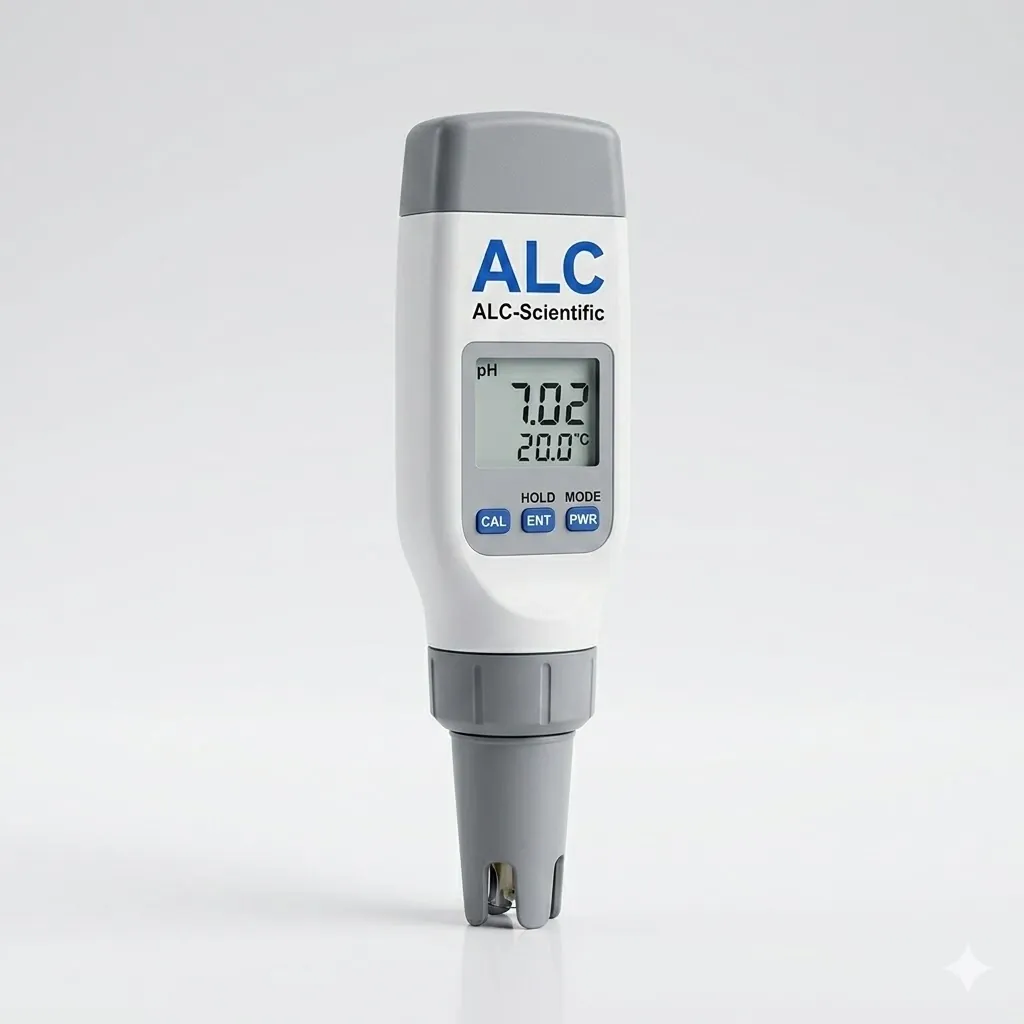
A pocket pH tester provides portable pH measurement for compatible samples using a maintained electrode, suitable buffers and the required temperature procedure. Buyers commonly evaluate it for water-quality screening, hydroponics, and food and beverage checks.
A pocket conductivity tester provides portable conductivity measurement for compatible water samples, with calibration, cell condition and temperature compensation affecting the reading. Buyers commonly evaluate it for water-quality screening, hydroponics, and process-water checks.
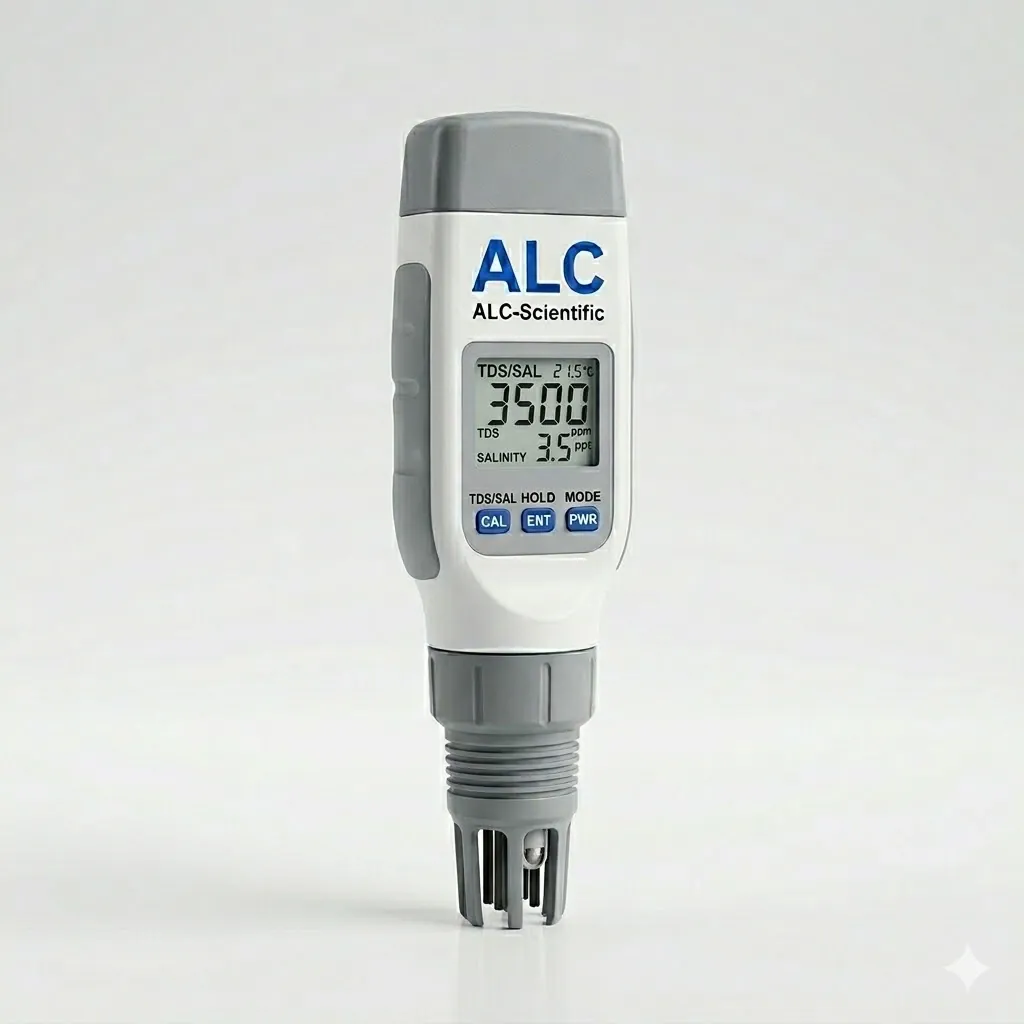
A pocket TDS and salinity tester measures conductivity and applies configured conversion factors to report derived TDS or salinity values where supported. The current product-family description covers aquaculture, hydroponics, and drinking-water checks.
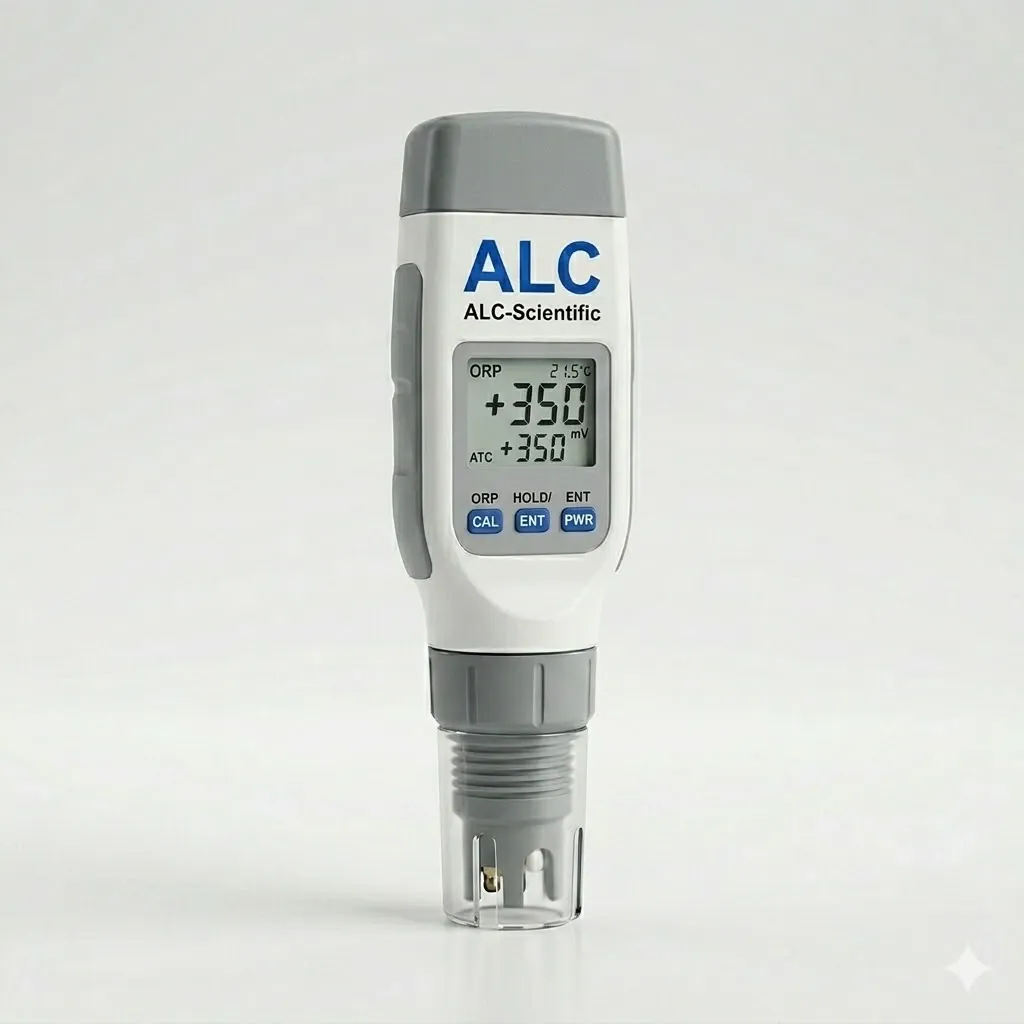
A pocket ORP tester measures oxidation-reduction potential relative to its reference system after the electrode stabilises in the sample. The current product-family description covers disinfection monitoring, water treatment, and aquaculture.
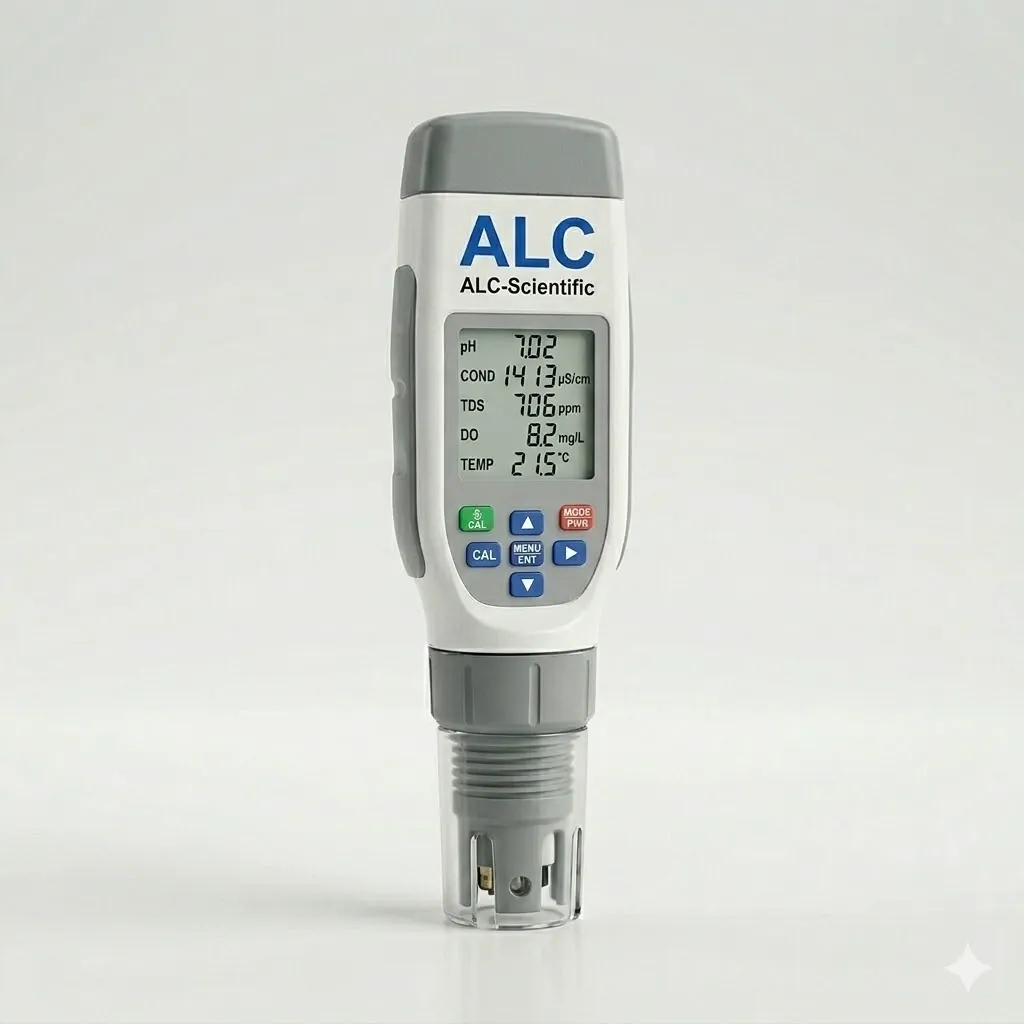
A pocket multiparameter tester combines several portable water-quality measurements in one body, with the actual parameters determined by the installed sensors and supported modes. Buyers commonly evaluate it for field water screening, hydroponics and aquaculture, and process-water checks.
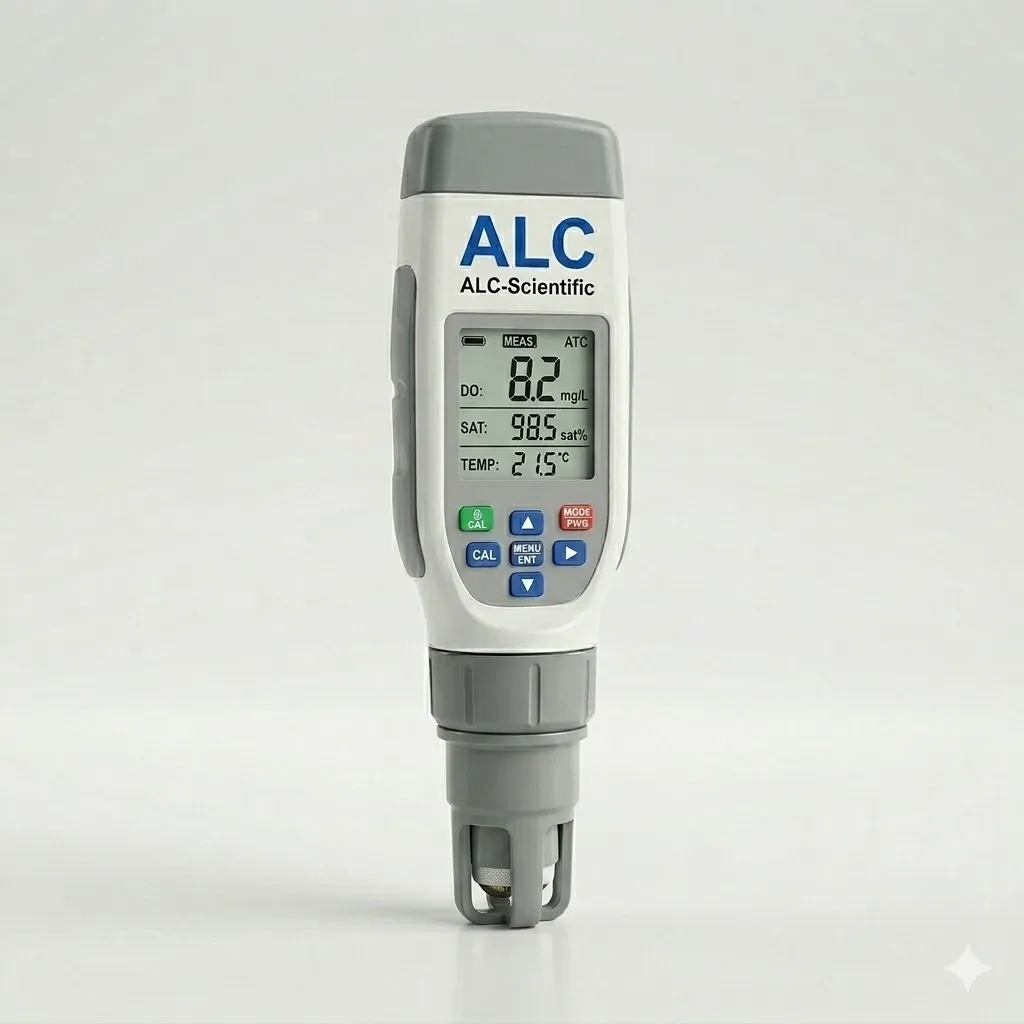
A pocket dissolved-oxygen tester measures oxygen response through a compatible sensor for field or bench water checks, subject to calibration and compensation conditions. Relevant workflows include aquaculture monitoring, surface-water testing, and wastewater checks.
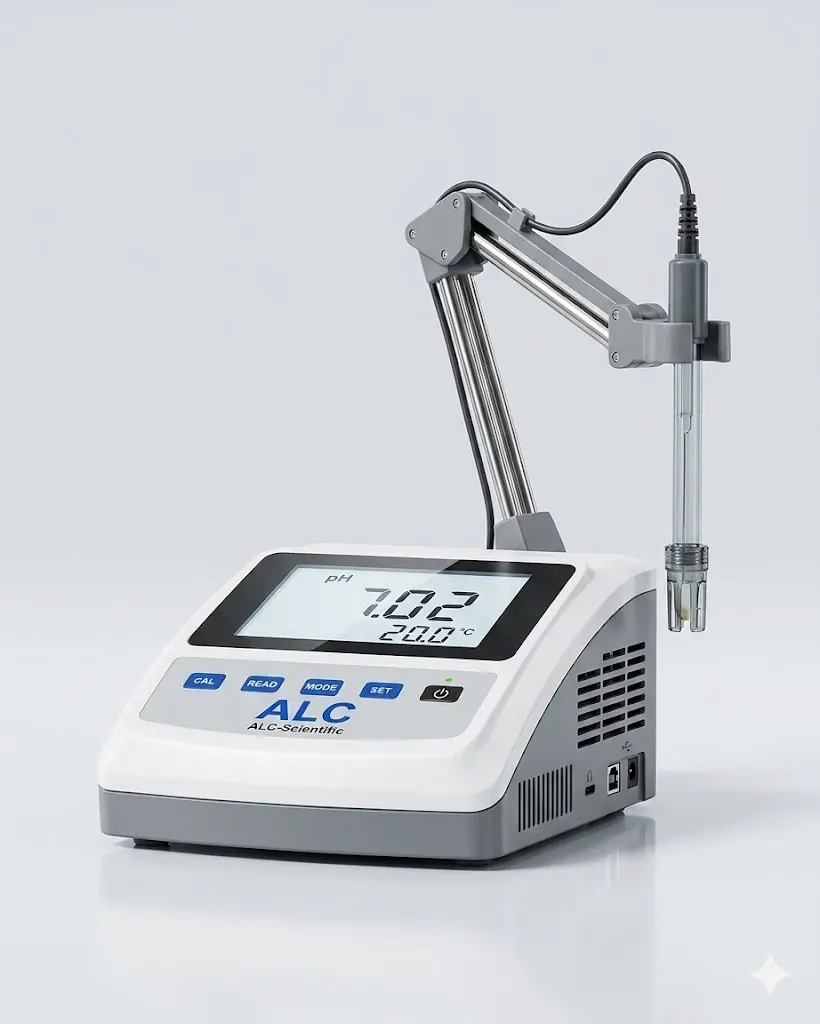
A benchtop pH meter uses a measuring electrode and stable reference to determine pH, with calibration and temperature handling chosen for the sample matrix. Typical enquiry contexts include buffer preparation, water and wastewater analysis, and food and beverage testing.
A benchtop conductivity meter measures the ability of ions in a sample to carry electrical current and may derive TDS or salinity through configured conversion settings. Buyers commonly evaluate it for water-quality testing, buffer and reagent checks, and process-water monitoring.
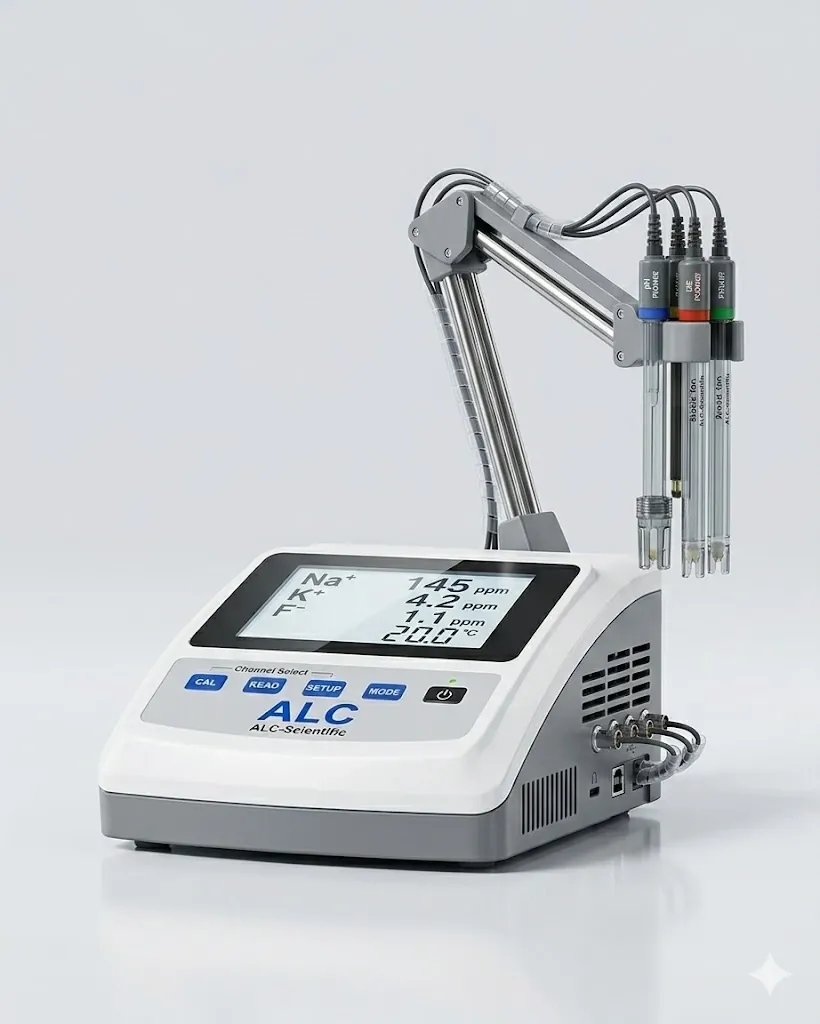
An ion-selective electrode develops a potential related to the activity of a target ion and must be paired with a compatible meter, reference system and calibration procedure. Buyers commonly evaluate it for fluoride or nitrate analysis, water and wastewater testing, and food and pharmaceutical analysis.
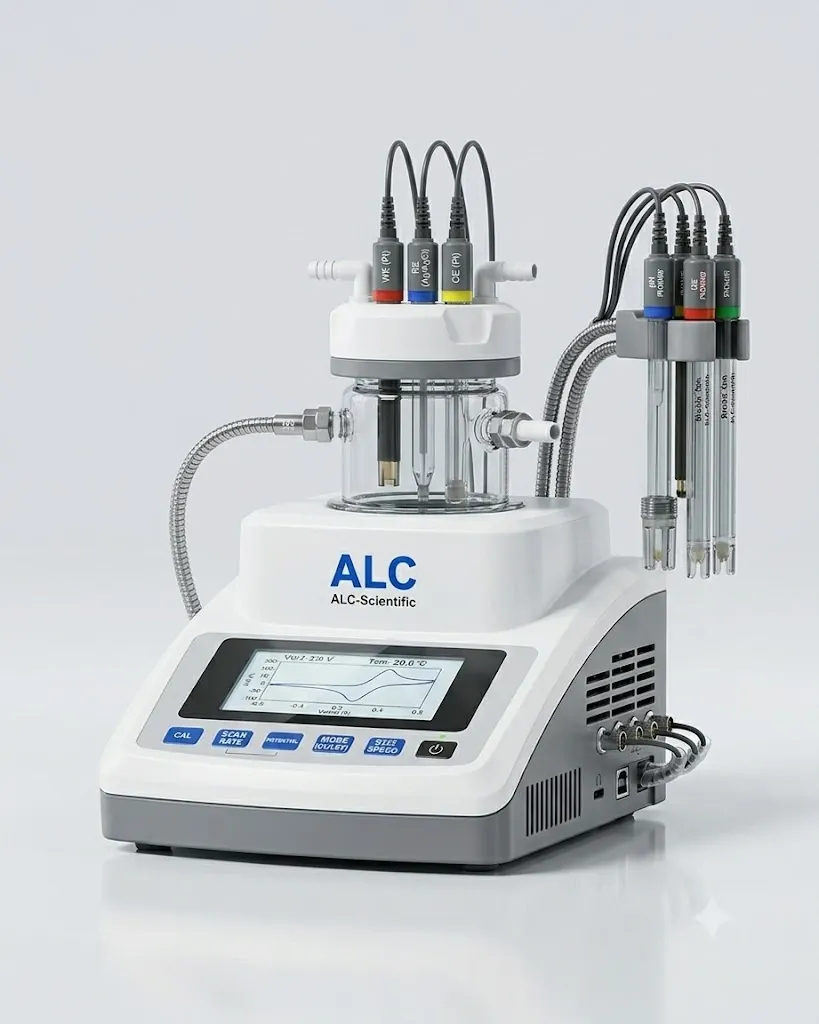
Electrochemistry electrodes and cells provide the sample interface, reference system and measurement geometry required for a defined electrochemical method. The current product-family description covers cyclic voltammetry, corrosion studies, and battery-material research.
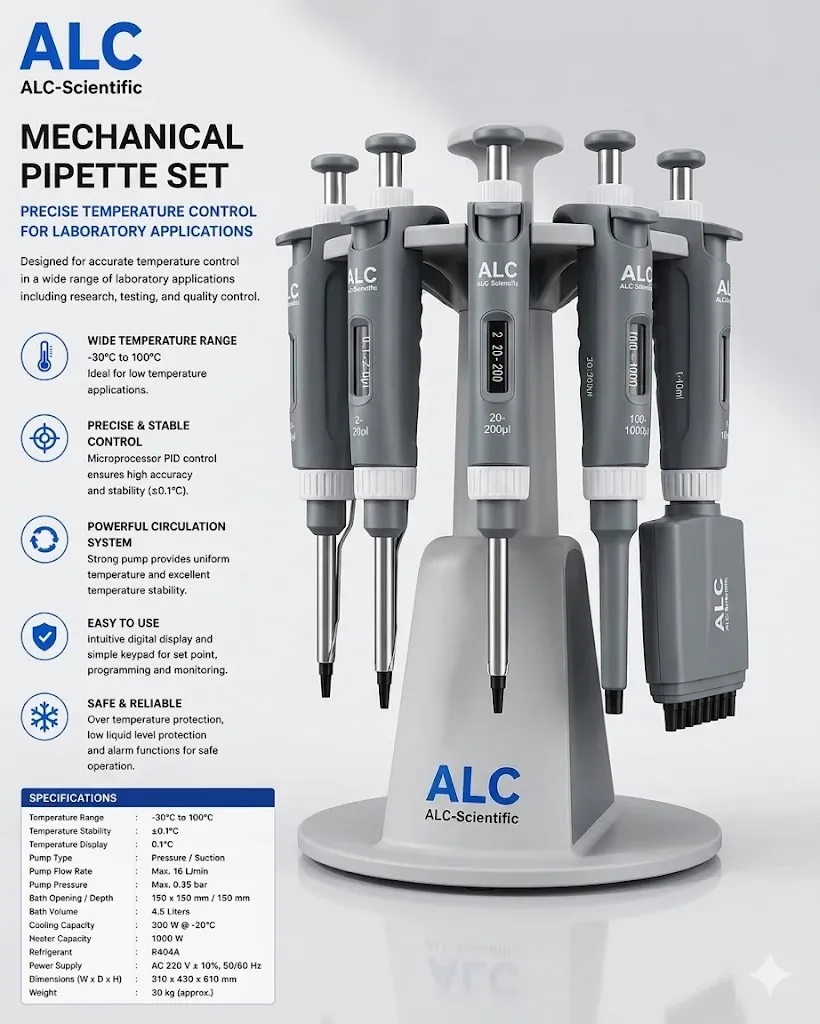
A mechanical pipette uses manual piston movement to aspirate and dispense a selected volume through compatible tips, with technique and calibration affecting transfer performance. Relevant workflows include sample transfer, reagent preparation, and PCR setup.
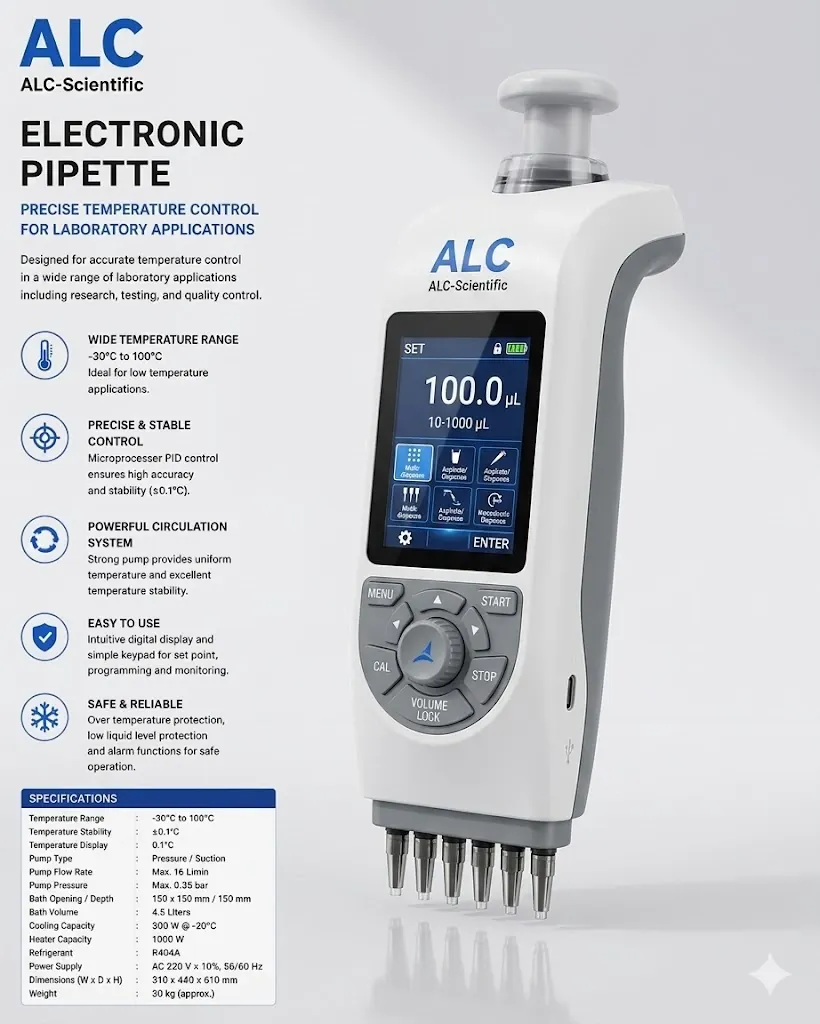
An electronic pipette uses motor-controlled piston movement for aspiration, dispensing or programmed liquid-handling steps with compatible tips. Relevant workflows include routine pipetting, serial dispensing, and mixing and dilution.
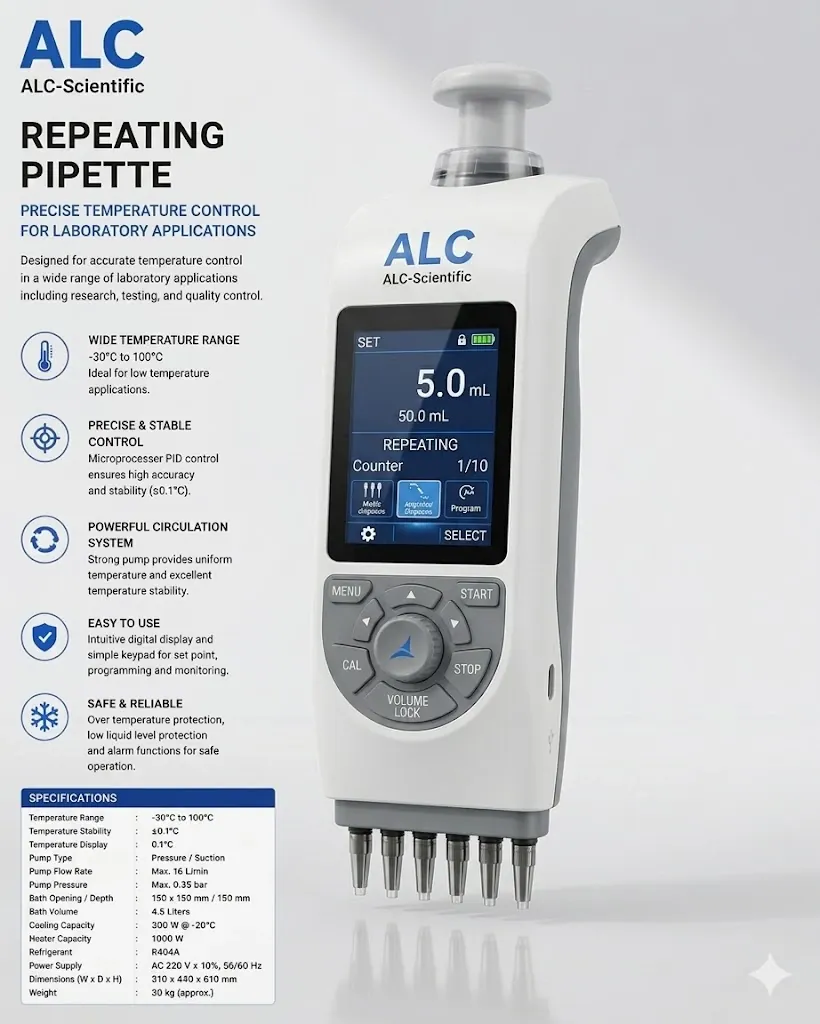
A repeating pipette dispenses a sequence of equal aliquots from one aspiration using a compatible reservoir, syringe or positive-displacement tip and selected step size. The current product-family description covers microplate filling, reagent aliquoting, and serial dispensing.
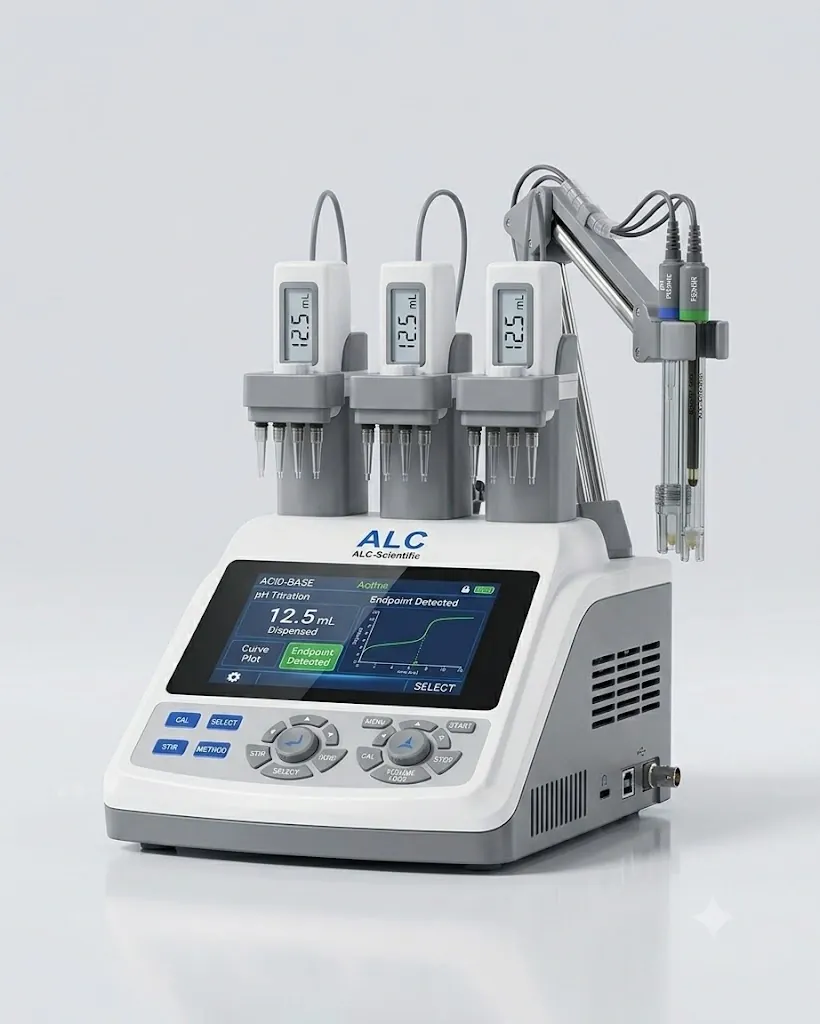
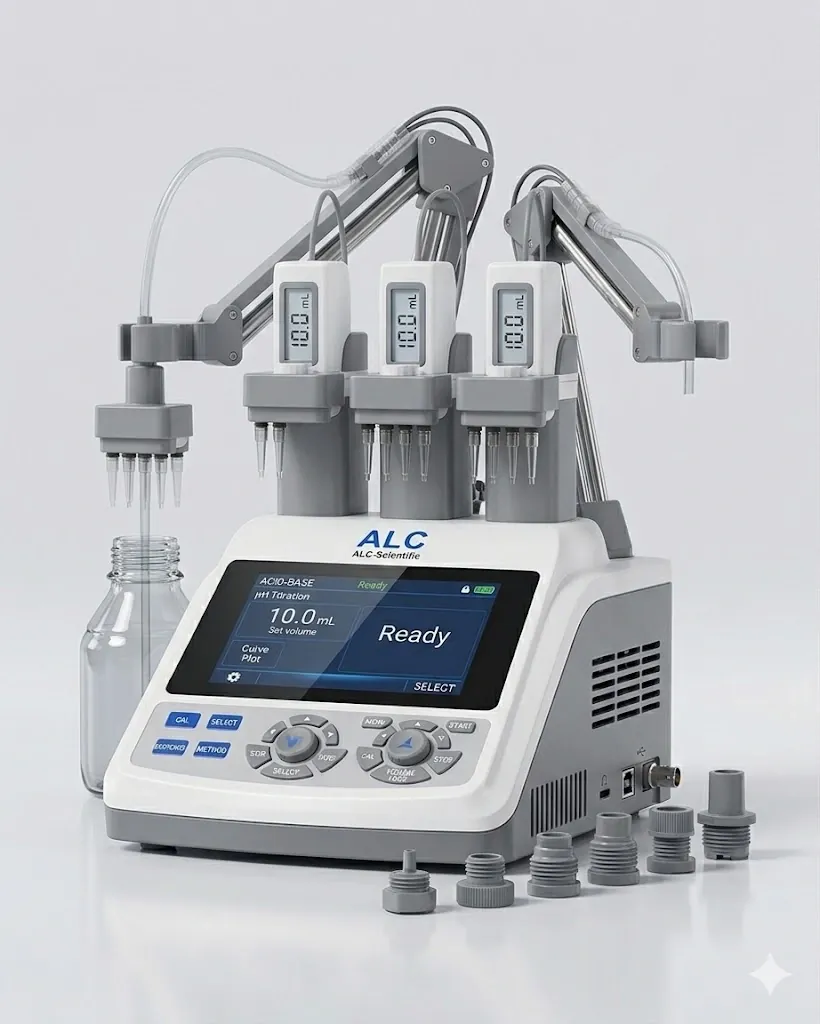
An electronic titrator delivers titrant in controlled increments and records or displays the delivered volume while the analytical endpoint is determined by the chosen method. Buyers commonly evaluate it for acid-base titration, water and food analysis, and quality-control titrations.
A bottle-top dispenser transfers repeatable liquid volumes directly from a reagent bottle through a piston-driven dosing mechanism and compatible wetted path. The current product-family description covers acid and base dispensing, solvent and reagent preparation, and routine analytical workflows.
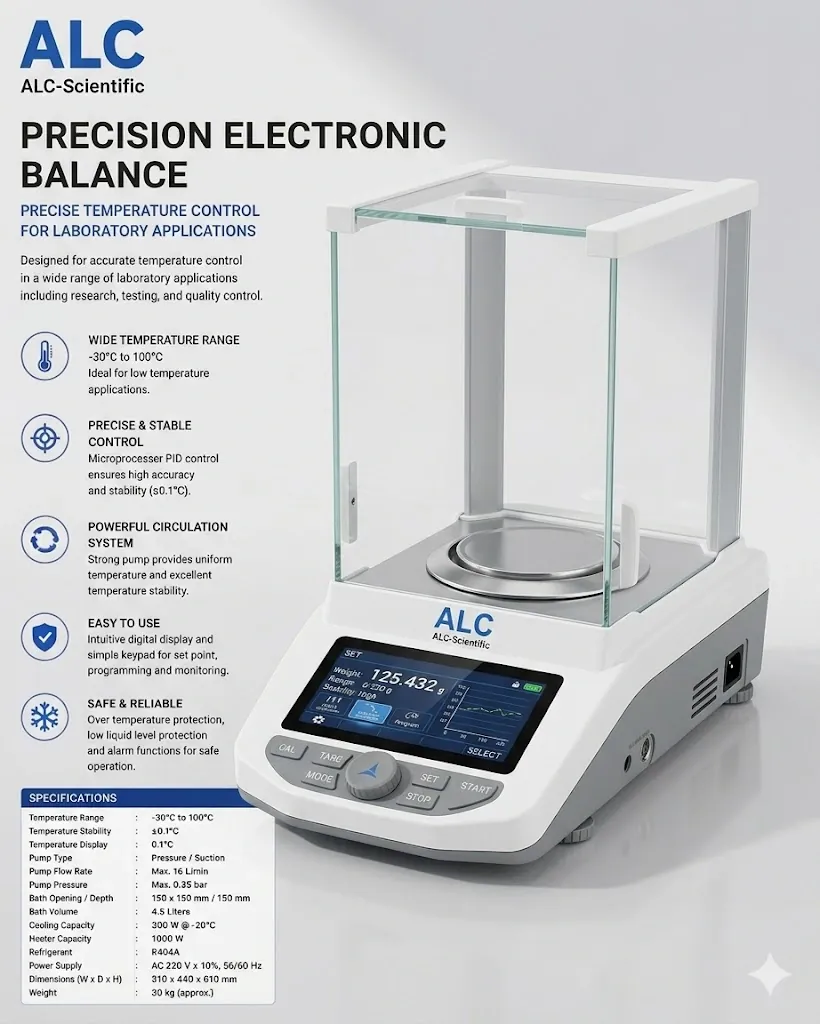
A precision electronic balance measures routine laboratory mass with greater resolution than general bench scales, subject to levelling, calibration and environmental control. Buyers commonly evaluate it for formulation, sample preparation, and piece counting.
An EMFC precision balance uses electromagnetic force compensation to convert pan load into a calibrated mass reading for controlled weighing tasks. Typical enquiry contexts include formulation, sample preparation, and counting and percentage weighing.
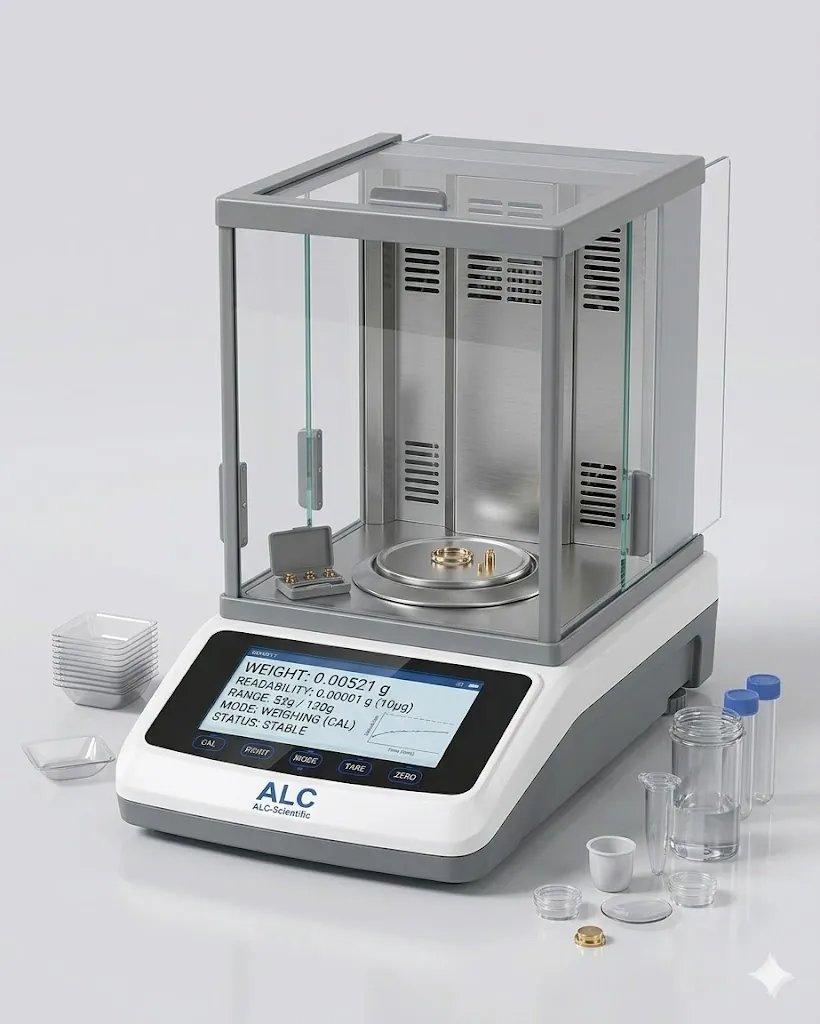
A semi-micro analytical balance resolves very small mass changes and therefore requires strict control of drafts, vibration, levelling, thermal equilibrium and reference checks. Typical enquiry contexts include reference-standard preparation, micro-sample formulation, and pharmaceutical assay preparation.
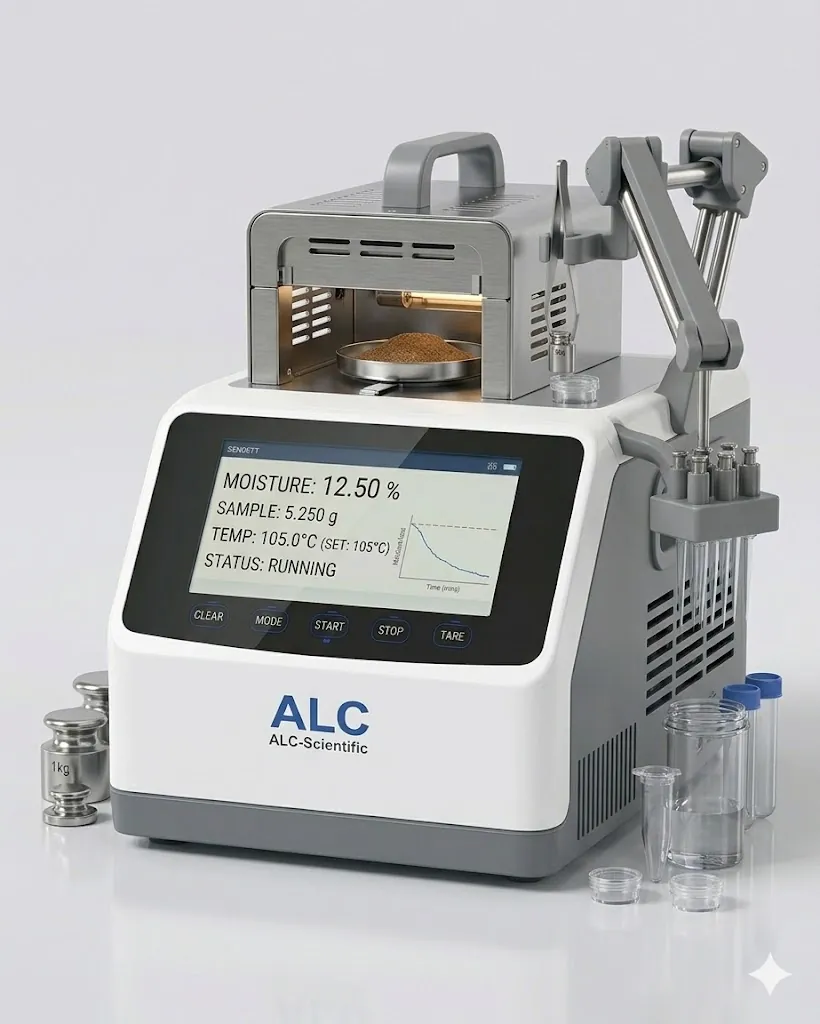
A moisture analyzer combines controlled sample heating with mass measurement to estimate loss on drying under a defined method rather than provide a universal moisture value. The current product-family description covers raw-material moisture testing, food and feed analysis, and pharmaceutical in-process testing.
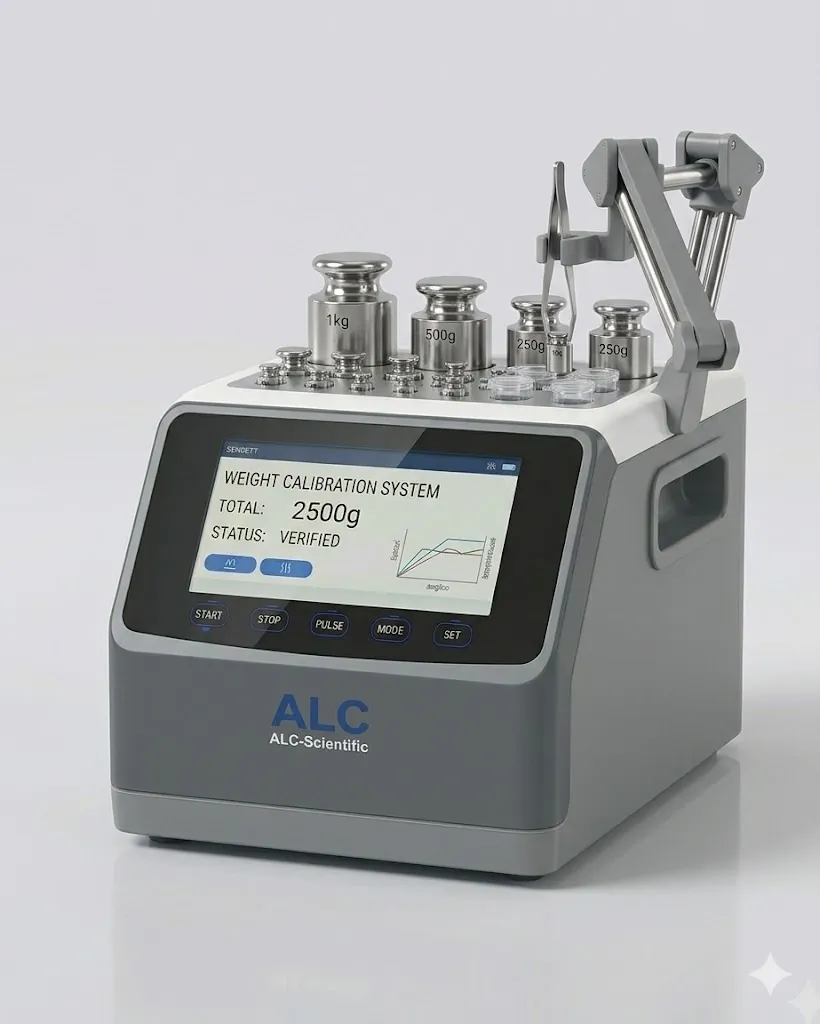
Calibration weights provide known reference masses for balance checks or calibration activities, subject to the selected accuracy class, certificate status and handling procedure. Buyers commonly evaluate it for daily balance checks, calibration support, and method verification.
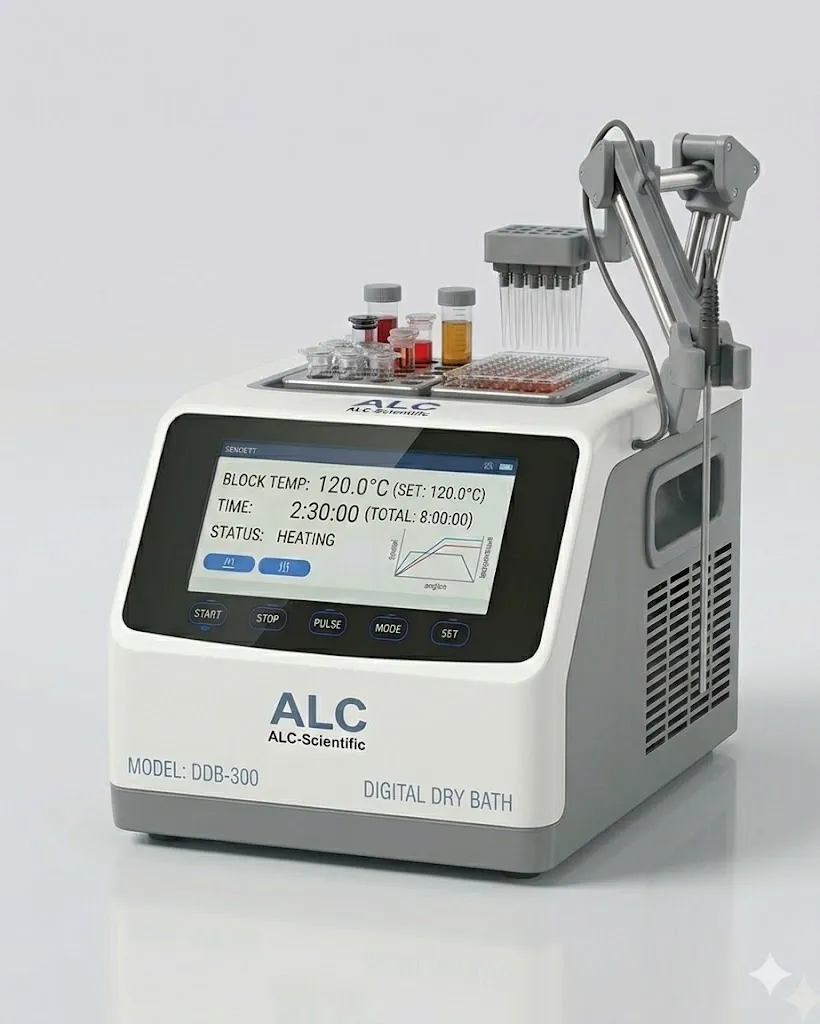
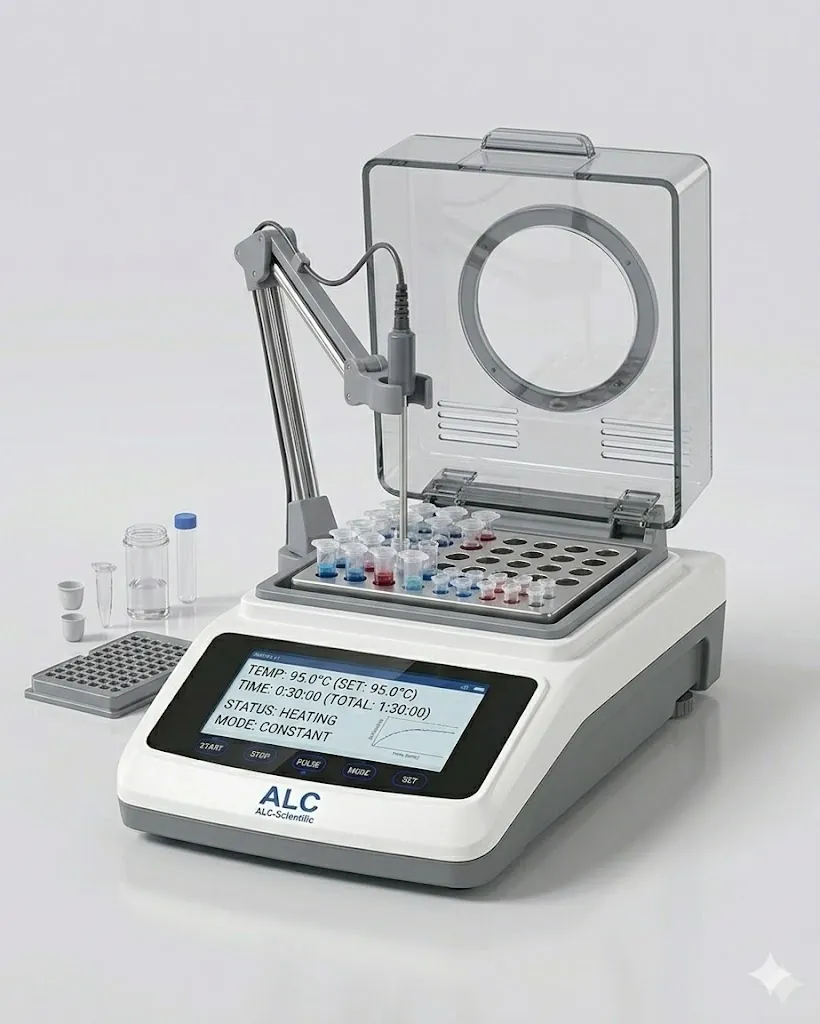
A digital dry bath heats tubes or vials through a fitted metal block, avoiding an open liquid bath while requiring the block geometry to match the vessels. Relevant workflows include enzyme incubation, sample denaturation, and tube warming.
A mini dry bath provides compact block heating for a small number of compatible tubes or vials where vessel fit and sample load influence heat transfer. Typical enquiry contexts include rapid tube warming, enzyme incubation, and field or point-of-use sample preparation.
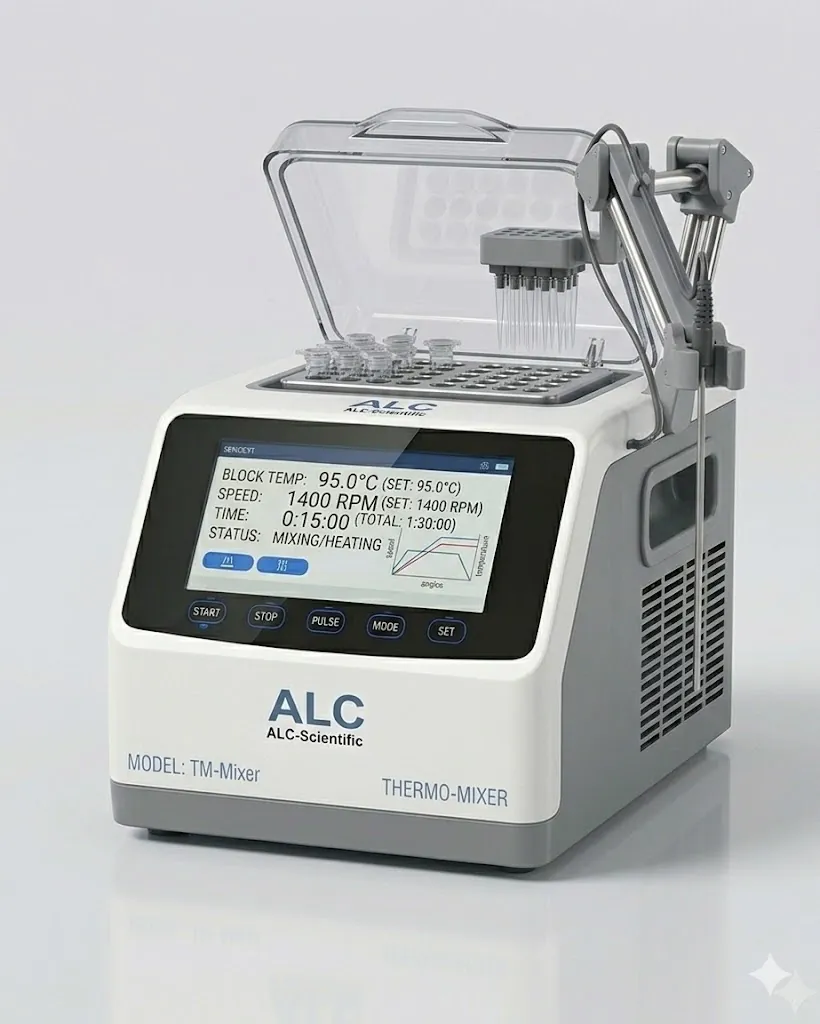
A thermo mixer combines block-based temperature control with orbital agitation for compatible tubes or plates used in timed incubation and mixing steps. Relevant workflows include enzyme reactions, sample lysis, and incubation with mixing.
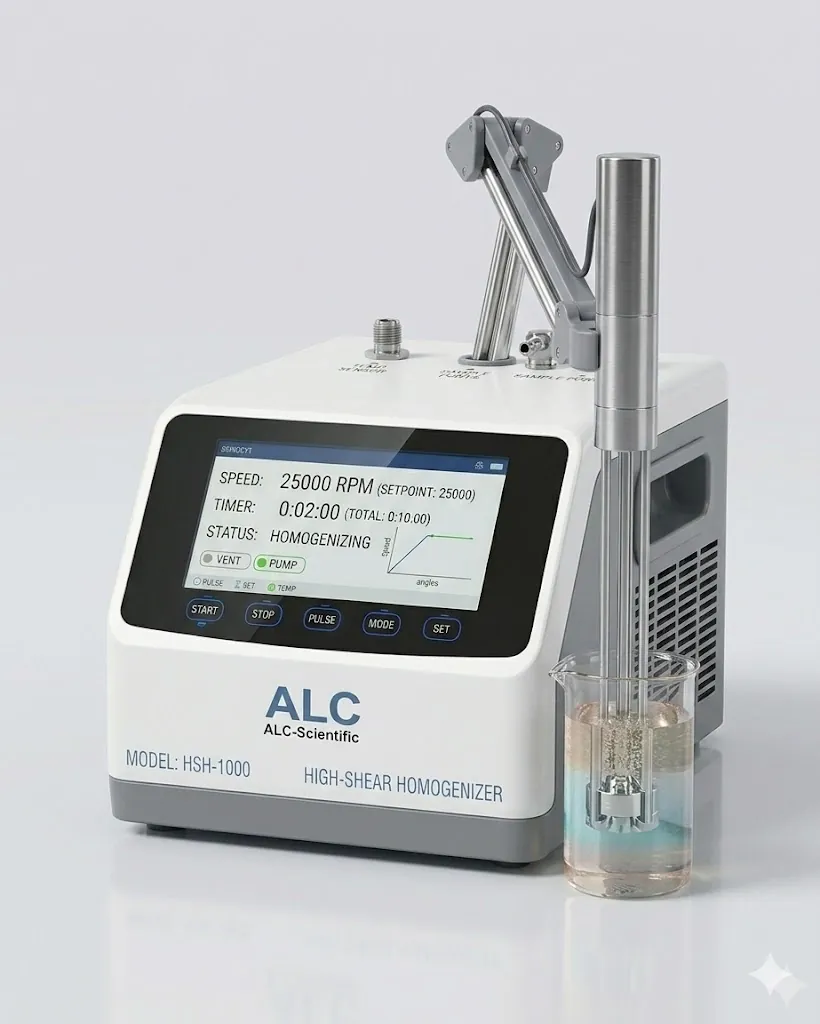
A high-shear homogenizer uses a driven processing tool to disrupt, disperse or emulsify a sample; tool geometry, viscosity, volume and heat generation determine method suitability. Relevant workflows include emulsion preparation, cell and tissue homogenization, and suspension preparation.
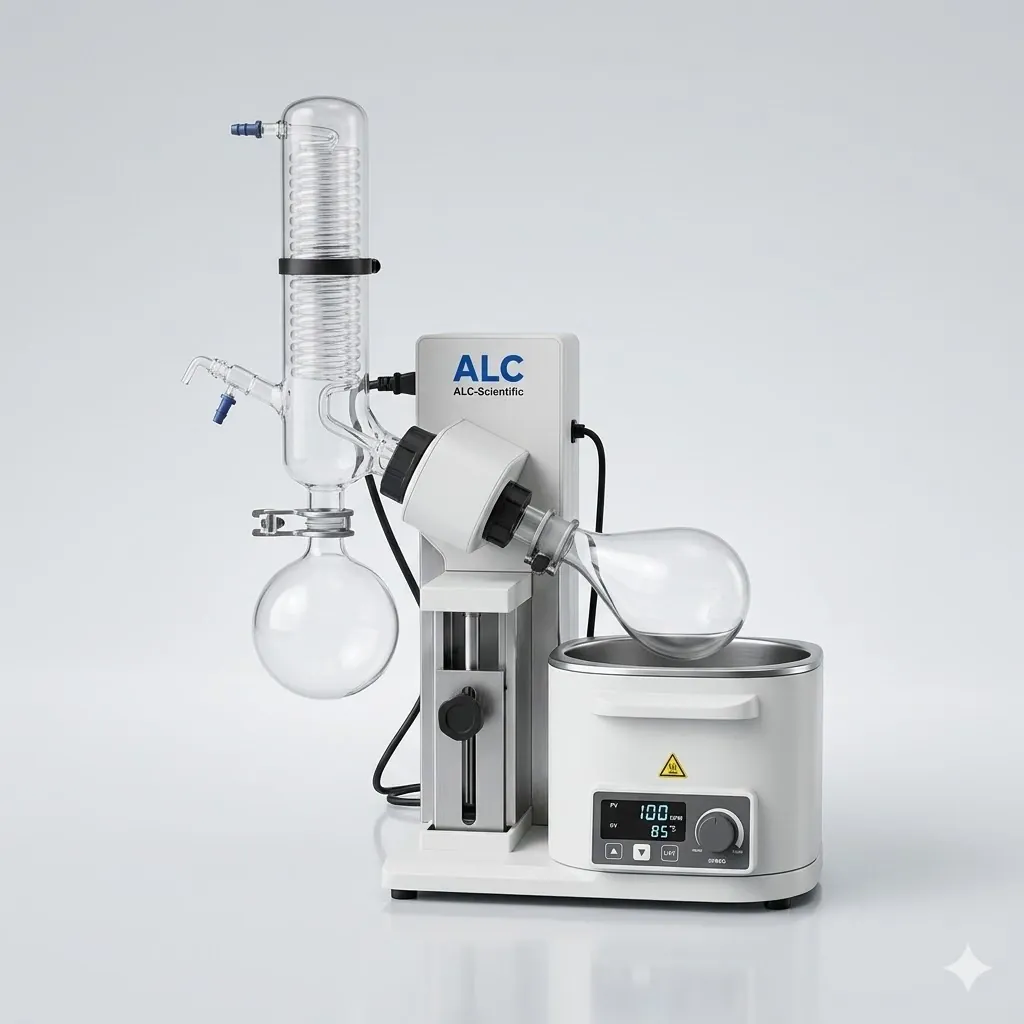
A digital rotary evaporator removes solvent by rotating a flask in a heated bath under reduced pressure and condensing the resulting vapour into a receiving vessel. The current product-family description covers solvent recovery, sample concentration, and extract preparation.
A mini or palm centrifuge provides quick spin-down of compatible small tubes using a fixed compact rotor, subject to tube rating, balance and the stated operating limit. The current product-family description covers droplet collection, quick spin-down after mixing, and PCR tube preparation.
A high-speed microcentrifuge provides rotor-based separation for small-volume tubes where RCF, tube rating, run time, braking and temperature sensitivity must be matched to the protocol. Relevant workflows include nucleic-acid purification, protein precipitation, and spin-column workflows.
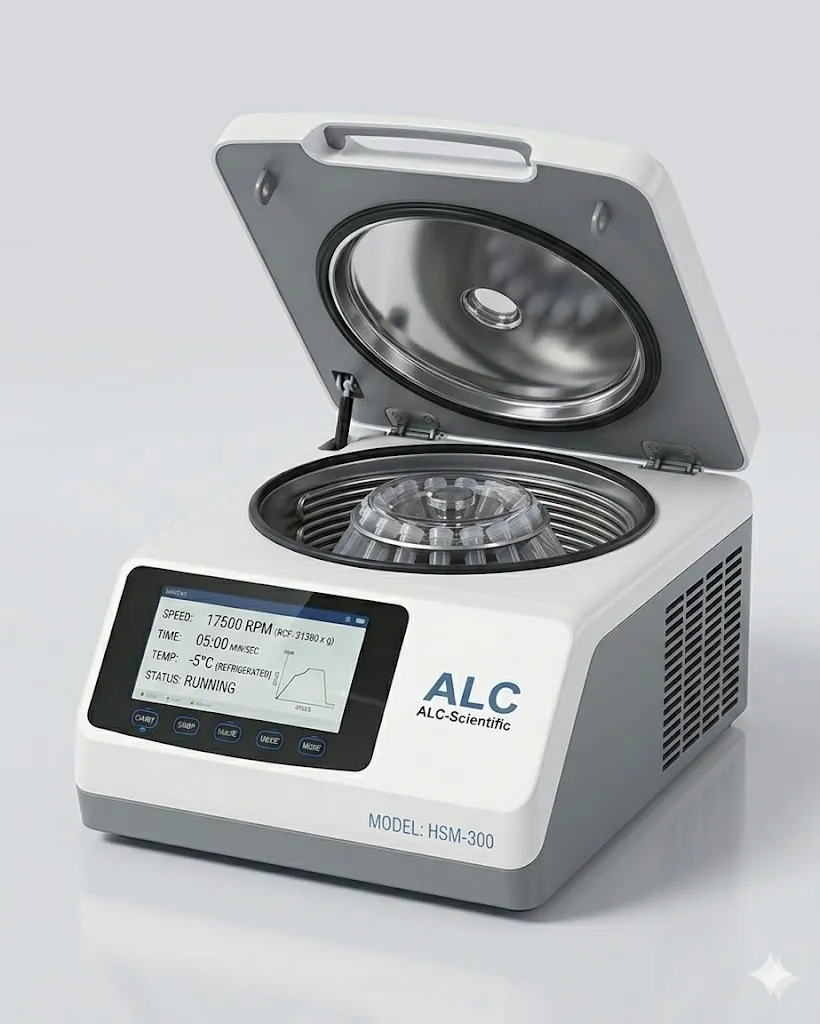
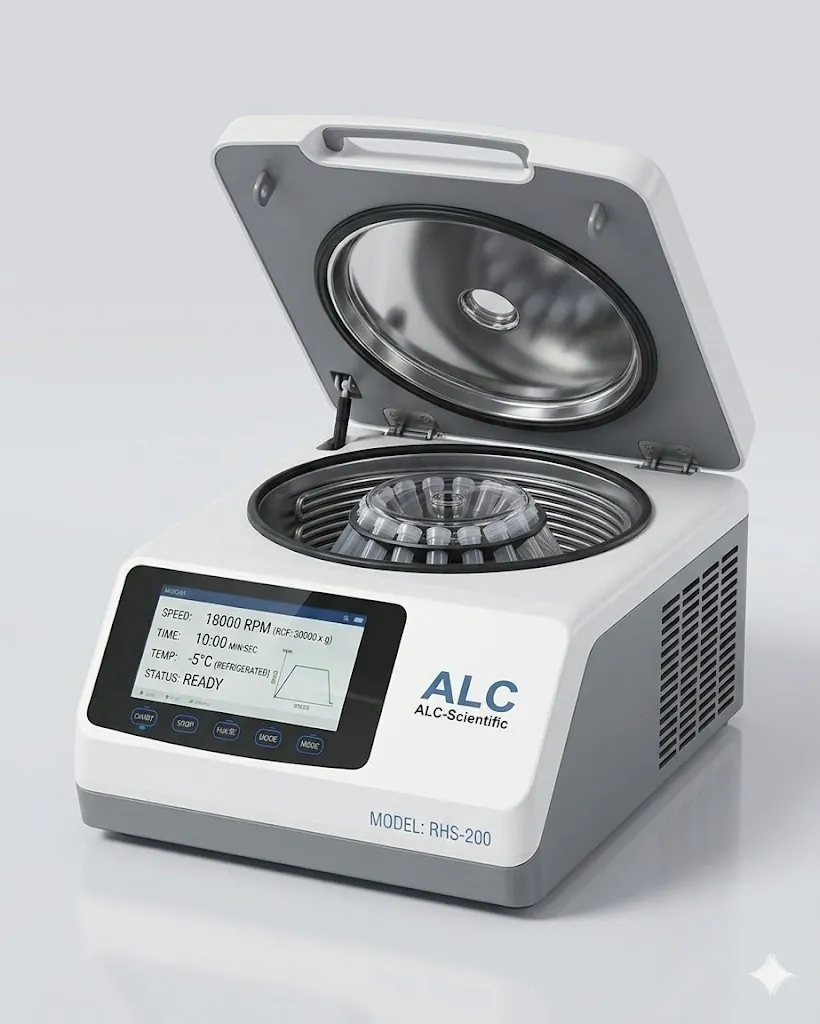
A refrigerated high-speed centrifuge combines rotor-based high-RCF separation with chamber temperature control for protocols that are sensitive to heat generated during a run. Typical enquiry contexts include nucleic-acid and protein workflows, cell and organelle separation, and temperature-sensitive precipitation.
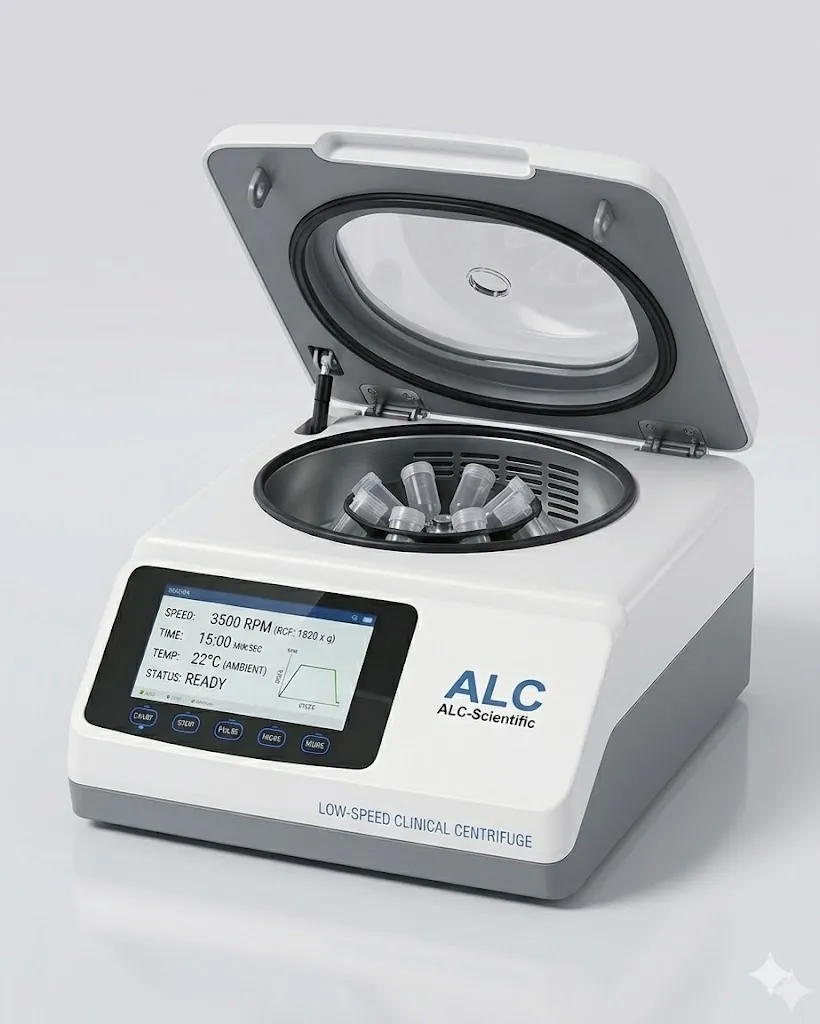
A low-speed clinical centrifuge separates compatible tubes in a rated rotor for routine protocols where tube format, RCF, balance and lid protection matter more than headline RPM. The current product-family description covers serum and plasma preparation, urine sediment preparation, and prp or routine blood workflows.
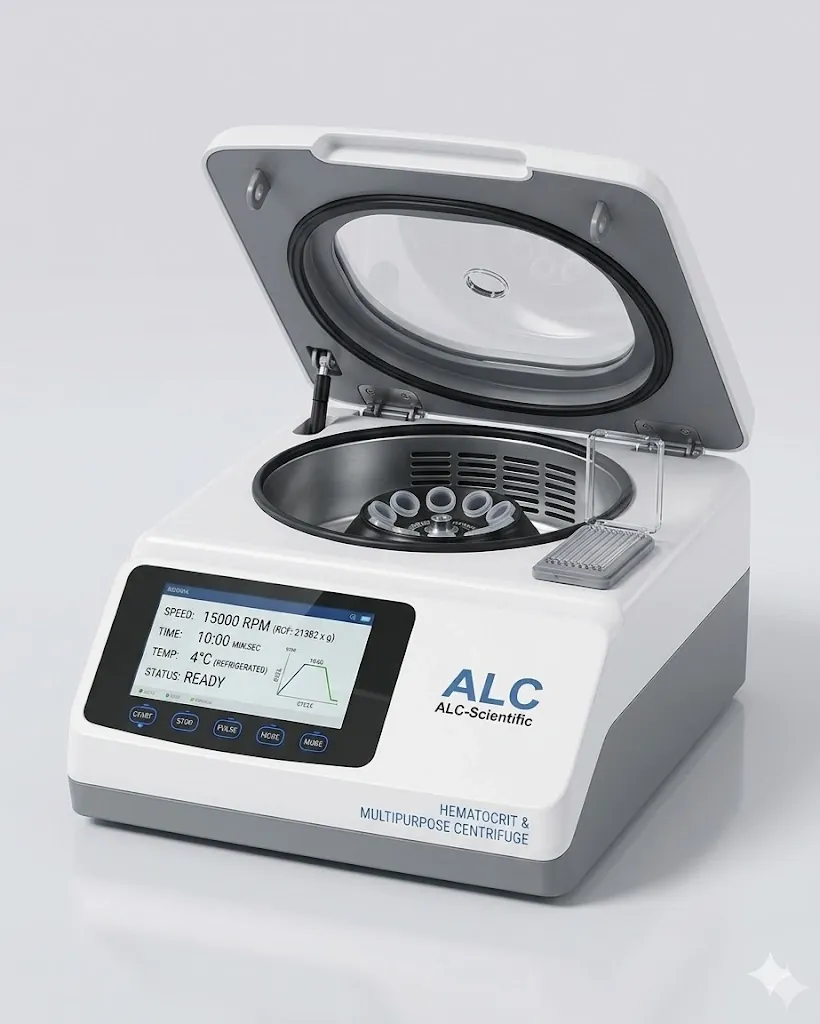
A hematocrit and multipurpose centrifuge supports capillary hematocrit separation and other compatible low- or medium-volume protocols through the selected rotor and adapters. Typical enquiry contexts include packed-cell volume determination, blood sample preparation, and urine and clinical sample separation.
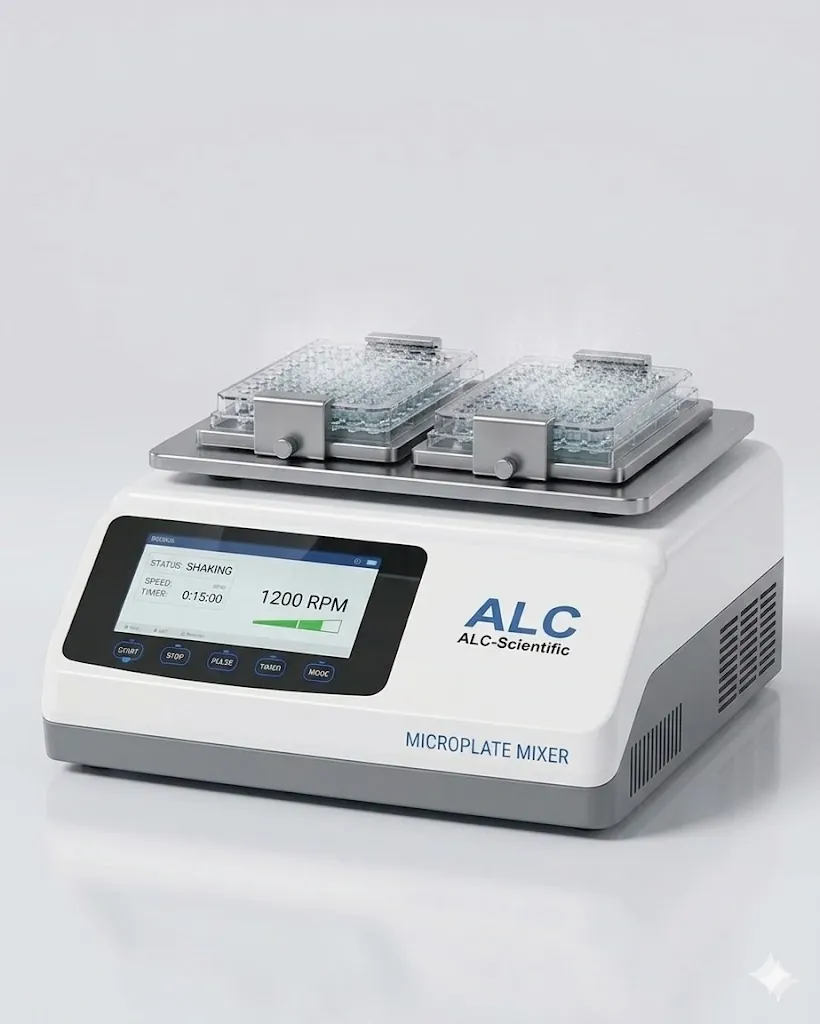
A microplate mixer applies controlled orbital or vibrational motion to secured plates so mixing intensity can be matched to well format, fill volume and assay conditions. Relevant workflows include immunoassay preparation, microplate reagent mixing, and cell-based assay preparation.
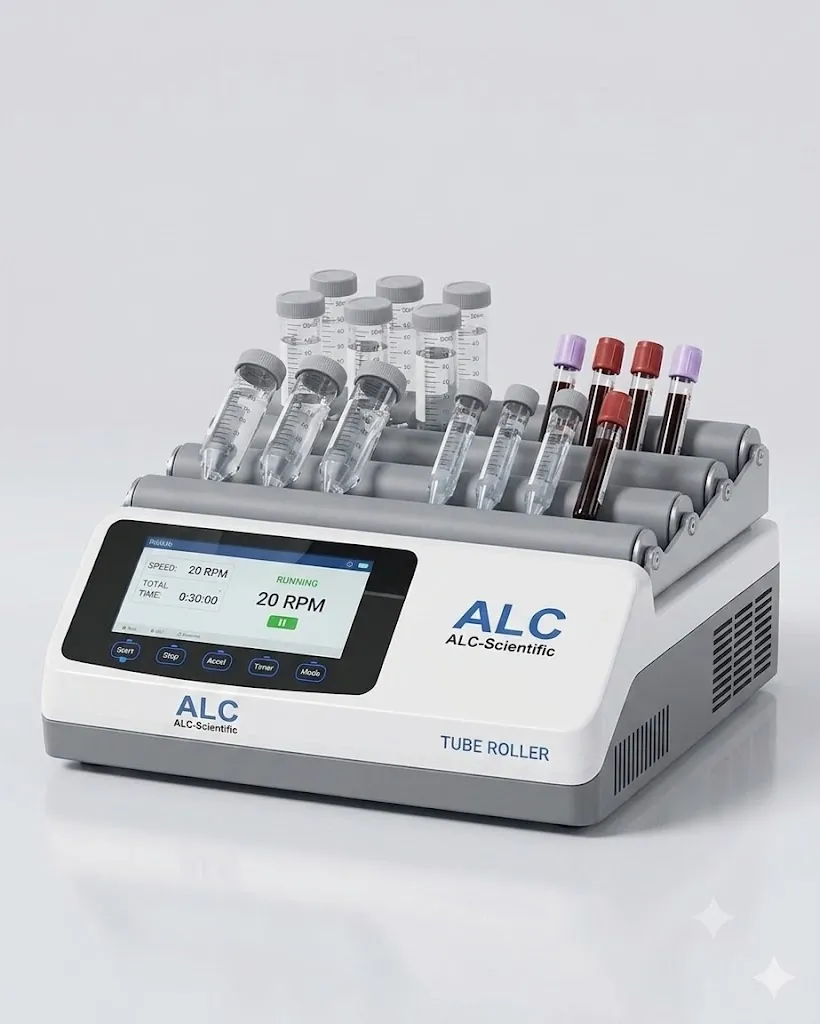
A tube roller rotates closed tubes, often with a gentle rocking action, to provide continuous low-shear mixing along the tube length. Relevant workflows include blood-tube mixing, sample resuspension, and hybridization.
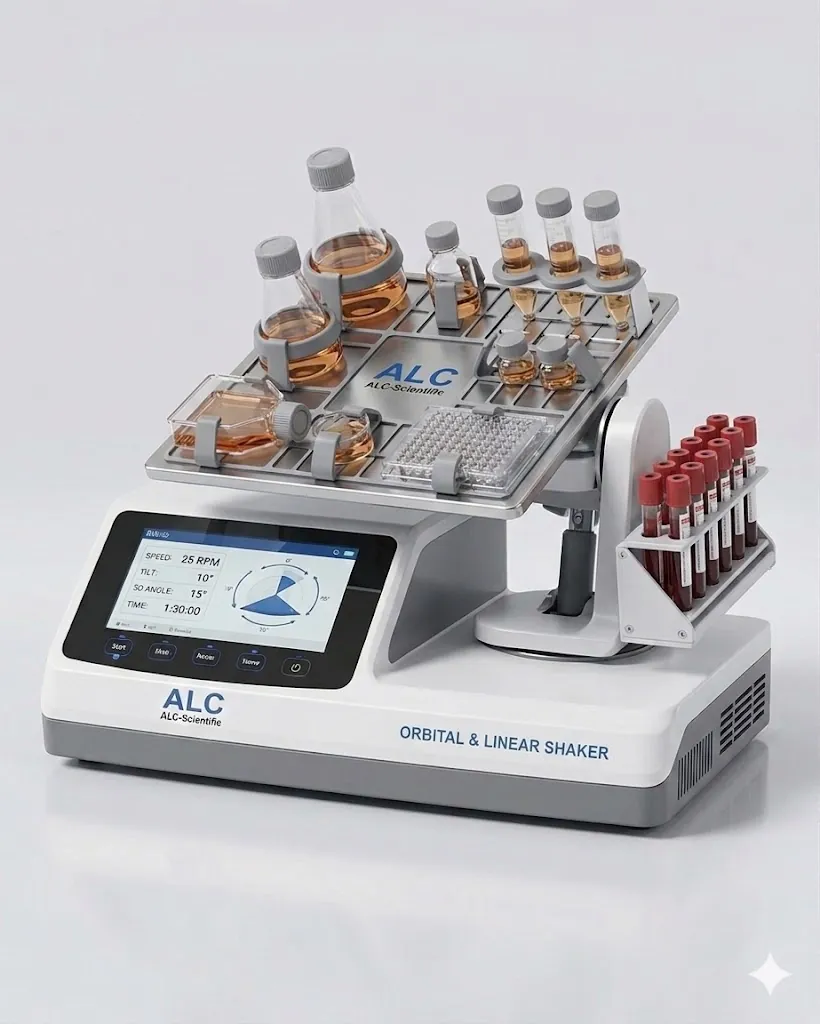
An orbital or linear shaker moves a secured platform in the selected motion pattern for vessel mixing, with load, clamp arrangement, speed and throw matched to the process. Buyers commonly evaluate it for culture aeration, extraction, and dissolution.
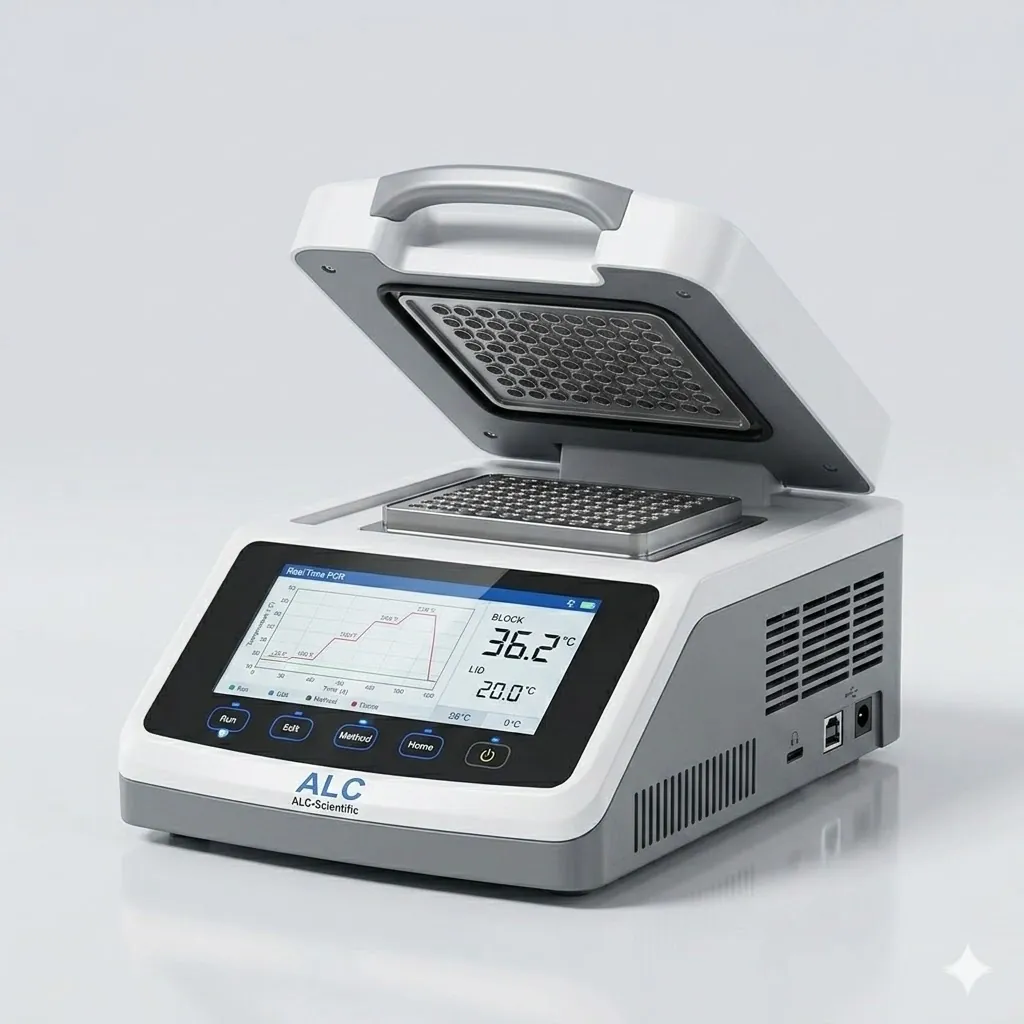
A PCR thermal cycler repeatedly changes block temperature according to a programmed protocol for nucleic-acid amplification with compatible tubes, plates and reagents. The current product-family description covers endpoint PCR, genotyping, and cloning and sequencing preparation.
An electrophoresis system applies an electric field across a selected gel and buffer arrangement to separate charged biomolecules according to the method. Typical enquiry contexts include DNA and RNA analysis, PCR-product checking, and protein separation.
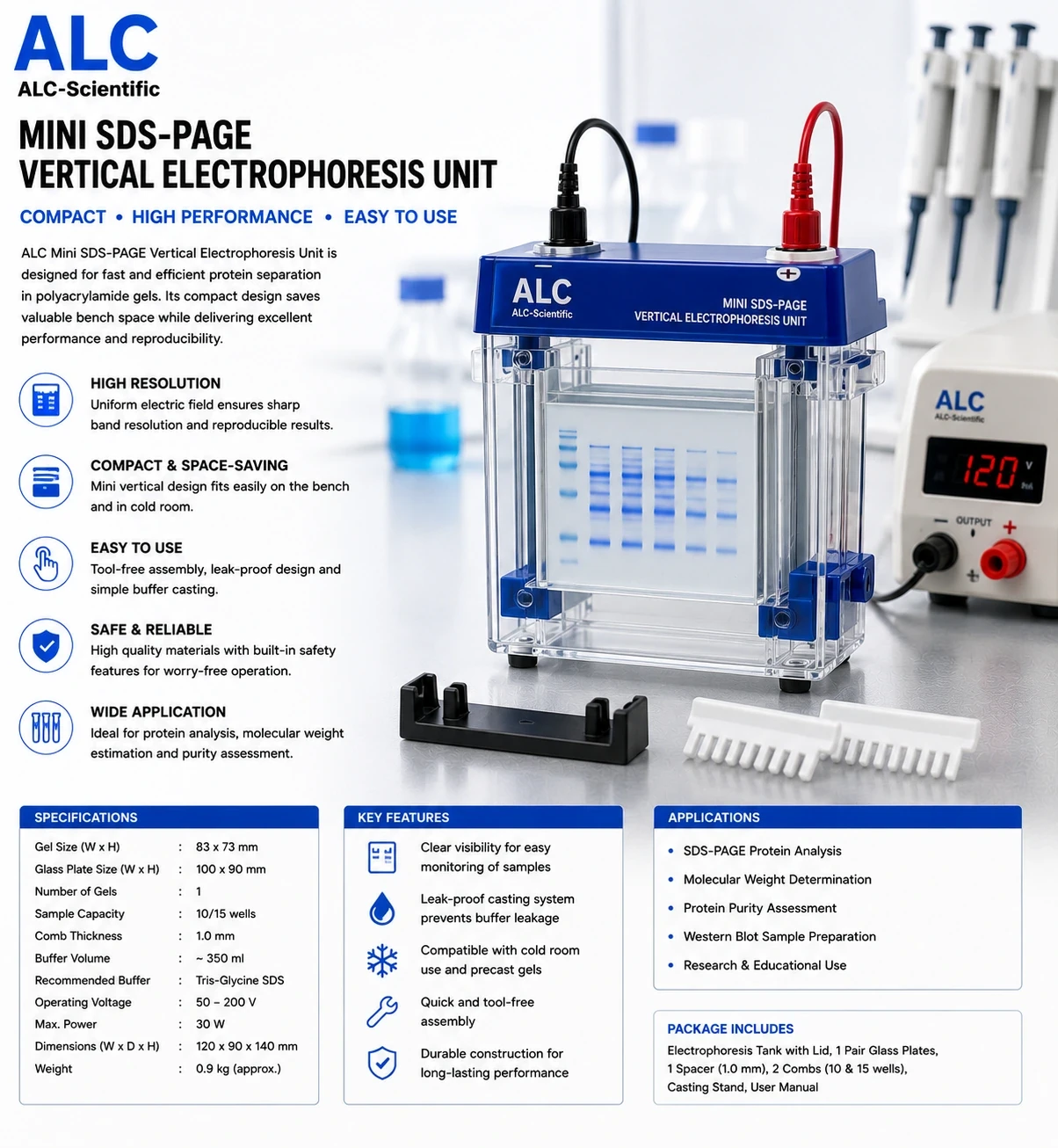
A mini SDS-PAGE vertical electrophoresis unit separates proteins through a compact vertical gel format using compatible cassettes, buffers and a controlled power supply. Typical enquiry contexts include SDS-PAGE protein separation, protein molecular-weight estimation, and protein purity assessment.
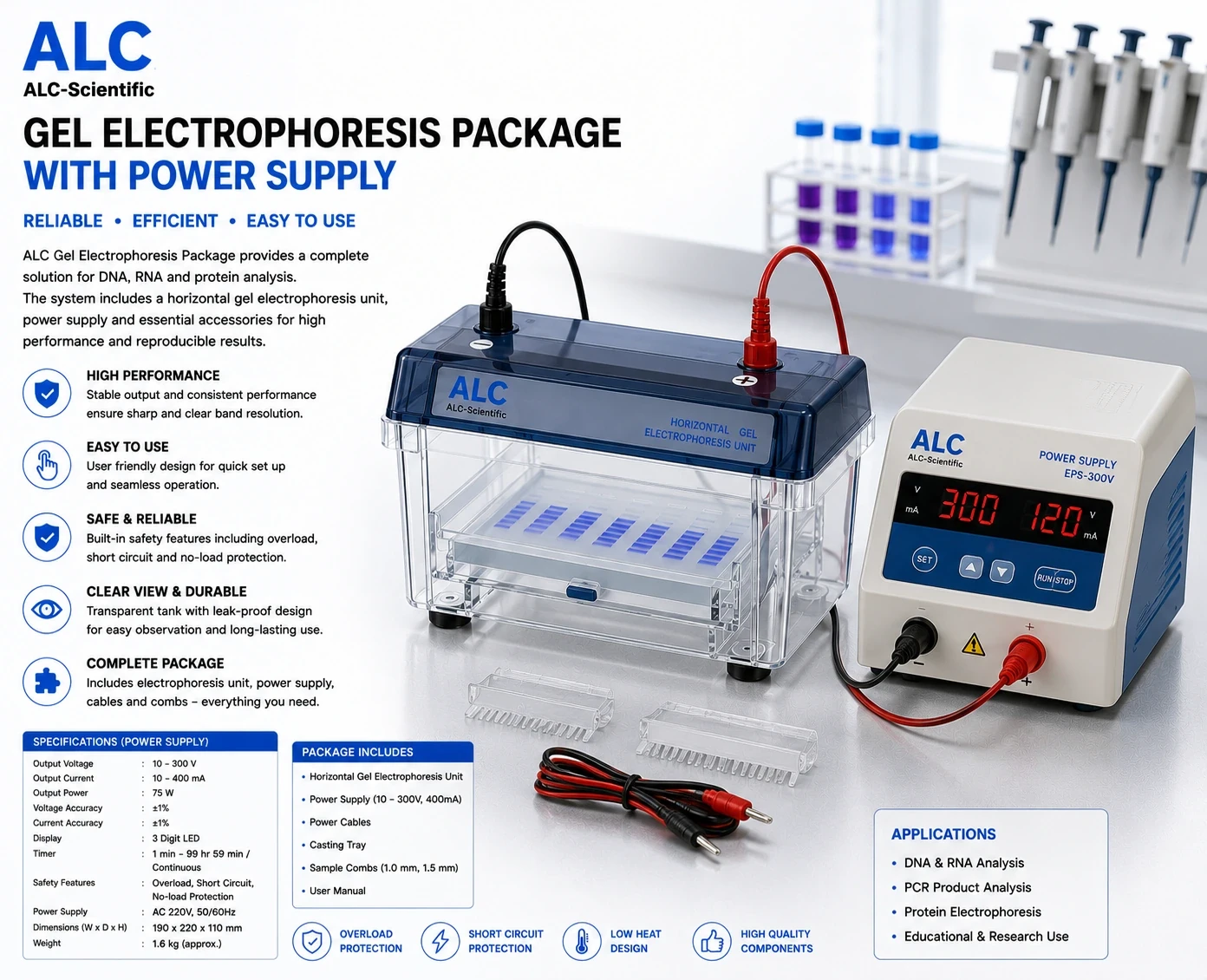
A gel electrophoresis package combines a chamber and compatible power supply so the gel format, buffer, sample number and electrical limits can be specified as one system. Relevant workflows include DNA and RNA agarose gel electrophoresis, PCR-product analysis, and restriction-digest and plasmid analysis.
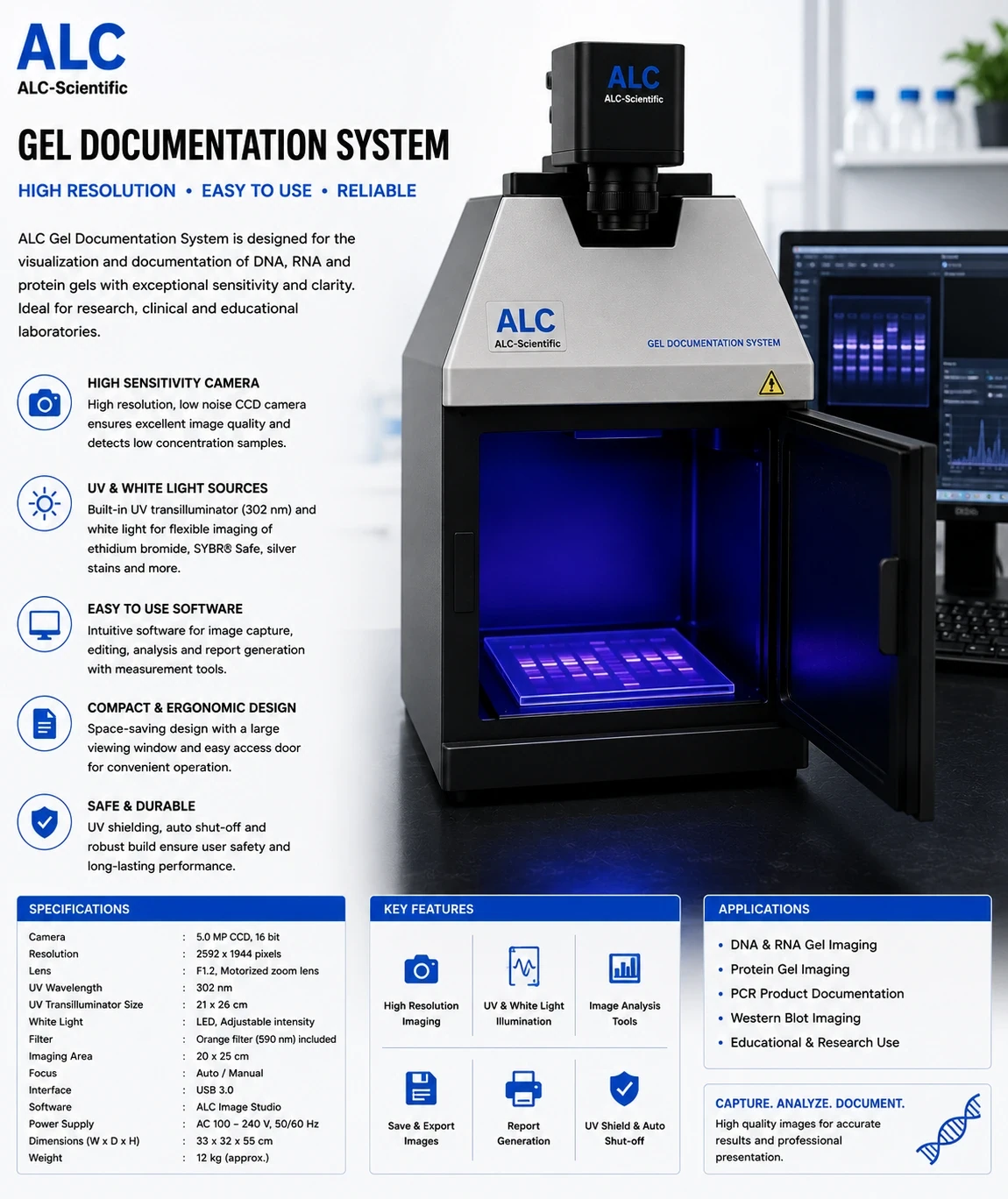
A gel documentation system combines controlled illumination, an imaging enclosure and a camera to record fluorescent or visible gel bands with method-appropriate filters. Typical enquiry contexts include DNA and RNA gel imaging, protein gel documentation, and PCR-product documentation.
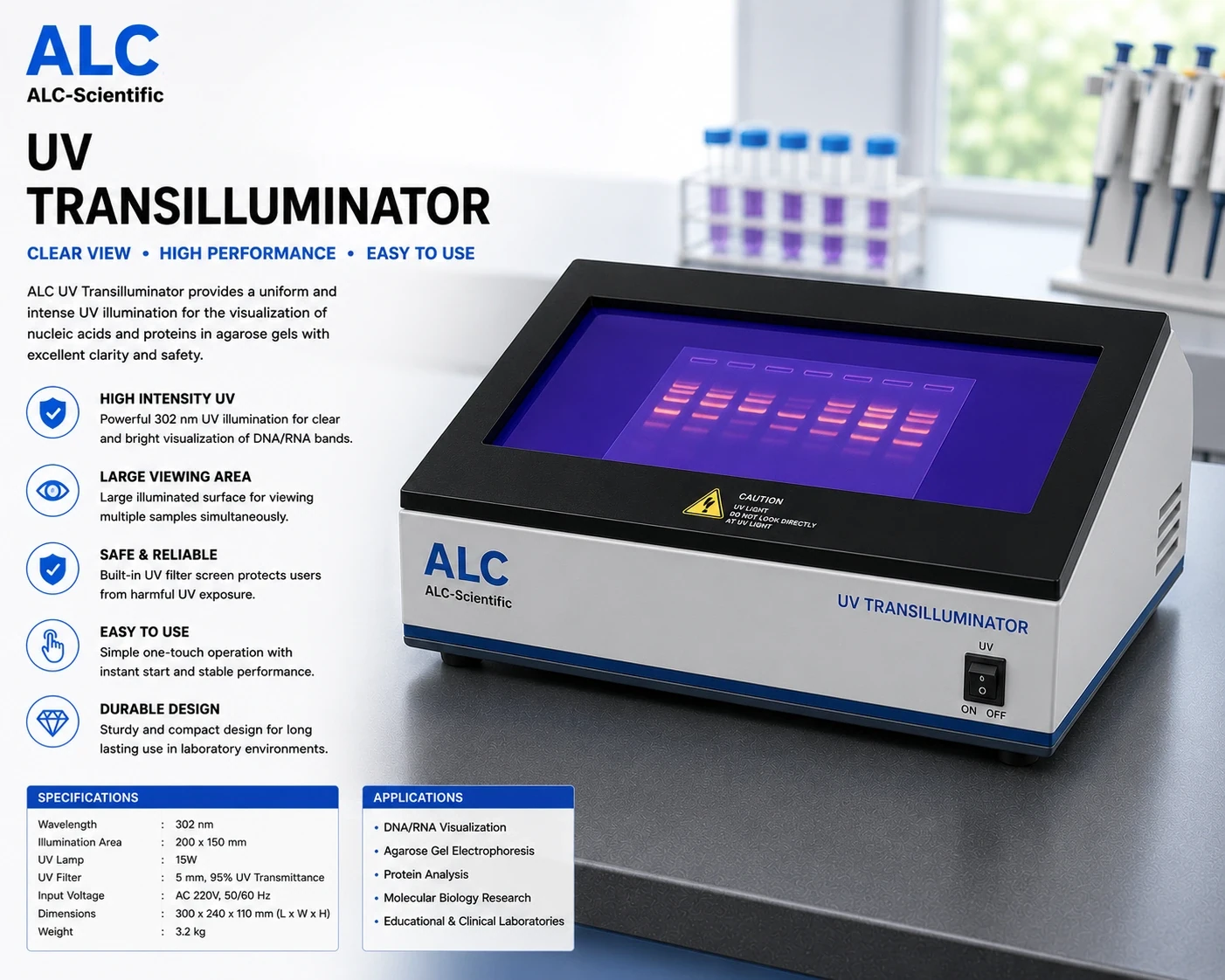
A UV transilluminator illuminates compatible fluorescent gel bands for viewing or documentation and requires wavelength-appropriate eye, skin and sample protection. Buyers commonly evaluate it for DNA and RNA band visualisation, agarose gel electrophoresis review, and PCR-product and restriction-digest checking.
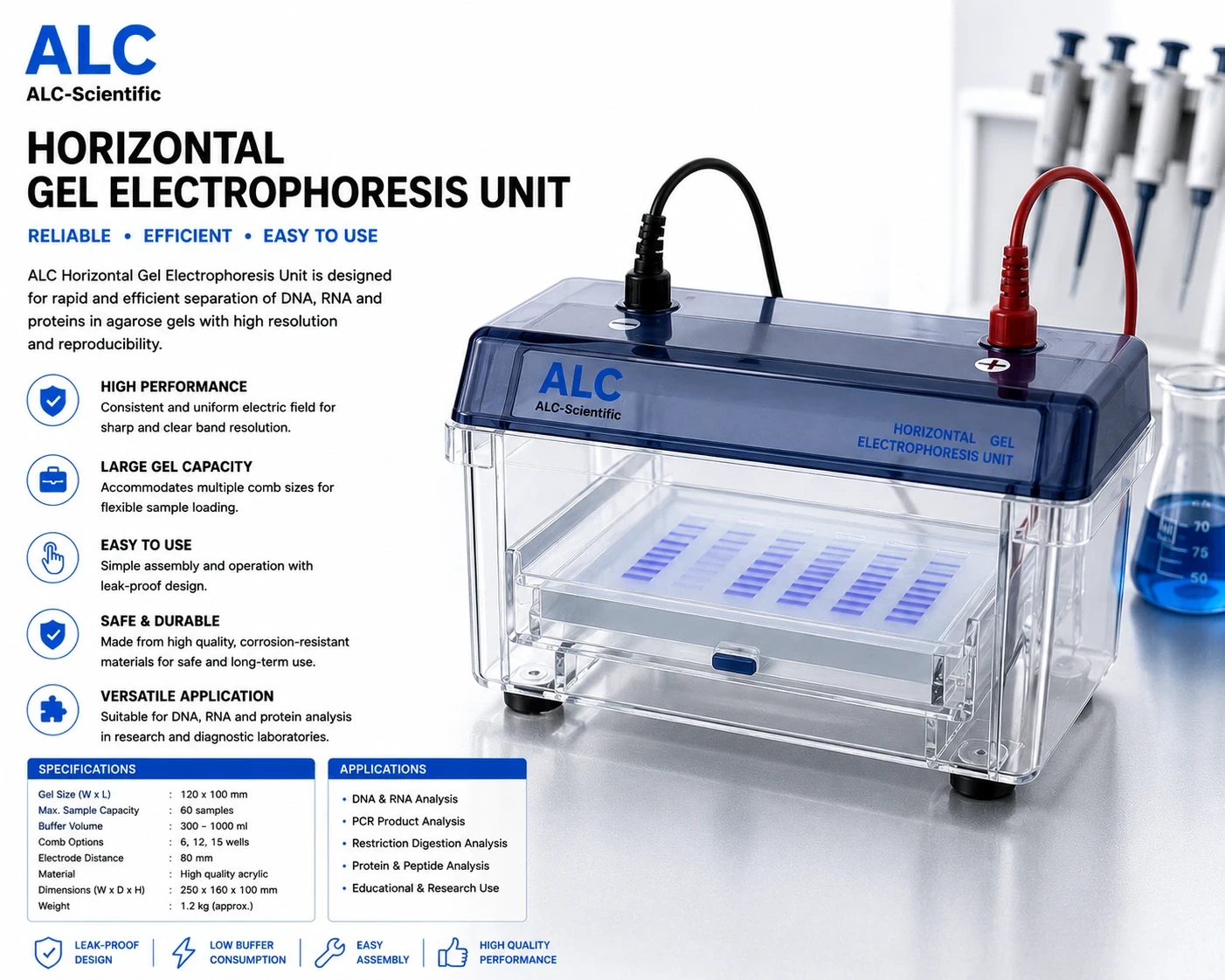
A horizontal gel electrophoresis unit runs submerged agarose gels for compatible nucleic-acid separations using a selected tray, comb, buffer volume and power condition. Relevant workflows include DNA and RNA fragment separation, PCR-product analysis, and restriction-digest and plasmid screening.
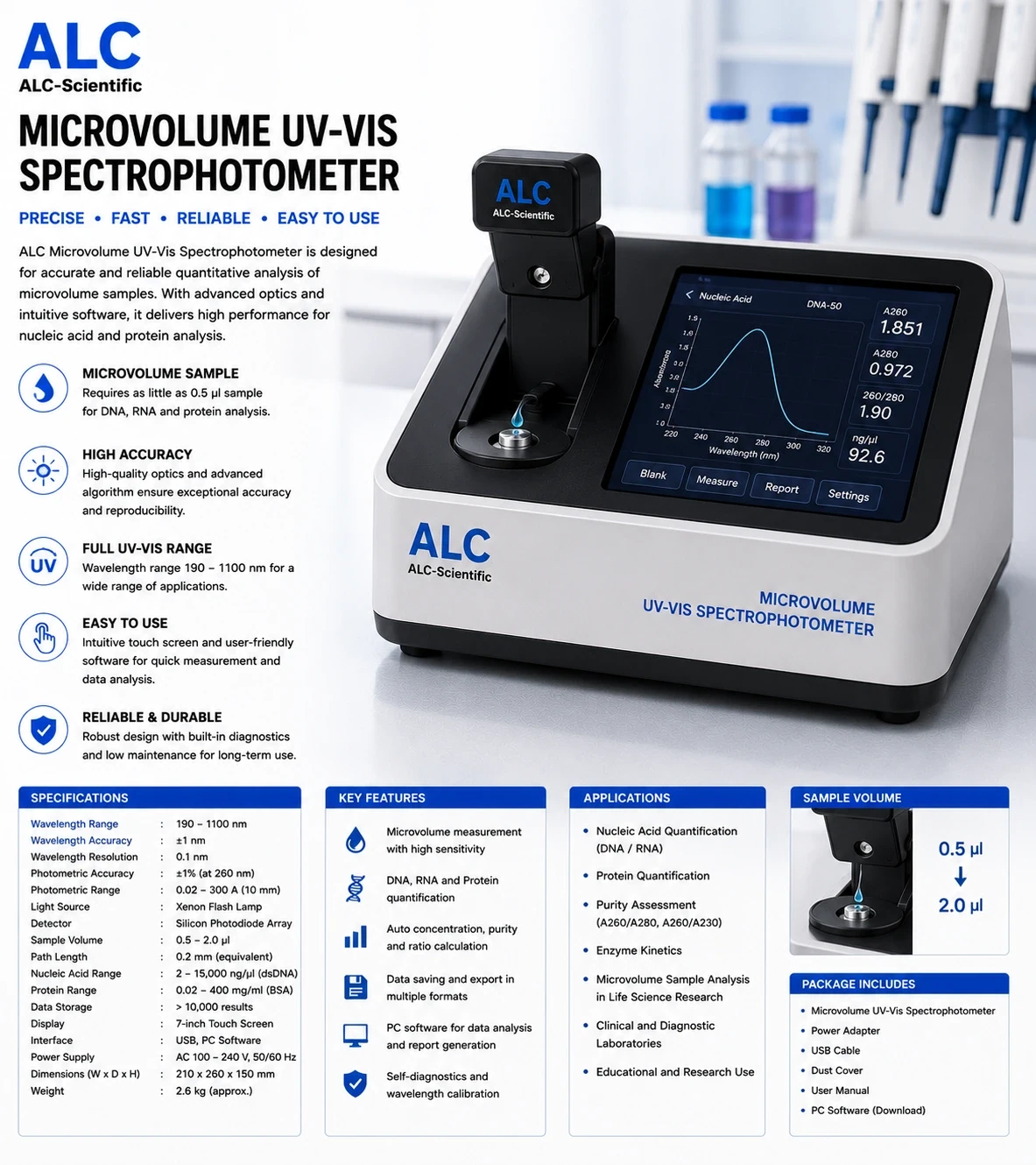
A microvolume UV–Vis spectrophotometer measures absorbance from very small liquid samples using a compatible pedestal or microvolume cell and a method-appropriate optical path. Buyers commonly evaluate it for DNA and RNA concentration measurement, nucleic-acid purity assessment, and protein concentration measurement.
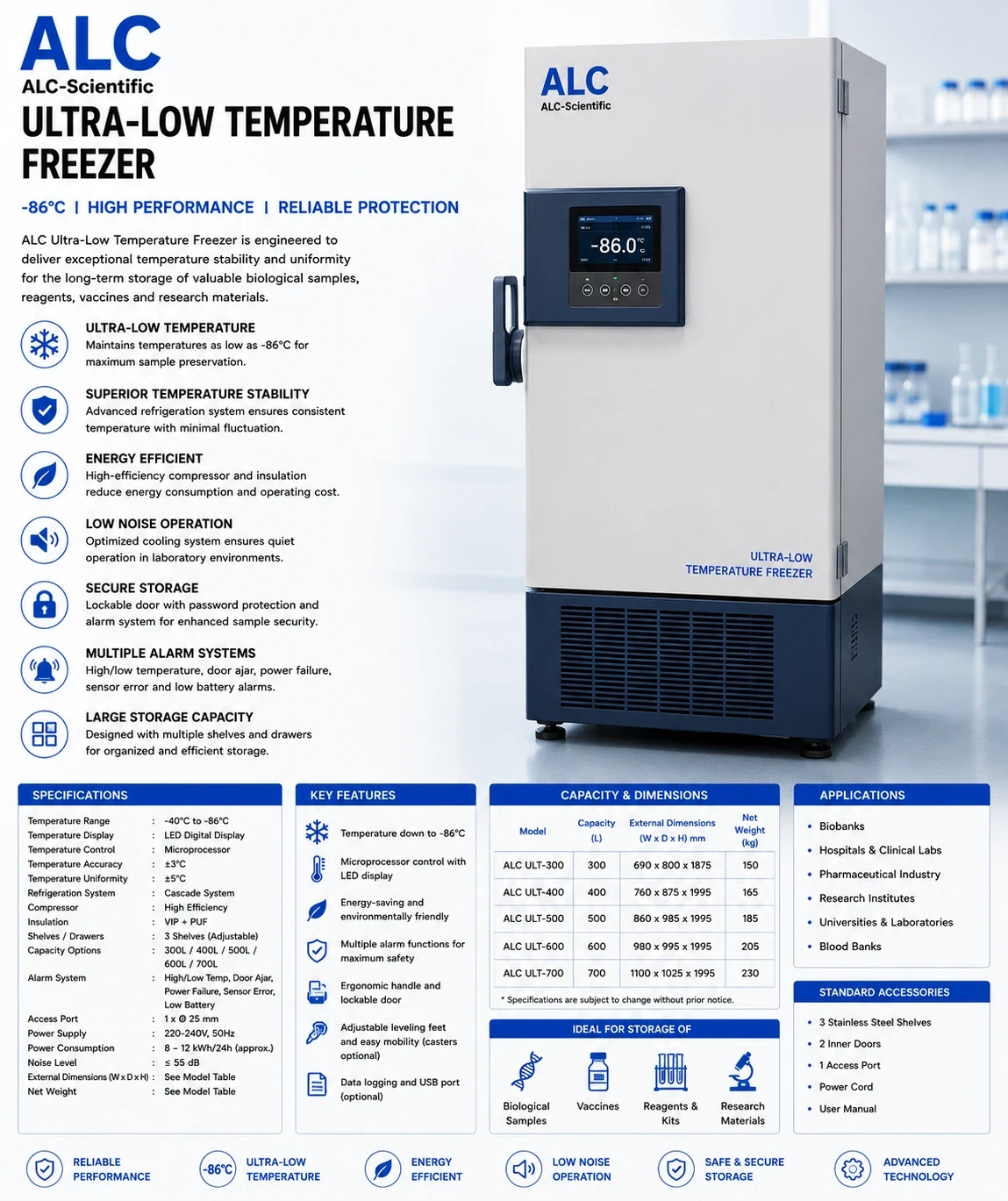
An ultra-low-temperature freezer provides controlled very-low-temperature storage for compatible samples, with monitoring, alarms, access practice, backup planning and recovery procedures forming part of the storage system. Relevant workflows include long-term storage of biological specimens, biobank and repository sample storage, and vaccine, reagent and kit preservation where validated.
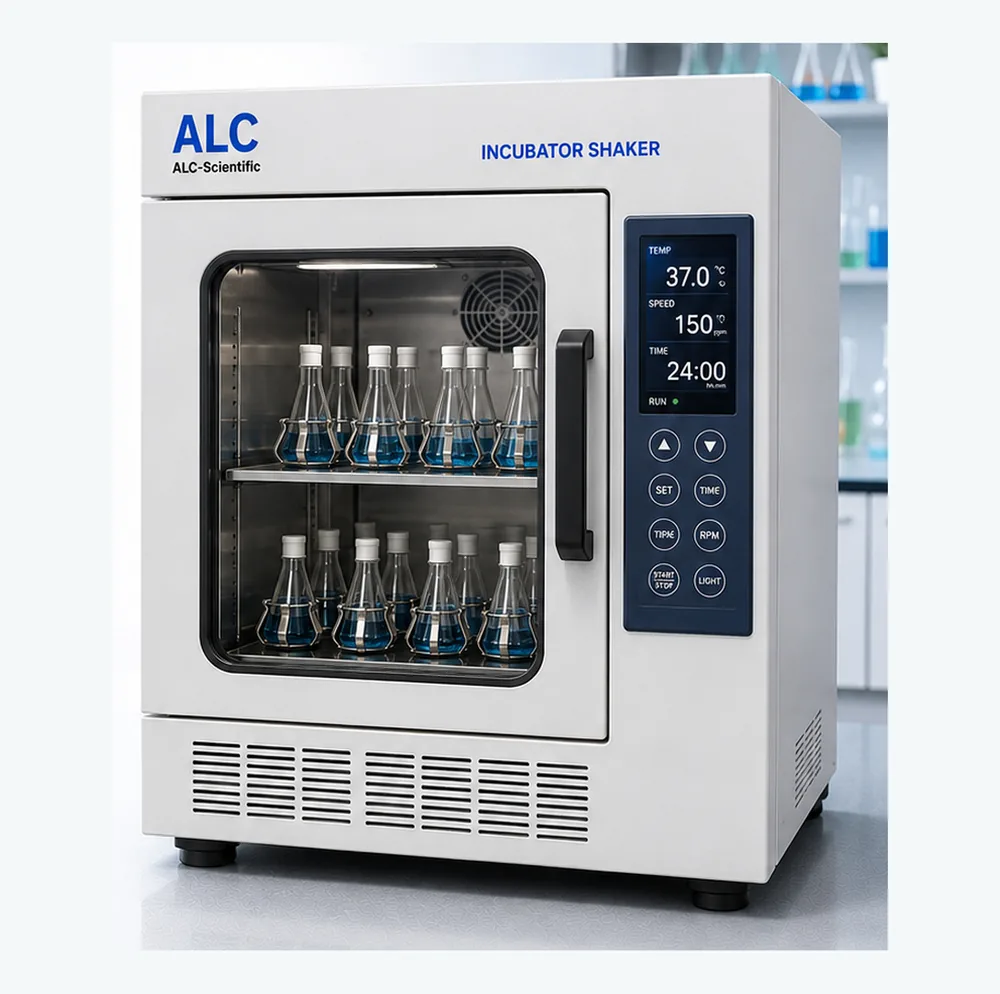
An incubator shaker combines controlled temperature with orbital movement for flasks or vessels secured by a suitable platform and clamp arrangement. Typical enquiry contexts include microbial culture and fermentation studies, yeast and bacterial growth, and protein-expression workflows.